





Every mini-split ships with the same thing in the box: a small plastic infrared remote that gets lost in a couch cushion within six months, offers no remote access, and tells the customer nothing about what the system is actually costing them to run. It's not a design flaw — it's a cost decision manufacturers made decades ago, and it's the reason "I can't find the remote" is one of the most common calls a ductless service tech fields.
Here's a direct, feature-by-feature look at what changes when you replace that OEM remote with the Boldr Smart Controller on an install.
Control: Line-of-Sight vs. From Anywhere
The OEM remote is an infrared device. It requires line of sight to the indoor unit, a working set of batteries, and — critically — someone in the same room. If a tenant, guest, or family member changes a setting, there's no record of it and no way to correct it remotely.
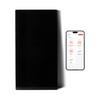
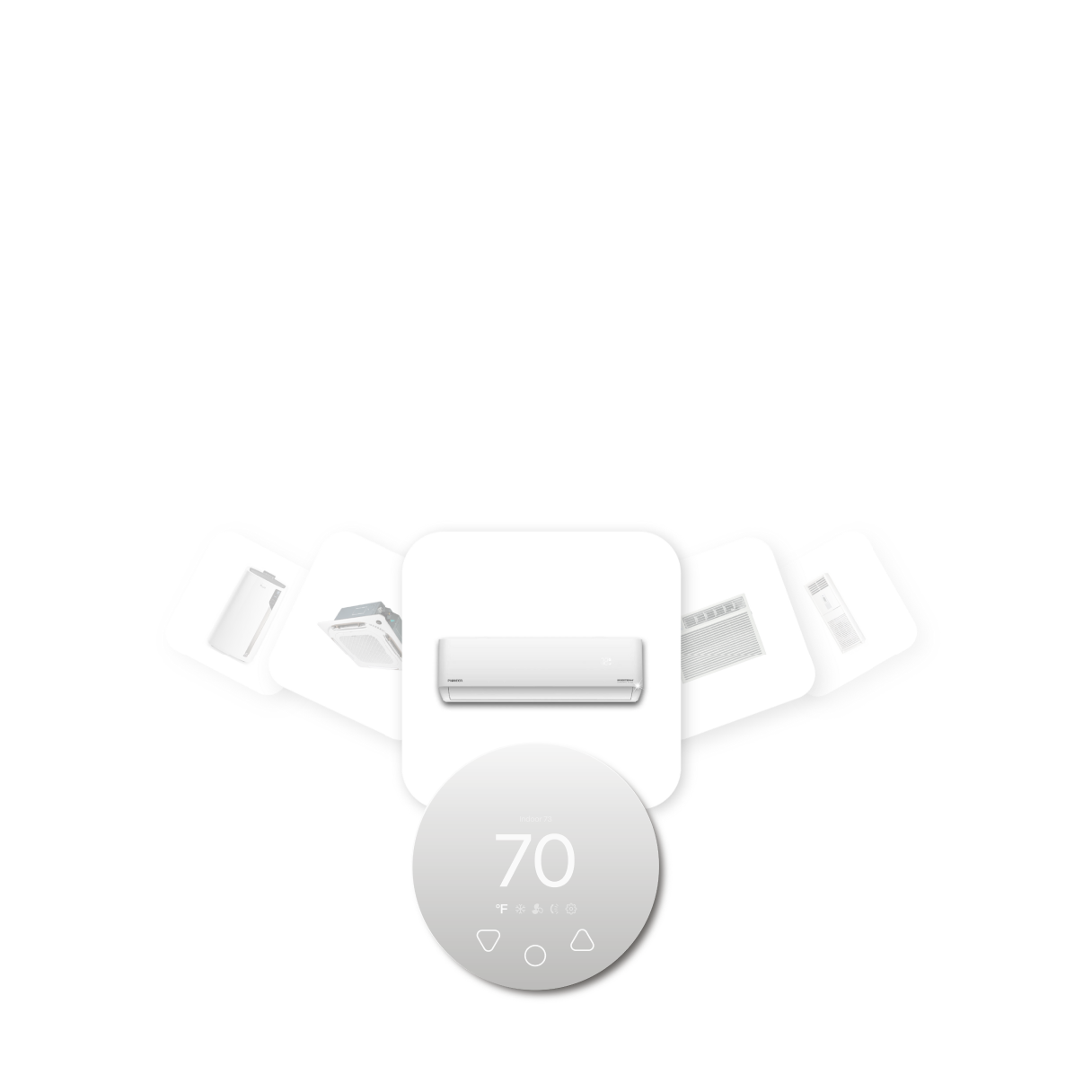
The Boldr Smart Controller gives full control of power, mode, temperature, fan speed, and swing from the Boldr app, from anywhere, in addition to on-device control through its own LCD display for anyone who prefers a physical interface. No line of sight required, no batteries to replace, and no "who changed the thermostat" mystery when three different people share a space.
Comfort: Basic On/Off vs. Comfort Zone AI
OEM remotes typically just relay a setpoint to the indoor unit's own basic control logic — which, on most mini-splits, means simple threshold-based cycling. That's the direct cause of the temperature swings and overshoot customers complain about, and it offers nothing in the way of freeze protection for shoulder-season operation.
Comfort Zone AI, built into the Boldr Smart Controller, actively manages that behavior to eliminate swings and overshoot, and includes freeze protection logic the OEM remote simply doesn't have access to. This is the difference between a system that technically responds to a setpoint and one that actually holds comfort steady.
Multi-Zone Systems: Where OEM Remotes Fall Apart
On a multi-head system, each OEM remote operates its zone in isolation, with no awareness of what the other indoor units on the same outdoor unit are doing. When one zone calls for heat while another calls for cool, that's a mechanical conflict the remotes can't see, let alone resolve — and it's a common source of "nuisance" callouts that aren't really equipment failures at all.
The Boldr Smart Controller's multi-zone conflict resolution is aware of the whole system, not just one head, and prevents those mode conflicts before they turn into a service call.
Monitoring: Nothing vs. Real Numbers
An OEM remote gives a customer zero visibility into energy use or cost. If they want to know what the system is costing them, their only option is to wait for the utility bill and guess.
The Boldr Smart Controller estimates energy use hourly through monthly with 98% accuracy without requiring a separate meter, and tracks energy costs with 99% accuracy — customers can even upload their utility bills for live spending comparisons. For a customer deciding whether the system is worth running, or trying to budget for it, that's not a nice-to-have. It's the answer to the question they're going to ask you anyway.
Maintenance: Reactive vs. Predictive
With an OEM remote, the first sign of a developing problem is usually the system failing to perform — often in the middle of a heat wave. There's no visibility into gradual efficiency decay before it becomes a no-cool emergency.
The Boldr Smart Controller's Unit Health Check tracks efficiency decay over time and sends maintenance alerts directly in the app — turning a reactive, emergency-driven service model into a scheduled, predictable one. That's fewer emergency truck rolls for you and fewer surprise failures for your customer.
Automation and Scenes: Manual Only vs. Set-and-Forget
OEM remotes require someone to manually adjust every setting, every time. There's no scheduling by time, location, or condition, no presence sensing to auto-adjust comfort on arrival and departure, and no way to control a whole property with one action.
The Boldr Smart Controller supports automations based on time, location, temperature, and humidity conditions; presence sensing that uses phone location to adjust comfort automatically; and Scenes that let a customer (or a property manager) control an entire property with one tap using pre-set room-by-room shortcuts.
Multi-Property and Multi-User Management
This is where the gap becomes most obvious for anyone managing more than a single home — property managers, short-term rental owners, and landlords. An OEM remote is a single, unmanaged device per room, with no user permissions, no oversight, and no way to restrict what a tenant or guest can change.
The Boldr Smart Controller supports unlimited users and rooms across multiple properties with per-user permissions, plus Temperature Range Lock to restrict selectable ranges per room and per user — a feature that alone eliminates a whole category of "the tenant set it to 65 and left" complaints.
Install Time and Compatibility
This is the objection contractors raise first, and it's the easiest to answer. The Boldr Smart Controller requires no wiring to the equipment and installs in under five minutes, with mounting options — Pro Mount for a hardwired wall install, Lite Mount for a tool-free snap install, and Lite Stand for freestanding tabletop use — covering essentially any jobsite scenario. It's compatible with all major mini-split brands, so it's not a brand-specific accessory you have to remember to stock separately per manufacturer.
For Contractors Specifically: The Business Case Beyond the Feature List
Two things matter here beyond the feature comparison. First, the Boldr Pro App gives you fleet-level visibility across every customer install — unit health, command history, warranties, and maintenance — in one dashboard, plus the ability to schedule customer callouts directly, instead of managing every ductless job as a separate, disconnected relationship. Second, every Boldr Smart Controller install comes with an exclusive 5-year Pro Warranty with automatic registration through the Boldr Pro Program — a meaningfully longer coverage window than the plastic remote it replaces ever offered, and a tangible reason for the customer to book you again when it's time for the next system.
The Bottom Line
An OEM remote does one thing: it changes a setpoint. The Boldr Smart Controller replaces that single function with real comfort control, multi-zone conflict resolution, energy and cost visibility, predictive maintenance, and property-level management — installed in the same five minutes it takes to hand a customer a plastic remote they're going to lose anyway.
Ready to start putting one on every mini-split you install? Learn more about the Boldr Smart Controller and the Boldr Pro Program, including the current installer rewards for your first jobs.


Recent Articles

Mini-Split Outdoor Unit Clearance 2026 Guide
A mini-split outdoor unit needs air. Lots of it. The condenser pull...
Read More
What Happens if Your Mini-Split Is Too Small?
Most homeowner sizing advice focuses on oversized mini-splits. But ...
Read More
Does a Mini-Split Need a Manual J Load Calculation?
A 500-square-foot room does not automatically need a 12,000 BTU min...
Read More
Signs Your Mini-Split May Have a Refrigerant Leak
A mini-split does not normally “use up” refrigerant the way a car u...
Read More
Mini-Split Minimum Capacity: Why It Matters
When homeowners compare mini-splits, they normally look at the bigg...
Read More