







Every air conditioner sold in the United States comes with a yellow EnergyGuide sticker. On it, you'll find a number designed to help you make a smarter purchase decision.
The problem? Most people glance at it, nod, and then pick the unit that fits their budget.
That number represents an AC efficiency rating. It tells you how much cooling an air conditioner can deliver for every watt of electricity it consumes. In simple terms, it shows how efficiently the system converts electricity into cooling.
Today, three main metrics appear on AC spec sheets:
-
SEER (Seasonal Energy Efficiency Ratio)
-
EER (Energy Efficiency Ratio)
-
SEER2, the updated efficiency standard introduced in January 2023
Each metric measures efficiency in a slightly different way and applies to different types of equipment. Understanding these ratings helps you estimate operating costs, compare systems, and choose a more energy-efficient cooling solution.
What Does AC Efficiency Rating Mean?
An AC efficiency rating measures the relationship between cooling output and electrical energy input.
Higher ratings mean the air conditioner produces more cooling per watt of electricity, which translates into lower energy consumption and reduced electricity bills.
Think of it like fuel economy in cars:
-
Two cars travel the same distance
-
One uses less fuel
Similarly, two AC units may cool the same room, but the unit with the higher efficiency rating uses less electricity to do it.
For example:
-
A 20-rated system produces the same cooling as a 14-rated system
-
But it can use roughly 30% less electricity
Efficiency ratings are measured under laboratory conditions, which is important to keep in mind. Real-world performance can vary depending on installation quality, duct leakage, airflow, and refrigerant charge.
Most systems include two primary efficiency measurements:
-
SEER / SEER2 – measures seasonal efficiency across varying temperatures
-
EER – measures efficiency at peak heat conditions
What Is EER?
EER (Energy Efficiency Ratio) measures how efficiently an air conditioner operates under specific high-temperature conditions.
The test uses fixed parameters:
-
Outdoor temperature: 95°F
-
Indoor temperature: 80°F
-
Relative humidity: 50%
The formula compares:
Cooling output (BTU per hour) ÷ Electrical input (watts)
Unlike SEER, which averages performance across an entire cooling season, EER focuses on peak performance during the hottest conditions.
Why EER matters
EER is especially useful in consistently hot climates where AC systems operate near peak capacity for long periods.
Examples include:
-
Arizona
-
Nevada
-
Southern Texas
In these climates, the EER rating often reflects real electricity consumption more accurately than SEER.
Typical relationship between SEER and EER
For many residential central systems:
EER ≈ 0.875 × SEER
So a 16 SEER system may have an EER of around 14.
Where EER is commonly used
EER ratings are standard for:
-
Window air conditioners
-
Portable air conditioners
-
Room cooling units
Since these systems typically operate at a single compressor speed, seasonal testing like SEER offers less useful information.

What Is Klima?
While efficiency ratings tell you how efficient an AC unit is on paper, real-world energy use depends heavily on how the system is operated.
This is where Klima comes in.
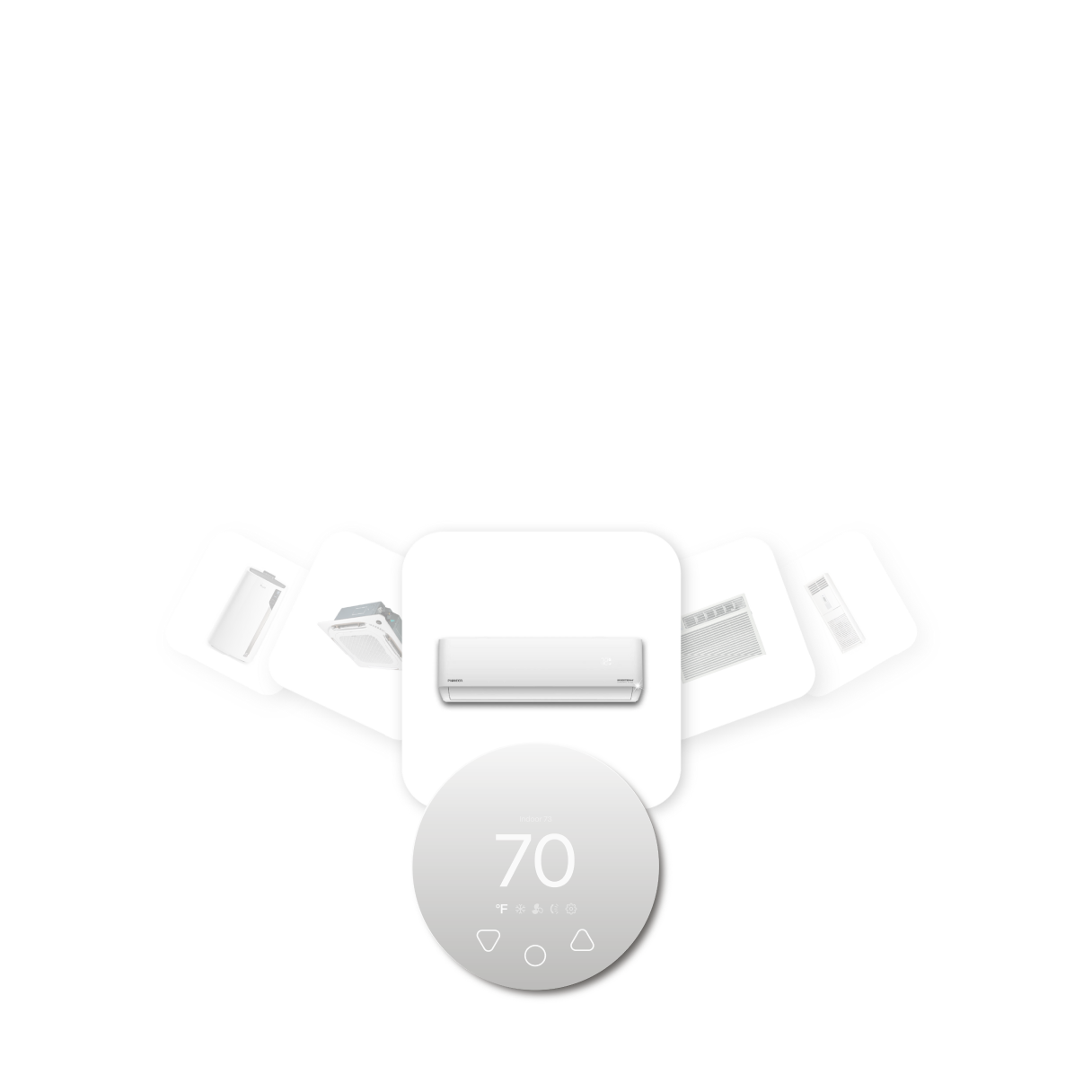
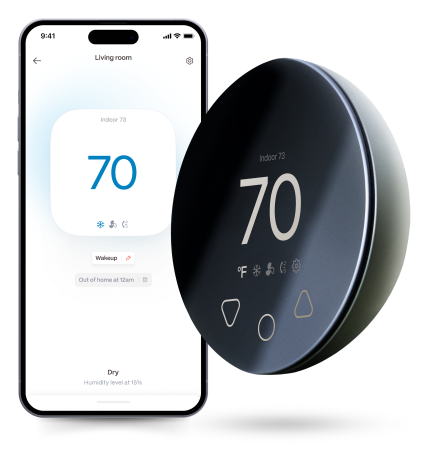
Klima is a smart controller designed specifically for ductless mini-split air conditioners.
Most mini-split systems rely on simple infrared remotes and lack advanced automation. Klima upgrades these systems into fully connected smart home climate devices.
Once installed, Klima connects your mini split to the Boldr Energy app, allowing you to control and monitor your ductless A/C system directly from your smartphone.
Instead of treating your mini split like a standalone appliance, Klima transforms it into an intelligent climate management system that helps improve comfort and reduce energy waste.

Klima’s Smart Features
Klima includes a range of smart home automation tools designed to improve comfort while reducing unnecessary energy use.
1. Remote Access
Klima allows you to control your mini split from anywhere using the Boldr Energy app.
Whether you're across town or traveling internationally, you can instantly adjust temperature settings, turn your ductless A/C system on or off, or check system status.
2. Location-Based Automation
Klima can automatically detects when everyone leaves home.
When the house is empty, it shuts the mini split off to prevent wasted energy. When someone returns, the ductless system turns back on so the home is comfortable.
3. Smart Scheduling
You can schedule your mini split system hour by hour based on your daily routine, with Klima’s Smart Scheduling feature.
Your mini-split runs only when needed, reducing unnecessary energy use while maintaining comfort.
Compatible with all brands of ACs and Mini-Splits
Automate Climate Management
Control remotely
Reduce Energy Consumption
Monitor bills in realtimeKlima - Smart Home Thermostat for Mini-splits, Air Conditioners and Heatpumps
4. Health Monitoring
Klima continuously monitors your mini split system.
If a potential issue appears, the Boldr Energy app alerts you early so problems can be addressed before they become expensive repairs.
5. Household Management
You are able to give other users access to the Boldr Energy app.
Family members or guests can adjust settings or receive full control depending on the permissions you assign.
6. Energy Cost Monitoring
Klima tracks real-time energy usage and predicts your monthly electricity costs.
This insight helps you make smarter decisions about how and when to run your air conditioner.
Smart Home Compatibility
Klima integrates with major smart home platforms including:
-
Apple Home
-
Apple HomeKit
-
Google Home
-
Google Assistant
-
Amazon Alexa
-
Home Assistant
-
SmartThings
This allows for voice control of your ductless A/C.

Conclusion
Air conditioner efficiency ratings like SEER, SEER2, and EER provide a useful way to compare cooling systems and estimate operating costs.
Higher ratings generally mean:
-
Lower electricity consumption
-
Reduced energy bills
-
Better overall efficiency
However, the number on the EnergyGuide sticker doesn't tell the whole story. Installation quality, home insulation, duct performance, and system usage patterns all affect real-world energy consumption.
Smart home climate devices like Klima help bridge that gap by optimizing how your mini split system operates. With automation, remote access, and energy monitoring, Klima helps ensure your air conditioner runs efficiently in everyday conditions.
FAQ
What is a good AC efficiency rating?
For central air conditioners, 14–16 SEER2 meets modern efficiency standards. Systems rated 17–20 SEER2 or higher are considered high efficiency and typically use variable-speed compressors.
What is the difference between SEER and EER?
SEER measures average efficiency across an entire cooling season, while EER measures efficiency at a fixed high-temperature condition (95°F outdoor temperature).
Why was SEER replaced by SEER2?
In 2023, the U.S. Department of Energy introduced SEER2 to better reflect real-world conditions. The new testing standard accounts for higher duct pressure and airflow resistance commonly found in real homes.
Does a higher SEER rating always save money?
Generally yes, but savings depend on factors like climate, electricity rates, and how often the system runs. Higher-efficiency systems usually cost more upfront but reduce long-term operating costs.
Can I improve my AC efficiency without replacing the system?
Yes. Improvements such as:
-
sealing duct leaks
-
maintaining correct refrigerant charge
-
upgrading insulation
-
installing smart controllers like Klima


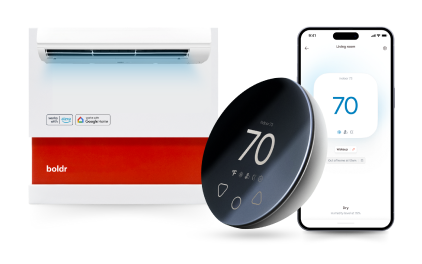
Klima - Smart Home Controller for Mini-splits, Air Conditioners and Heatpumps
Compatible with all brands of ACs and Mini-Splits Automate Climate Management Control remotely Reduce Energy Consumption Monitor bills in realtime
Try NowRecent Articles

Mini-Split Outdoor Unit Clearance 2026 Guide
A mini-split outdoor unit needs air. Lots of it. The condenser pull...
Read More
What Happens if Your Mini-Split Is Too Small?
Most homeowner sizing advice focuses on oversized mini-splits. But ...
Read More
Does a Mini-Split Need a Manual J Load Calculation?
A 500-square-foot room does not automatically need a 12,000 BTU min...
Read More
Signs Your Mini-Split May Have a Refrigerant Leak
A mini-split does not normally “use up” refrigerant the way a car u...
Read More
Mini-Split Minimum Capacity: Why It Matters
When homeowners compare mini-splits, they normally look at the bigg...
Read More