







Heat pump vs mini-split is one of the most commonly searched HVAC questions — and the answer is simpler than most people expect: all residential mini-splits are heat pumps. The confusion arises because "heat pump" describes a technology category, while "mini-split" describes a specific equipment configuration within that category. This guide untangles all of the terminology so you can research, compare, and buy with confidence.
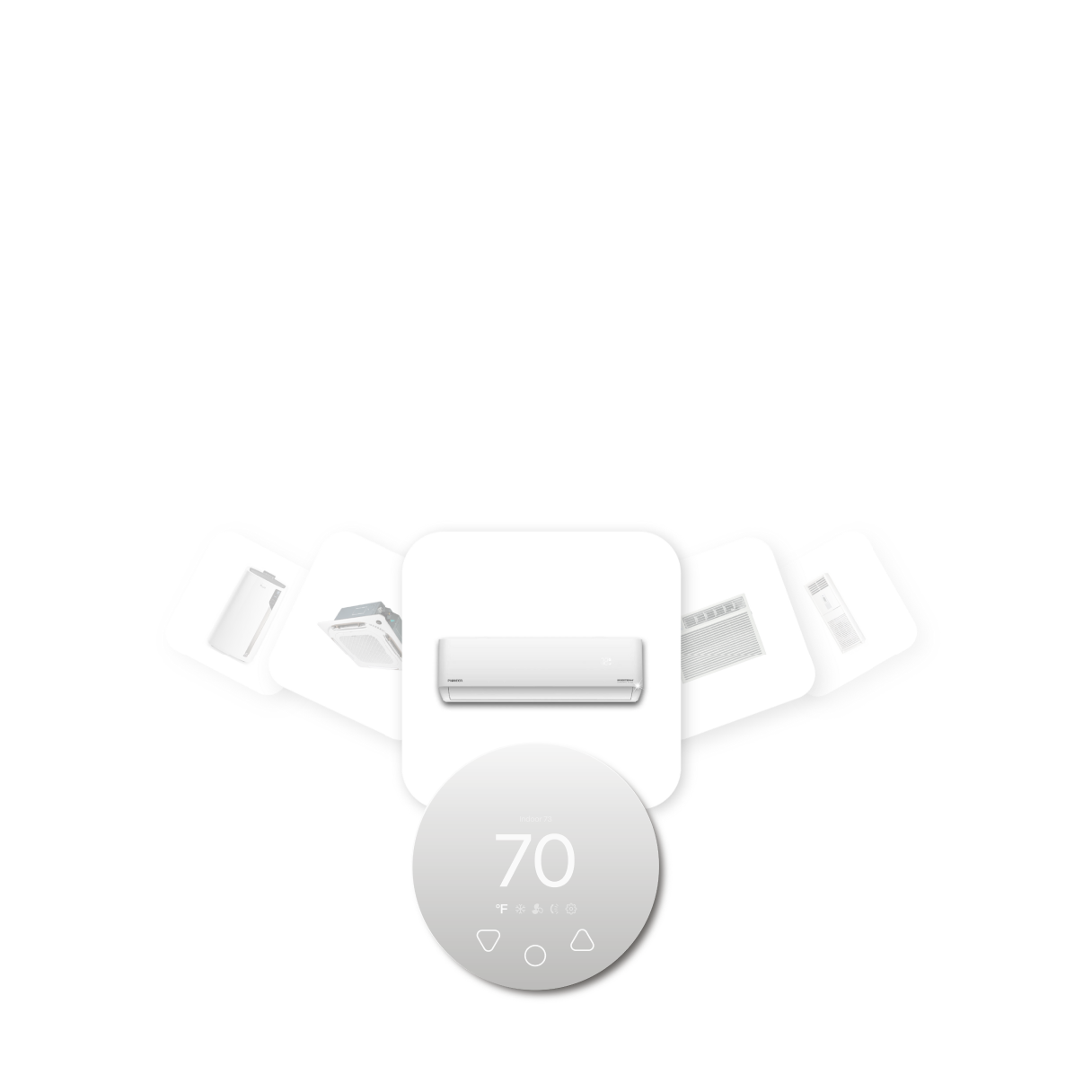
Compatible with all brands of ACs and Mini-Splits
Automate Climate Management
Control remotely
Reduce Energy Consumption
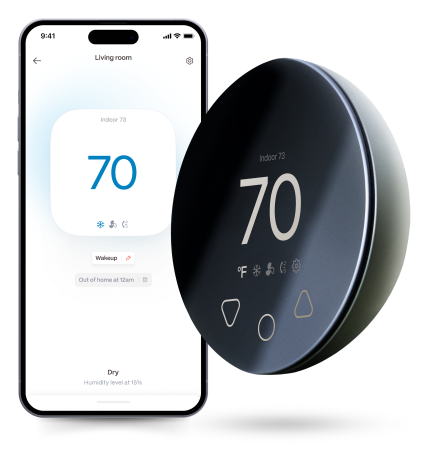
Monitor bills in realtimeKlima - Smart Home Thermostat for Mini-splits, Air Conditioners and Heatpumps
The Short Answer
A mini-split is a type of heat pump. Specifically, it is a ductless, air-source heat pump in a split configuration (separate indoor and outdoor units). When someone says "heat pump," they could mean a mini-split — or they could mean a ducted central air-source heat pump, a geothermal heat pump, or a water-source heat pump. The term "heat pump" is the broad category; "mini-split" is a specific product type within it.
The Full Heat Pump Family
| Type | Heat Source | Ductwork? | Common Application |
|---|---|---|---|
| Mini-split (ductless) | Outdoor air | No | Residential rooms, additions, whole-home zoned |
| Ducted air-source heat pump | Outdoor air | Yes — connects to central duct system | Homes with existing ductwork replacing furnace + AC |
| Geothermal (ground-source) | Ground | Yes (typically) | Whole-home; high efficiency; high upfront cost |
| Water-source heat pump | Water (pond, well, loop) | Yes | Commercial; properties with water access |
| Heat pump water heater | Air in mechanical room | No | Domestic hot water — not space heating |
When People Say "Heat Pump" — What They Usually Mean
In residential HVAC conversations, "heat pump" most commonly refers to a ducted central air-source heat pump — the type that replaces a gas furnace and central AC with a single electric system connected to the existing duct system. This is the system most utility rebate programs discuss when they offer incentives for "air-source heat pumps." A mini-split qualifies under this definition and typically qualifies for the same rebates.
Mini-Split vs Ducted Heat Pump: Key Differences
| Factor | Mini-Split (Ductless) | Ducted Heat Pump (Central) |
|---|---|---|
| Ductwork requirement | None | Requires existing or new duct system |
| Zone control | Room-by-room independent control | Whole home (zone dampers add cost) |
| Best for existing ductwork | No advantage — ductwork not used | Yes — leverage existing infrastructure |
| Best for no ductwork | Yes — ideal application | No — ductwork installation adds $8,000–$15,000 |
| Cold-climate performance | Cold-climate models to −25°C | Cold-climate ducted models also available |
Stay cool and save more. Use code JONES15 to get 15% off your entire order—no strings attached.
Upgrade your comfort with a Klima today.
Frequently Asked Questions
Does a mini-split qualify for heat pump rebates in Canada and the US?
Yes — mini-splits are explicitly listed as eligible equipment in virtually all heat pump rebate programs. In Canada (Greener Homes, provincial programs) and the US (IRA Section 25C), qualifying ductless mini-split heat pumps are eligible for the same incentives as ducted central heat pumps. Confirm your specific model meets the minimum efficiency threshold for the program you are applying to.
Is a mini-split more efficient than a ducted heat pump?
A mini-split eliminates duct losses, which account for 10–30% of energy waste in ducted systems. On rated efficiency alone, comparable units may be similar — but a mini-split delivers its full rated output directly to the room, while a ducted system loses a portion through the duct system. In homes with long duct runs through unconditioned spaces, this makes the mini-split the more efficient real-world choice.
Related reading:
→ Mini-Split vs Ductless Heat Pump: Is There a Difference?
→ Mini-Split vs Central Air for Large Homes
→ Mini-Split Heat Pump COP: What It Means and Why It Matters


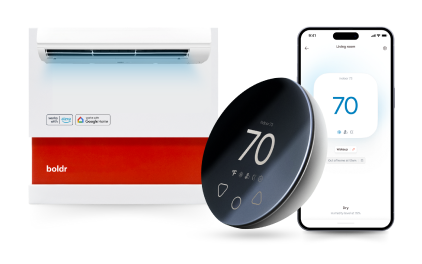
Klima - Smart Home Controller for Mini-splits, Air Conditioners and Heatpumps
Compatible with all brands of ACs and Mini-Splits Automate Climate Management Control remotely Reduce Energy Consumption Monitor bills in realtime
Try NowRecent Articles

Can a Mini-Split Handle 100°F Heat?
When temperatures cross 100°F in Phoenix, Dallas, Las Vegas or Cali...
Read More
Mini-Split for a Bonus Room Over the Garage
In many U.S. homes, there is one room the central HVAC system never...
Read More
Mini-Split Self-Clean Mode: What It Really Does
A button labeled Self Clean sounds impressive. Press it and the min...
Read More
Best Mini-Split Fan Speed: Auto, Low or High?
One of the simplest buttons on a mini-split remote can create a sur...
Read More
Do Mini-Splits Need an ERV or HRV?
A mini-split can heat the house. It can cool the house. It can circ...
Read More