





Quick answer: Per kilowatt-hour, infrared and convection heaters cost the same, because both turn nearly all their electricity into heat. Infrared usually costs less in practice because it warms you directly. You feel comfortable at a lower setting, it reacts fast enough to run only when needed, and it heats just the area you use. Convection is better for evenly heating a closed, well-insulated room for long periods.
"Infrared vs convection" is really a question about where the heat goes. Convection warms the air. Infrared warms you and the surfaces around you. That one difference changes the running cost, the comfort and the right heater for each room.
30% more cost effective than traditional heaters
Smart functions to automate home climate
Control remotely
Maintenance Free
Easy 5 minute installation
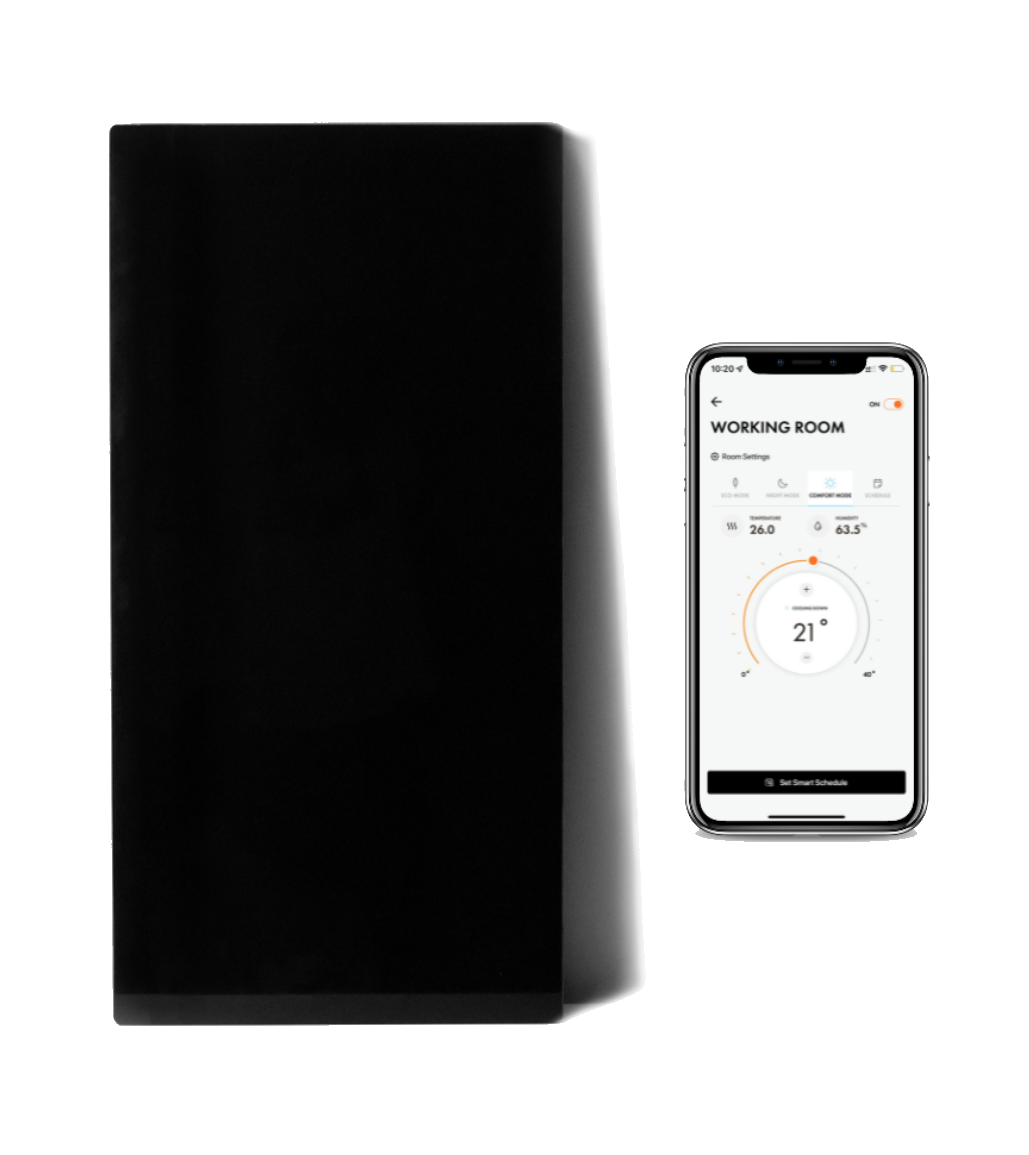
Kelvin - cost effective, smart electric heater
Stay warm and save more. Use code JONES15 to get 15% off your entire order—no strings attached.
Upgrade your comfort with a Kelvin today
Infrared vs convection heaters: side-by-side
|
|
Infrared heater |
Convection heater |
|---|---|---|
|
What it heats |
People, floors, furniture and walls |
The air |
|
Time until you feel warm |
Seconds to a few minutes |
5–20 minutes |
|
Heat distribution |
Even from floor to head height |
Warm at the ceiling, cooler at the floor |
|
Noise |
Silent |
Silent (oil, panel) to noticeable (fan) |
|
Air movement and dust |
Minimal |
Constant circulation, more with a fan |
|
Drafty rooms |
Holds up well, because the warmth is stored in surfaces |
Warm air escapes when doors open |
|
Typical wattage for one room |
450–700 W panel |
1,000–1,500 W |
|
Best for |
Rooms you use for a few hours at a time, drafty spaces, quiet rooms |
Closed, well-insulated rooms heated all day |
How does a convection heater work?
A convection heater warms air over a hot element. Warm air rises, spreads across the ceiling, cools and sinks, and that loop slowly heats the room. Fan heaters push the air faster, while oil-filled radiators and baseboard heaters rely on natural circulation. Convection works well in a sealed room. Its weakness is that heat collects near the ceiling and leaves every time a door opens.
How does an infrared heater work?
An infrared heater gives off radiant energy that passes through the air and is absorbed by whatever it reaches, including you. Those warm surfaces then heat the air around them. Our guide to how infrared heaters work walks through the process step by step.
Which costs less to run: infrared or convection?
Start with the formula: cost per hour = watts ÷ 1,000 × your rate per kWh. At 17¢/kWh:
- 1,500 W convection heater: ~26¢/hour at full power
- 700 W infrared panel (Kelvin Large): ~12¢/hour at full power
Infrared isn't cheaper just because the number is smaller. The 700 W panel draws less because it doesn't need to heat the whole volume of air to make you comfortable.
Worked example: a 150 sq ft home office, used 8 hours a day on weekdays (about 22 days a month)
|
|
1,500 W convection heater |
700 W infrared panel |
|---|---|---|
|
Assumed runtime once the room is warm |
~60% of the time |
~60% of the time |
|
Energy per month |
~158 kWh |
~74 kWh |
|
Cost per month at 17¢/kWh |
~$27 |
~$13 |
Your numbers will depend on insulation, climate and thermostat setting, but this pattern holds: in a room used for part of the day, a correctly sized infrared panel on a schedule uses noticeably less energy than a convection heater large enough to heat the same air.
What size heater do I need for my room?
Common rule of thumb: convection needs about 10 W per sq ft. Infrared panels need about half that, because they don't have to bring all the air up to temperature first. Assuming 7.8 ft ceilings and average insulation:
|
Room size |
Convection |
Infrared (Kelvin) |
|---|---|---|
|
Up to 100 sq ft |
1,000 W |
Standard, 450 W |
|
150 sq ft |
1,500 W |
Large, 700 W |
|
200 sq ft |
2,000 W (two heaters) |
Large, 700 W |
|
300 sq ft |
3,000 W (two circuits) |
Large + Standard, 1,150 W |
|
400 sq ft open plan |
4,000 W |
2 × Large, 1,400 W |
Size up one step for high ceilings, single-pane windows or rooms over an unheated garage.
Infrared heater vs central heat: when does zone heating win?
Central heating warms every room, whether anyone is in it or not. If you spend the day in one room, it's usually cheaper to turn the central thermostat down and heat just that room with an efficient panel. The U.S. Department of Energy estimates you can save up to 10% a year on heating by setting your thermostat back 7–10°F for 8 hours a day.
Zone heating works best for home offices, bedrooms at night, and additions or bonus rooms the central system struggles to reach. Central heating, especially a modern heat pump, is still the cheaper way to keep a whole house warm when everyone is home.
Which should you choose?
Choose infrared if:
- You use the room for a few hours at a time and want warmth quickly.
- The room is drafty or has doors that open often.
- You want silent heat for a bedroom, nursery or office.
- Allergies or dust are a concern, since there's no fan blowing air around.
Choose convection if:
- The room is closed and well insulated, and you heat it all day.
- You need a cheap stopgap for a few weeks.
- You want warm air across a space that infrared can't see directly, such as an L-shaped room.
Stay warm and save more. Use code JONES15 to get 15% off your entire order—no strings attached.
Upgrade your comfort with a Kelvin today
Infrared vs convection FAQ
Is infrared heat better than convection heat?
Infrared is better for quick, targeted comfort in rooms you use part-time and in drafty spaces. Convection is better for steadily warming the air in a closed room. Many homes do best with central heating for the background temperature and infrared panels in the rooms people use most.
Are infrared heaters more efficient than convection heaters?
Both convert almost all of their electricity into heat. Infrared is often more effective because less heat collects at the ceiling or escapes through doors, and people feel warm at a lower air temperature. That's where the savings come from.
Is infrared better than a regular space heater?
Most "regular" space heaters are convection fan heaters. Compared with those, infrared panels are silent, don't blow dust around, warm you faster and use lower wattage for the same room. Fan heaters are cheaper to buy.
Do infrared heaters work in large rooms?
Yes. Use several panels on different walls rather than one big heater, so every seating area is in line of sight of a panel. For example, two Kelvin Large panels cover about 400 sq ft.
Can infrared heaters replace central heating?
In small, well-insulated homes or apartments, a panel in each main room can replace central heating. In larger homes, infrared works best alongside central heat so you can turn the whole-house thermostat down.
Silent infrared heat with smart control
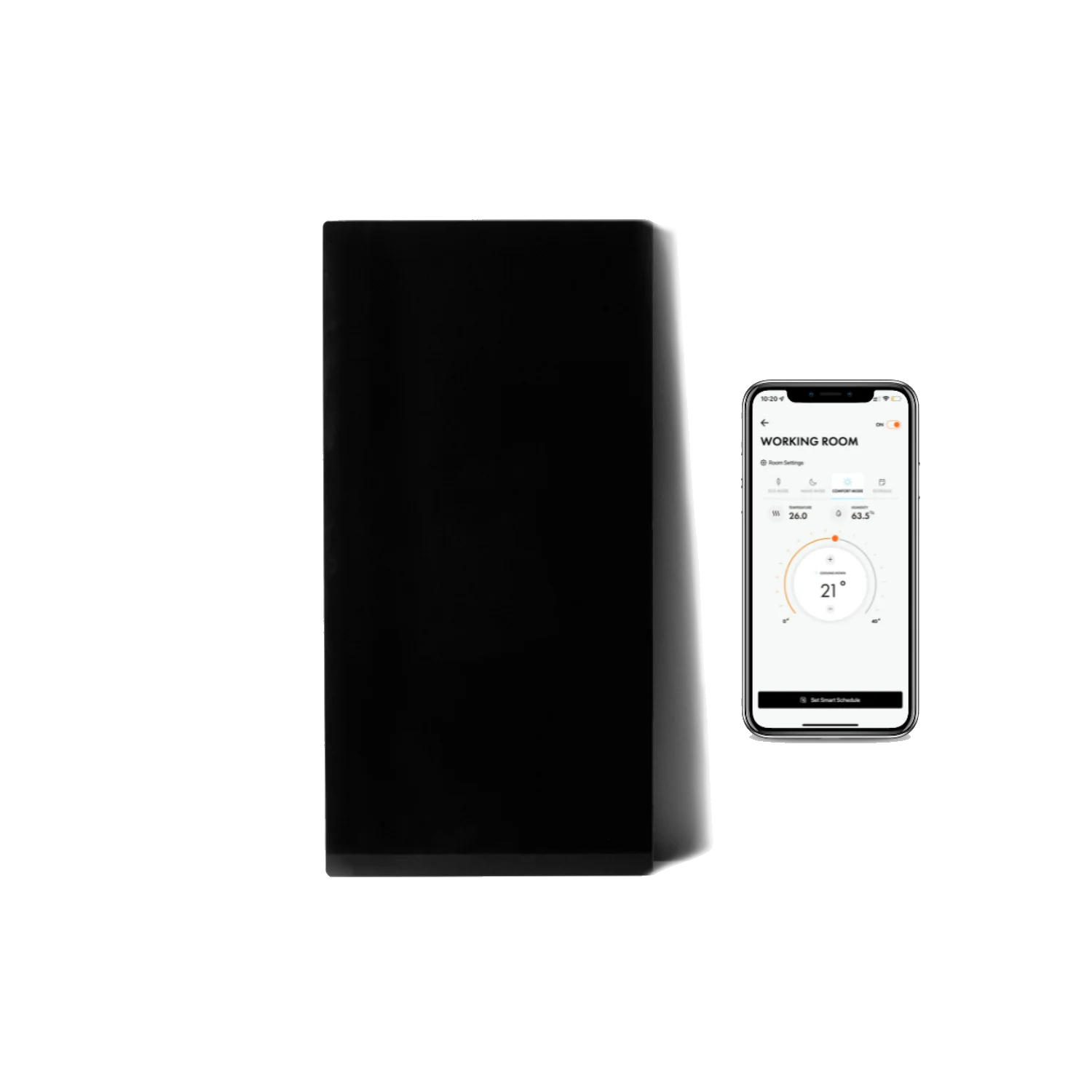
Kelvin comes in 450 W and 700 W sizes and includes a wireless room sensor, schedules, location sensing and cost tracking in the app. It mounts on a wall or stands on the floor, and comes with a 2-year warranty.


Kelvin - cost effective, smart electric heater
30% more cost effective than traditional heaters Smart functions to automate home climate Control remotely Maintenance Free Easy 5 minute installation
Try NowRecent Articles

Mini-Split Outdoor Unit Clearance 2026 Guide
A mini-split outdoor unit needs air. Lots of it. The condenser pull...
Read More
What Happens if Your Mini-Split Is Too Small?
Most homeowner sizing advice focuses on oversized mini-splits. But ...
Read More
Does a Mini-Split Need a Manual J Load Calculation?
A 500-square-foot room does not automatically need a 12,000 BTU min...
Read More
Signs Your Mini-Split May Have a Refrigerant Leak
A mini-split does not normally “use up” refrigerant the way a car u...
Read More
Mini-Split Minimum Capacity: Why It Matters
When homeowners compare mini-splits, they normally look at the bigg...
Read More