





A mini-split uses between 85 and 720 kWh of electricity per month depending on its size, how many hours per day it runs, and whether it is heating or cooling. For a typical 12,000 BTU unit running 8 hours per day in cooling mode, monthly electricity costs range from $22 to $38 in most US and Canadian markets. This guide breaks down the real numbers so you can estimate your own usage accurately.
Mini-Split Electricity Use by Size
| Unit Size (BTU) | Average Wattage | Monthly kWh (8 hrs/day) | Monthly kWh (12 hrs/day) |
|---|---|---|---|
| 6,000 | 350–500W | 85–120 kWh | 130–180 kWh |
| 9,000 | 500–750W | 120–180 kWh | 180–270 kWh |
| 12,000 | 700–1,000W | 170–240 kWh | 250–360 kWh |
| 18,000 | 1,000–1,500W | 240–360 kWh | 360–540 kWh |
| 24,000 | 1,400–2,000W | 340–480 kWh | 500–720 kWh |
| 36,000 | 2,000–3,000W | 480–720 kWh | 720–1,080 kWh |
Monthly Cost by Electricity Rate
Multiply your monthly kWh by your electricity rate to get your actual monthly cost. Electricity rates vary significantly by region.
| Region / Rate | Typical $/kWh | 12K BTU Monthly Cost (8 hrs/day) |
|---|---|---|
| Quebec (low) | CAD $0.09 | CAD $15–$22 |
| US South (low) | $0.11 | $19–$26 |
| US National Average | $0.16 | $27–$38 |
| Ontario / BC | CAD $0.13–$0.17 | CAD $22–$41 |
| California | $0.28–$0.35 | $48–$84 |
| Hawaii (highest) | $0.40+ | $68–$96 |
Why Mini-Splits Use Less Electricity Than Other Systems
Two technologies make mini-splits significantly more efficient than traditional HVAC:
Inverter compressor: Traditional air conditioners and heat pumps cycle on and off at full power. Mini-splits use inverter-driven compressors that adjust speed continuously — ramping up for rapid cooling or heating, then slowing down to maintain the setpoint with minimal energy. This typically reduces energy use by 30–50% compared to traditional fixed-speed systems.
No duct losses: Central HVAC systems lose 15–25% of their heated or cooled air through leaks and heat transfer in the ductwork, especially when ducts run through unconditioned attics or crawl spaces. Mini-splits deliver conditioned air directly into the room — no ductwork, no losses.
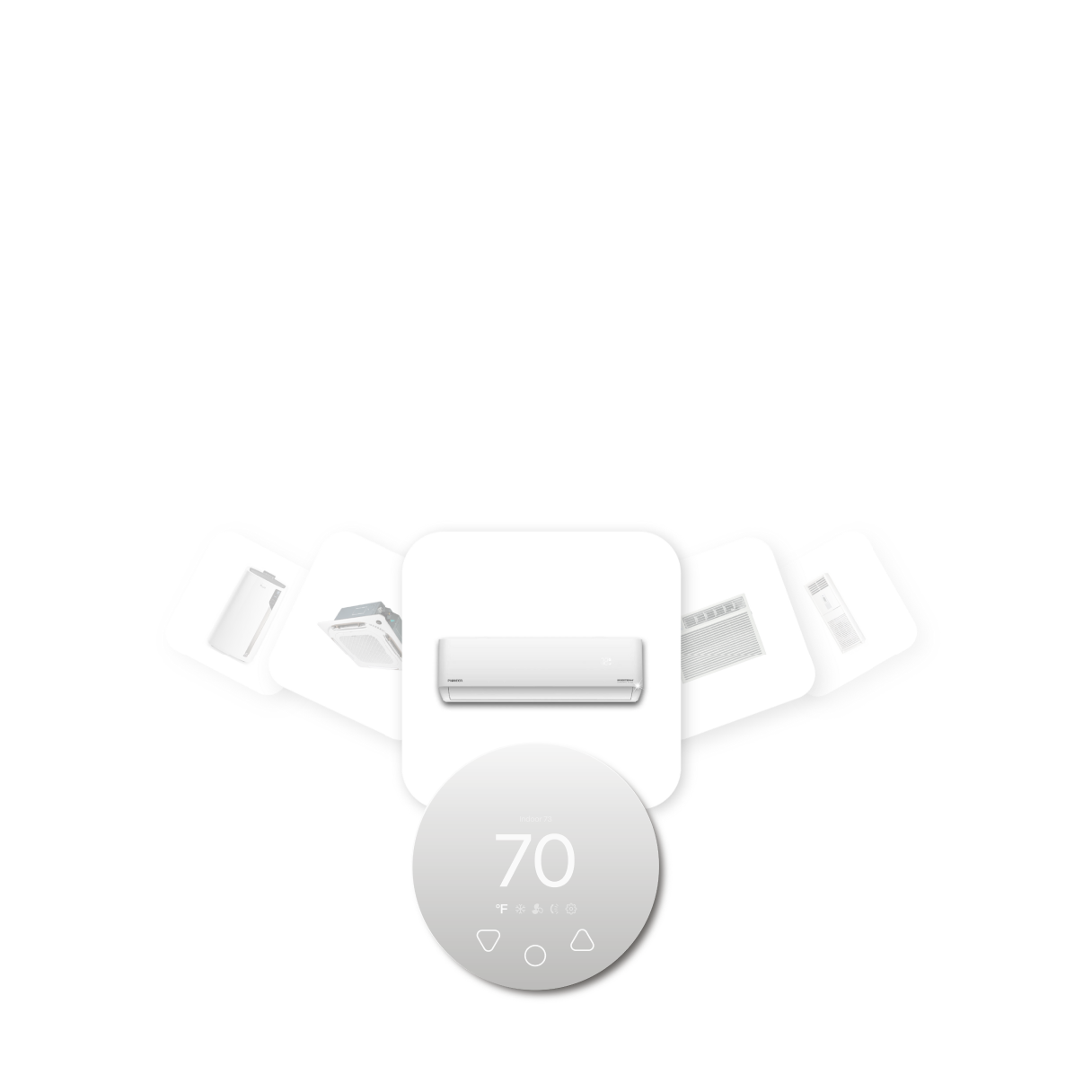
Compatible with all brands of ACs and Mini-Splits
Automate Climate Management
Control remotely
Reduce Energy Consumption
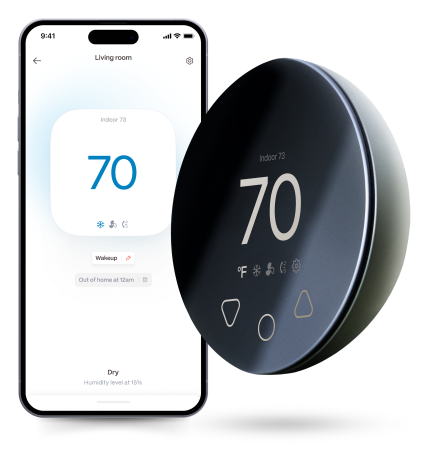
Monitor bills in realtimeKlima - Smart Home Thermostat for Mini-splits, Air Conditioners and Heatpumps
Heating vs Cooling Electricity Use
Heating typically uses 20–40% more electricity per hour than cooling for the same room. This is because:
- Winter temperature differences (indoor vs outdoor) are usually larger than summer differences, requiring more work from the heat pump.
- Defrost cycles consume extra energy during cold-weather operation.
- Heat pump efficiency decreases as outdoor temperatures drop, so colder regions see higher electricity use for the same heating output.
If you plan to use a mini-split as your primary heat source in a cold climate, expect winter electricity bills to be noticeably higher than summer bills.
How to Calculate Your Exact Electricity Cost
Use this formula:
(Average wattage ÷ 1,000) × hours per day × 30 days × your electricity rate = monthly cost
Example: A 12,000 BTU unit at 800W average, running 8 hours/day at $0.16/kWh:
(800 ÷ 1,000) × 8 × 30 × $0.16 = $30.72 per month
Tips to Reduce Mini-Split Electricity Use
- Clean the filter every 2–4 weeks. A dirty filter forces the unit to work harder, increasing energy use by 5–15%.
- Set a consistent temperature. Inverter systems are most efficient when maintaining a steady setpoint. Avoid large temperature swings.
- Use sleep mode at night. Sleep mode reduces fan speed and gradually adjusts the temperature, lowering nighttime energy use.
- Close doors and windows. Leaking conditioned air forces the system to run longer.
- Turn it off when you leave. For longer absences, turn the unit off rather than leaving it running in an empty room.
- Schedule annual maintenance. A professional tune-up ensures the system runs at peak efficiency.
Frequently Asked Questions
Does a mini-split use a lot of electricity?
No. A 12,000 BTU mini-split uses about as much electricity as a hair dryer on medium setting — but runs at much lower power most of the time thanks to the inverter compressor. Monthly electricity costs are typically $22–$38 in average US markets.
How much electricity does a mini-split use per hour?
A 12,000 BTU mini-split typically uses 700–1,000 watts per hour when running at full capacity. At part-load (most of the time), actual consumption is often 300–600 watts per hour. This is significantly less than a 1,500W space heater and roughly half the hourly consumption of a typical window AC.
Is it cheaper to run a mini-split 24/7 or turn it on and off?
In most cases, running the mini-split 24/7 at a moderate setpoint uses similar or less energy than cycling it on and off. Inverter compressors operate most efficiently at steady part-load. For longer absences (more than a few hours), turning the unit off saves energy.


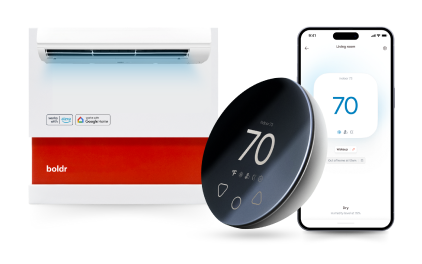
Klima - Smart Home Controller for Mini-splits, Air Conditioners and Heatpumps
Compatible with all brands of ACs and Mini-Splits Automate Climate Management Control remotely Reduce Energy Consumption Monitor bills in realtime
Try NowRecent Articles

Mini-Split Outdoor Unit Clearance 2026 Guide
A mini-split outdoor unit needs air. Lots of it. The condenser pull...
Read More
What Happens if Your Mini-Split Is Too Small?
Most homeowner sizing advice focuses on oversized mini-splits. But ...
Read More
Does a Mini-Split Need a Manual J Load Calculation?
A 500-square-foot room does not automatically need a 12,000 BTU min...
Read More
Signs Your Mini-Split May Have a Refrigerant Leak
A mini-split does not normally “use up” refrigerant the way a car u...
Read More
Mini-Split Minimum Capacity: Why It Matters
When homeowners compare mini-splits, they normally look at the bigg...
Read More