





A mini-split is one of the most practical ways to heat and cool a garage because it does not require ductwork, runs on a dedicated electrical circuit, and can handle both summer heat and winter cold from a single unit. Whether you use your garage as a workshop, gym, home office, or hobby space, this guide covers how to size the system, what to budget, and which factors matter most for garage installations.
Why a Mini-Split Works Well for Garages
Garages present unique challenges that mini-splits handle better than most alternatives. They are typically uninsulated or poorly insulated, separated from the home's central HVAC system, and have large door openings that create significant temperature swings. A mini-split is a self-contained system that operates independently — you can heat or cool the garage without affecting the rest of the house, and the system can be turned off completely when the garage is not in use.
Compared to portable AC units, space heaters, or garage-specific propane heaters, a mini-split is more efficient, safer (no combustion or carbon monoxide risk), quieter, and provides both heating and cooling year-round.
Sizing Guide: What BTU Do You Need?
Garages require more BTU per square foot than standard rooms because of poor insulation, high ceilings, concrete floors that absorb and radiate heat, and the large garage door opening. A good rule of thumb for garages is 25–30 BTU per square foot for uninsulated garages and 20–25 BTU per square foot for insulated garages.
| Garage Type | Typical Size | Uninsulated BTU Need | Insulated BTU Need | Recommended Unit |
|---|---|---|---|---|
| 1-car garage | 200–300 sq ft | 6,000–9,000 | 5,000–7,500 | 9,000 BTU |
| 2-car garage | 400–600 sq ft | 12,000–18,000 | 10,000–15,000 | 12,000–18,000 BTU |
| 3-car garage | 600–900 sq ft | 18,000–27,000 | 15,000–22,500 | 24,000 BTU |
How Much Does a Garage Mini-Split Cost?
Total installed cost for a single-zone garage mini-split typically falls between $1,500 and $4,500 in the US and $2,000 to $5,500 CAD in Canada. The range depends on the brand, BTU size, and complexity of the electrical and mounting work.
| Cost Component | Typical Range (USD) |
|---|---|
| Mini-split unit (equipment) | $700–$2,000 |
| Professional installation labor | $500–$1,500 |
| Electrical work (dedicated circuit, breaker) | $200–$600 |
| Mounting bracket and supplies | $50–$150 |
| Total installed | $1,500–$4,500 |
DIY mini-split kits (such as those from MrCool) can reduce costs by eliminating the installation labor. A DIY kit for a 12,000–18,000 BTU system typically costs $1,200–$2,500, though you will still need an electrician for the dedicated circuit if one does not already exist.
Insulation: Should You Insulate Before Installing?
Adding insulation to your garage before installing a mini-split is one of the best investments you can make for both comfort and efficiency. An uninsulated garage with a steel door can lose heat so quickly that even a properly sized mini-split will work significantly harder than necessary.
At minimum, consider insulating the garage door (DIY kits cost $50–$150) and sealing gaps around the door frame and any windows. If your budget allows, insulating the walls (R-13 fiberglass batts) and ceiling (R-30 or higher) will dramatically reduce both heating and cooling loads, potentially allowing you to use a smaller — and less expensive — mini-split unit.
Installation Considerations for Garages
Electrical Requirements
A mini-split requires a dedicated electrical circuit. A 12,000 BTU unit typically needs a 20-amp, 240-volt circuit. An 18,000 or 24,000 BTU unit may need a 30-amp circuit. If your garage electrical panel does not have a spare breaker slot, an electrician will need to add one — this is usually a straightforward job but adds $200–$400 to the total cost.
Indoor Unit Placement
Mount the indoor unit high on the wall opposite the garage door. This position allows the air to flow across the longest dimension of the space. Avoid mounting the unit directly above workbenches where sawdust, metal shavings, or paint spray could be drawn into the filter — or plan for more frequent filter cleaning if this is unavoidable.
Outdoor Unit Placement
Place the outdoor unit on a concrete pad or wall bracket outside the garage, ideally on the same wall as the indoor unit to minimize the line set length. Keep at least 12 inches of clearance on all sides for airflow. In areas with heavy snowfall, consider an elevated wall bracket or a snow guard to prevent drifts from blocking the unit.
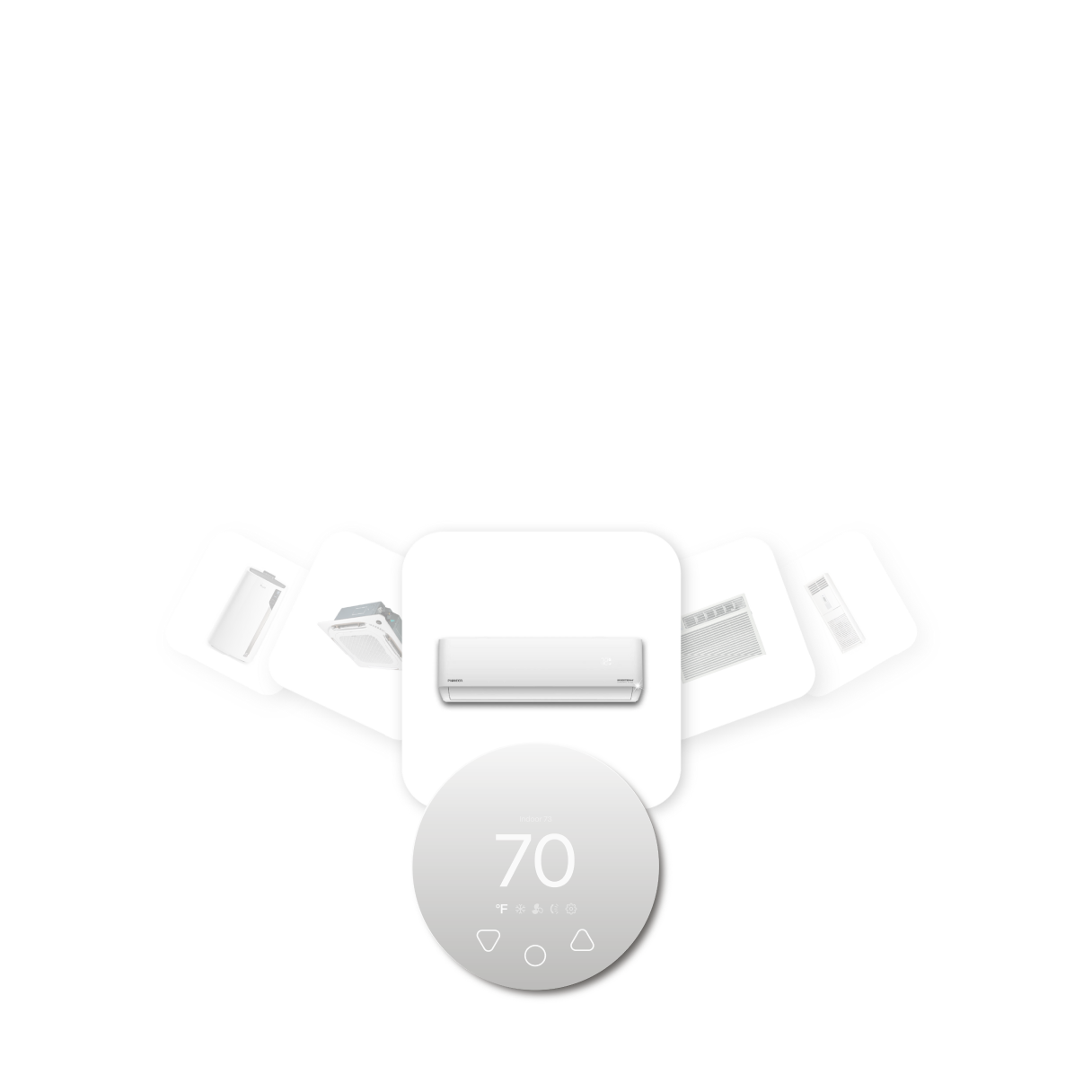
Compatible with all brands of ACs and Mini-Splits
Automate Climate Management
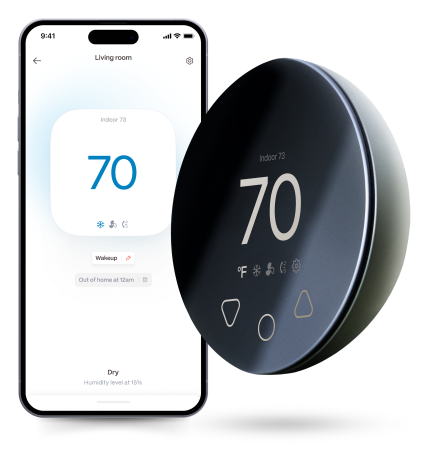
Control remotely
Reduce Energy Consumption
Monitor bills in realtimeKlima - Smart Home Thermostat for Mini-splits, Air Conditioners and Heatpumps
Best Mini-Split Features for Garages
When choosing a garage mini-split, several features are particularly valuable for this type of space.
Wide operating temperature range. Look for units rated to operate in cooling mode at high outdoor temperatures (up to 115°F / 46°C) and in heating mode at very low temperatures. Garages in the sun belt need high-temp cooling capacity; garages in the north need low-temp heating capability.
Washable filters. Garages are dustier than living spaces. A unit with easily removable, washable mesh filters will require less maintenance cost over time.
Auto-restart after power outage. Many garages are on circuits that occasionally trip. A mini-split with auto-restart will resume operation at its previous settings after a power interruption without needing manual intervention.
Timer and scheduling. If you use the garage at specific times (weekday evenings, weekend mornings), a built-in timer lets you pre-condition the space before you arrive. Some models also support WiFi control, allowing you to turn the system on remotely from your phone.
Frequently Asked Questions
Can I use a mini-split in a garage that is not insulated?
Yes, but you will need a larger unit and it will work harder (using more electricity) than it would in an insulated garage. Insulating the garage door alone can reduce the heat load by 15–20%.
Is a mini-split better than a garage heater?
For year-round use, yes — a mini-split provides both heating and cooling. Gas or propane garage heaters are heating-only and produce combustion byproducts that require ventilation. A mini-split produces no emissions inside the space and requires no venting.
Will opening the garage door constantly make the mini-split useless?
Frequently opening a large garage door will let conditioned air escape and force the mini-split to work harder. If you open the door often, the unit will maintain comfort while it is closed but will struggle to keep up while the door is open. This is true of any heating or cooling system, not just mini-splits.
Do I need a permit to install a mini-split in my garage?
Permit requirements vary by municipality. Many jurisdictions require an electrical permit for the new dedicated circuit. Some also require a mechanical permit for the refrigerant work. Check with your local building department or ask your HVAC installer — reputable contractors will pull permits as part of the job.


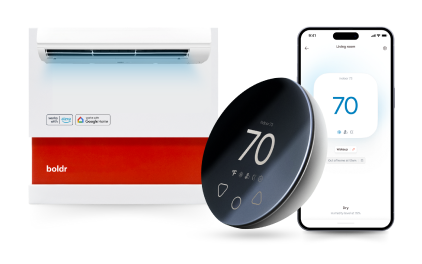
Klima - Smart Home Controller for Mini-splits, Air Conditioners and Heatpumps
Compatible with all brands of ACs and Mini-Splits Automate Climate Management Control remotely Reduce Energy Consumption Monitor bills in realtime
Try NowRecent Articles

Mini-Split Outdoor Unit Clearance 2026 Guide
A mini-split outdoor unit needs air. Lots of it. The condenser pull...
Read More
What Happens if Your Mini-Split Is Too Small?
Most homeowner sizing advice focuses on oversized mini-splits. But ...
Read More
Does a Mini-Split Need a Manual J Load Calculation?
A 500-square-foot room does not automatically need a 12,000 BTU min...
Read More
Signs Your Mini-Split May Have a Refrigerant Leak
A mini-split does not normally “use up” refrigerant the way a car u...
Read More
Mini-Split Minimum Capacity: Why It Matters
When homeowners compare mini-splits, they normally look at the bigg...
Read More