







A mini-split heat pump is a ductless heating and cooling system that uses the same technology found in all heat pumps — transferring heat between indoor and outdoor air using a refrigerant cycle — but delivers it without ductwork through a wall-mounted indoor unit. Nearly every modern mini-split sold in North America is a heat pump, meaning it can cool your home in summer and heat it in winter from a single system.
With an estimated 80,000+ monthly searches in the US and Canada, "mini-split heat pump" is one of the most researched terms in the HVAC space. This guide covers everything homeowners want to know: how the technology works, what it costs, which brands lead the market, and how to decide if a mini-split heat pump is the right choice for your home.
How a Mini-Split Heat Pump Works
A mini-split heat pump operates on the same principle as a refrigerator — but in reverse. It does not generate heat through combustion (like a furnace) or electrical resistance (like a baseboard heater). Instead, it moves existing heat from one place to another using a compressor, refrigerant, and two heat exchangers.
In cooling mode, the system absorbs heat from indoor air through the evaporator coil in the indoor unit, transports that heat through refrigerant lines to the outdoor unit, and releases it into the outside air through the condenser coil. The indoor air, now cooled, is circulated back into the room.
In heating mode, the process reverses. A component called a reversing valve redirects the refrigerant flow. The outdoor coil now absorbs heat from the outdoor air — even in cold temperatures — and the indoor coil releases that heat into the room. This is why heat pumps are so efficient: they move heat rather than creating it, delivering 2 to 4 times more heating energy than the electrical energy they consume.
For a detailed breakdown of the refrigerant cycle and components, see our companion article: How Does a Mini-Split Work?
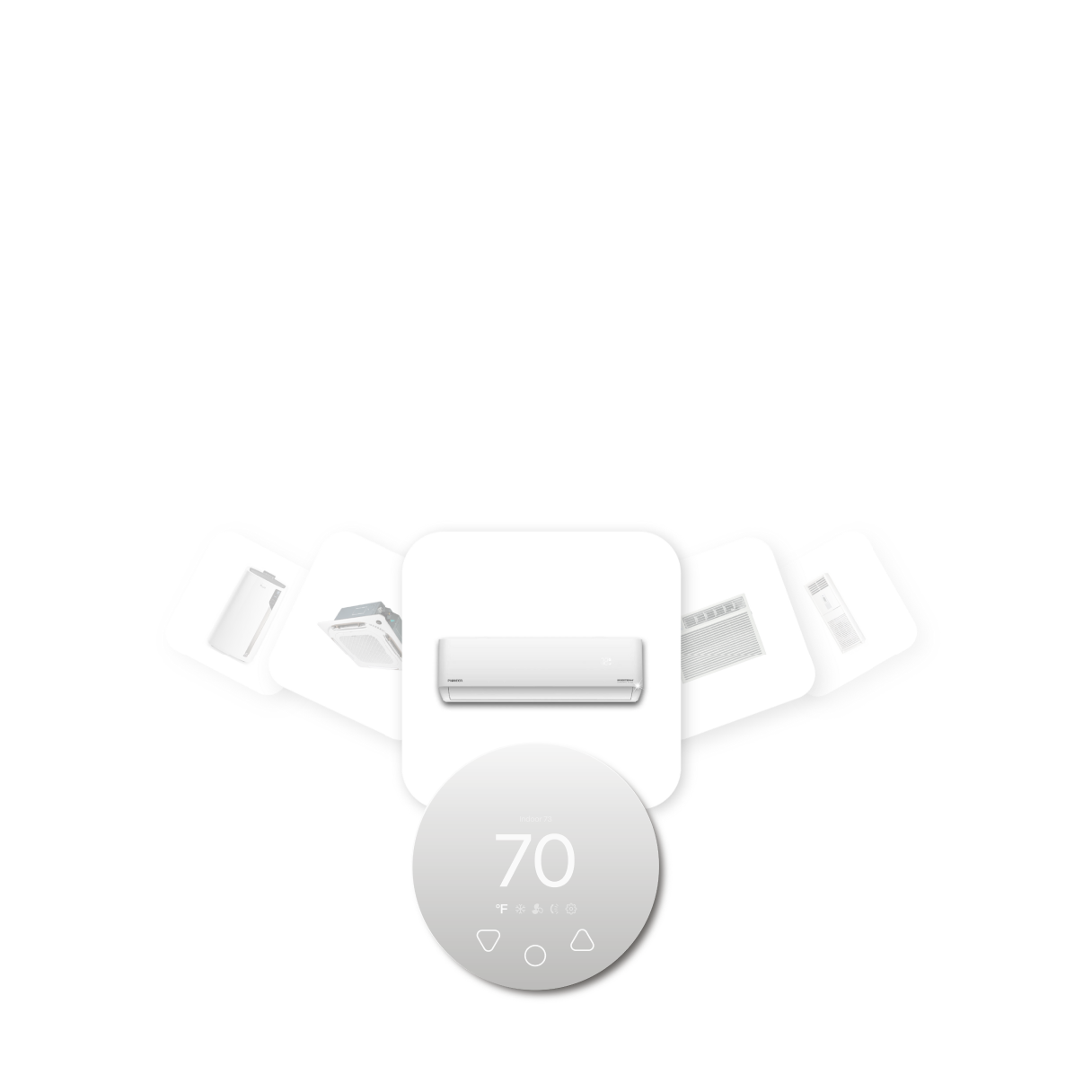
Compatible with all brands of ACs and Mini-Splits
Automate Climate Management
Control remotely
Reduce Energy Consumption
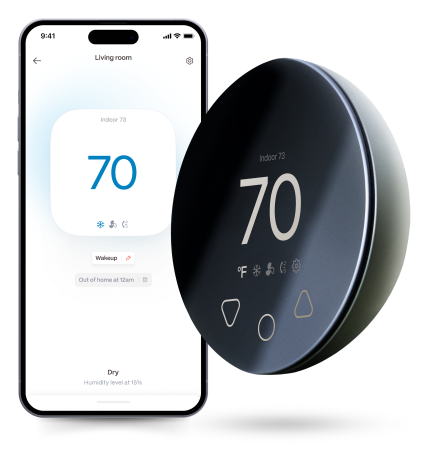
Monitor bills in realtimeKlima - Smart Home Thermostat for Mini-splits, Air Conditioners and Heatpumps
How Efficient Are Mini-Split Heat Pumps?
Mini-split heat pumps achieve high efficiency through two technologies: the inverter-driven compressor and the ductless delivery method.
The inverter compressor adjusts its speed continuously rather than cycling on and off. At low demand, it runs slowly and uses very little electricity. This variable-speed operation means the system spends most of its time at partial load — which is its most efficient operating range.
The ductless design eliminates the energy losses associated with ductwork. According to Energy Star, duct losses in traditional forced-air systems can waste over 25% of the energy used for heating and cooling.
Efficiency Ratings Explained
| Rating | What It Measures | Mini-Split Range | Central System Range |
|---|---|---|---|
| SEER2 | Seasonal cooling efficiency | 18–42 | 13–21 |
| HSPF2 | Seasonal heating efficiency | 9–15 | 7–10 |
| COP (at 47°F) | Heating efficiency at rated temp | 3.0–5.0 | 2.5–3.5 |
A COP (Coefficient of Performance) of 3.0 means the system delivers 3 watts of heat for every 1 watt of electricity consumed. For comparison, an electric baseboard heater has a COP of exactly 1.0 — it converts electricity to heat one-for-one. A gas furnace at 95% efficiency converts 0.95 units of fuel energy into heat but also requires electricity to run the blower. The heat pump's ability to move heat rather than generate it is fundamentally why it is more efficient.
Mini-Split Heat Pump Costs (2026)
Single-Zone System
| Component | US Cost (USD) | Canada Cost (CAD) |
|---|---|---|
| Equipment (9,000–12,000 BTU) | $700–$2,000 | $900–$2,500 |
| Professional installation | $800–$2,000 | $1,000–$2,500 |
| Electrical (dedicated circuit) | $200–$600 | $250–$700 |
| Total single-zone installed | $1,500–$4,500 | $2,000–$5,500 |
Multi-Zone System
| Configuration | US Cost (USD) | Canada Cost (CAD) |
|---|---|---|
| 2-zone system | $3,500–$7,000 | $4,500–$8,500 |
| 3-zone system | $5,000–$10,000 | $6,500–$12,000 |
| 4-zone system | $7,000–$14,000 | $9,000–$17,000 |
These ranges reflect typical market pricing and vary by brand, region, and installation complexity. Premium brands (Mitsubishi, Daikin, Fujitsu) tend to cost more than value brands (MrCool, Gree, Pioneer), though they often carry longer warranties and higher efficiency ratings.
Top Mini-Split Heat Pump Brands
The mini-split market includes both premium and value-oriented brands. Each has strengths that serve different buyer needs. The following overview reflects industry consensus from HVAC trade publications and installer surveys — not a ranking or endorsement of one brand over another.
Mitsubishi Electric
Mitsubishi is widely regarded as the market leader in mini-split heat pumps in North America. Their Hyper-Heating (H2i) technology is frequently cited in HVAC trade press for its cold-climate performance, rated to heat at temperatures as low as −13°F (−25°C). Mitsubishi offers an extensive product range from single-zone residential to large commercial systems and has one of the largest installer networks in the US and Canada.
Fujitsu
Fujitsu's Halcyon and XLTH product lines are popular among HVAC contractors for their reliability and competitive pricing relative to Mitsubishi. The XLTH series is specifically designed for cold climates and has been a strong performer in Canadian markets, according to industry reviews. Fujitsu is frequently recommended by installers as a high-quality option at a moderate price point.
Daikin
Daikin is the world's largest HVAC manufacturer by revenue and has expanded aggressively in the North American mini-split market. Their Fit and Aurora product lines offer strong efficiency ratings, and Daikin's manufacturing scale gives them pricing advantages in some markets. The Aurora line is their cold-climate offering.
LG
LG's mini-split heat pumps are known for their quiet operation and smart connectivity features. LG's Art Cool line, which includes mirror-finish and picture-frame indoor units, appeals to design-conscious homeowners. LG offers solid mid-range performance across most climate zones.
MrCool
MrCool has carved out a niche in the DIY market with pre-charged line set kits that allow homeowners to install a mini-split without hiring an HVAC contractor. Their DIY line is among the best-selling mini-split systems on Amazon and home improvement retailers. Trade-offs include a smaller installer support network and less established long-term reliability data compared to premium brands.
Other Notable Brands
Carrier, Bosch, Gree, Pioneer, Samsung, Panasonic, Midea, Hisense, Senville, and Cooper & Hunter all offer mini-split heat pump systems in the North American market. Each brand has dedicated articles in our brand review series.
Mini-Split Heat Pump vs Other Heating Systems
| System | Fuel Source | Efficiency | Heating + Cooling? | Ductwork Required? |
|---|---|---|---|---|
| Mini-split heat pump | Electricity | COP 2.5–5.0 | Yes | No |
| Central heat pump | Electricity | COP 2.0–4.0 | Yes | Yes |
| Gas furnace | Natural gas | 80–98% AFUE | No (needs separate AC) | Yes |
| Electric baseboard | Electricity | COP 1.0 (100%) | No | No |
| Oil furnace | Heating oil | 80–90% AFUE | No | Yes |
| Propane furnace | Propane | 80–96% AFUE | No | Yes |
The mini-split heat pump's combination of high efficiency, no ductwork requirement, and year-round heating and cooling makes it particularly attractive for homes without existing ductwork, room additions, and older homes where installing ducts would be impractical or prohibitively expensive.
Is a Mini-Split Heat Pump Right for You?
A mini-split heat pump is a strong fit if your home lacks ductwork and adding it would be expensive or impractical, you want both heating and cooling from a single system, you are currently heating with electric baseboard, oil, or propane and want to reduce costs, you need zone-based temperature control (different temperatures in different rooms), you are adding a room, converting a garage, or finishing a basement, or you live in a climate where temperatures rarely drop below −10°F (−23°C) or you are willing to keep a backup heat source for extreme cold.
A mini-split heat pump may not be the best primary choice if your home already has a high-efficiency ducted system in good condition, you live in an extreme cold climate (below −20°F regularly) and want to eliminate all other heat sources, or you need to heat a very large open-plan space (over 2,000 sq ft) where ductwork distribution would be more effective.
Frequently Asked Questions
Is a mini-split the same thing as a heat pump?
A mini-split is a type of heat pump. The term "mini-split" refers to the ductless split-system form factor (indoor unit + outdoor unit, no ducts). The term "heat pump" refers to the technology (reversible refrigerant cycle that can heat and cool). Nearly all modern mini-splits are heat pumps.
How much does a mini-split heat pump save on heating bills?
Savings depend on what you are replacing. Homeowners switching from electric baseboard heat typically see 30–50% reductions in heating electricity, according to utility program data. Switching from oil or propane furnaces can save 25–40% on annual heating costs, though this depends on local fuel and electricity prices.
How long does a mini-split heat pump last?
With regular maintenance — filter cleaning every 2–4 weeks and annual professional service — a mini-split heat pump typically lasts 15 to 20 years. The compressor is the most critical component, and the inverter compressor technology used in modern units is designed for long-life operation with minimal wear.
Can a mini-split heat pump heat an entire house?
Yes, with a multi-zone system. One outdoor unit can connect to multiple indoor units (typically 2 to 5), each serving a different room or zone. For whole-home coverage, a multi-zone system is sized to the total heating and cooling load. Many homeowners in the US and Canada use multi-zone mini-splits as their sole HVAC system.
Do mini-split heat pumps qualify for tax credits or rebates?
In the US, qualifying heat pumps are eligible for federal tax credits under the Inflation Reduction Act (up to $2,000 for the most efficient models). Many state and utility programs offer additional rebates. In Canada, the Canada Greener Homes Grant and provincial programs offer rebates for heat pump installations. Check with your local utility and government energy programs for current incentives in your area.


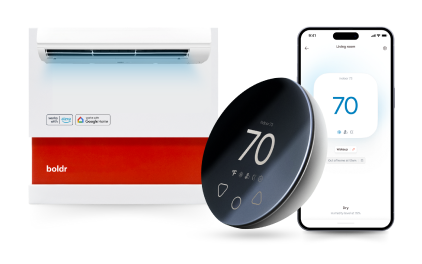
Klima - Smart Home Controller for Mini-splits, Air Conditioners and Heatpumps
Compatible with all brands of ACs and Mini-Splits Automate Climate Management Control remotely Reduce Energy Consumption Monitor bills in realtime
Try NowRecent Articles

Mini-Split for Home Office: Best Quiet Options 2026
A mini-split is one of the best climate control solutions for a hom...
Read More
Mini-Split Noise Levels: What's Normal and What's Not
Most sounds a mini-split makes are completely normal — and knowing ...
Read More
Mini-Split Inverter Compressor: What It Does and Why It Matters
The inverter compressor is the core technology that makes modern mi...
Read More
Mini-Split vs Window Unit: Total Cost Over 10 Years
Over a 10-year period, a mini-split almost always costs less than t...
Read More
Mini-Split Lifespan: How to Make Yours Last 20+ Years
A mini-split's rated lifespan is 15–20 years for premium brands — b...
Read More