







Ice forming on the outdoor unit of a mini-split during winter heating mode is normal and expected — but there are specific patterns that signal a real problem. Knowing the difference between routine frost accumulation and abnormal ice build-up prevents unnecessary service calls and protects you from missing a genuine fault. This guide covers both scenarios clearly.
Compatible with all brands of ACs and Mini-Splits
Automate Climate Management
Control remotely
Reduce Energy Consumption
Monitor bills in realtimeKlima - Smart Home Thermostat for Mini-splits, Air Conditioners and Heatpumps
When Outdoor Unit Ice Is Normal
During heating mode in cold, humid conditions, frost naturally accumulates on the outdoor coil as the refrigerant inside absorbs heat from the cold air outside. The surface temperature of the outdoor coil can drop to −10°C or lower, causing moisture in the ambient air to freeze on the fins. This is completely normal and the system handles it automatically:
- The mini-split runs an automatic defrost cycle every 30–90 minutes
- During defrost, refrigerant flow briefly reverses to warm the outdoor coil
- The outdoor fan stops to allow the coil to warm faster
- Steam rises from the outdoor unit — this is melted frost evaporating
- Water drips from the outdoor unit base — this is the melted frost draining
- After 3–10 minutes, defrost completes and normal heating resumes
When Outdoor Unit Ice Indicates a Problem
| Ice Pattern | What It Means | Action |
|---|---|---|
| Light frost on coil fins — clears every 30–90 min | Normal defrost cycle operation | None — system is working correctly |
| Thick solid ice covering most of the coil, not clearing after 2+ hours | Defrost cycle not triggering or not completing — sensor fault, defrost board fault, or refrigerant issue | Turn unit off; call technician |
| Ice on refrigerant lines (copper pipes) between units | Missing or damaged line set insulation; low refrigerant causes abnormally cold suction line | Check insulation on lines; if insulation intact, call technician for refrigerant check |
| Outdoor unit frozen solid — fan blades encased in ice | Unit buried in snowdrift or ice dam from roof drip; physical installation issue | Turn off unit; carefully clear ice and snow manually; improve drainage away from unit |
| Ice builds up in cooling mode (summer) | Not expected — dirty coil or low refrigerant causing abnormal condensation | Clean coil; call technician if persists |
Protecting the Outdoor Unit in Winter
- Elevation: The outdoor unit should be elevated above the expected maximum snow depth in your area — on wall brackets or a raised pad. Snow burying the base blocks the drain and can encase the unit in ice.
- Avoid roof drip zones: Never install an outdoor unit directly below a roof edge where snowmelt or ice dams drip onto the unit — falling ice can damage the fan blade and heavy drips cause accelerated icing.
- Do not cover the unit: Mini-splits run in heating mode through winter and need unobstructed airflow. A full cover prevents defrost operation and traps moisture. A top-only visor to deflect falling debris is acceptable for some models — verify with your manufacturer.
Frequently Asked Questions
Should I manually defrost my outdoor unit?
Only if the unit is physically buried in snow or encased in ice from a rooftop ice dam — and only with warm water or carefully brushing off loose snow. Never use an ice pick, shovel, or heat gun near the outdoor coil. For normal operational frost (the light icing that accumulates between defrost cycles), leave it alone — the system handles it automatically.
My outdoor unit is making a loud noise during defrost — is that normal?
Yes — the reversing valve switch at the start and end of a defrost cycle produces a loud thud or clunk, and the refrigerant flowing in the reverse direction creates an audible gurgling or rushing sound. This lasts 3–10 minutes and is completely normal. Steam and dripping water from the unit during this period are also normal.
Related reading:
→ Mini-Split Not Heating? 8 Common Causes and Fixes
→ Mini-Split Frozen Up in Summer: Why and How to Fix It
→ Do Mini-Splits Work in Cold Weather?


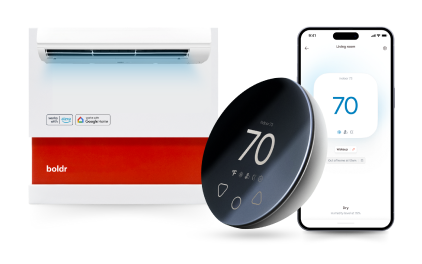
Klima - Smart Home Controller for Mini-splits, Air Conditioners and Heatpumps
Compatible with all brands of ACs and Mini-Splits Automate Climate Management Control remotely Reduce Energy Consumption Monitor bills in realtime
Try NowRecent Articles

Mini-Split Outdoor Unit Clearance 2026 Guide
A mini-split outdoor unit needs air. Lots of it. The condenser pull...
Read More
What Happens if Your Mini-Split Is Too Small?
Most homeowner sizing advice focuses on oversized mini-splits. But ...
Read More
Does a Mini-Split Need a Manual J Load Calculation?
A 500-square-foot room does not automatically need a 12,000 BTU min...
Read More
Signs Your Mini-Split May Have a Refrigerant Leak
A mini-split does not normally “use up” refrigerant the way a car u...
Read More
Mini-Split Minimum Capacity: Why It Matters
When homeowners compare mini-splits, they normally look at the bigg...
Read More