






A mini-split's efficiency changes significantly between summer and winter — not because the equipment changes, but because the outdoor conditions that determine how hard the refrigerant circuit has to work change dramatically. Understanding seasonal efficiency helps you set realistic expectations for your electricity bill and explains why the same mini-split costs different amounts to run in January vs July.
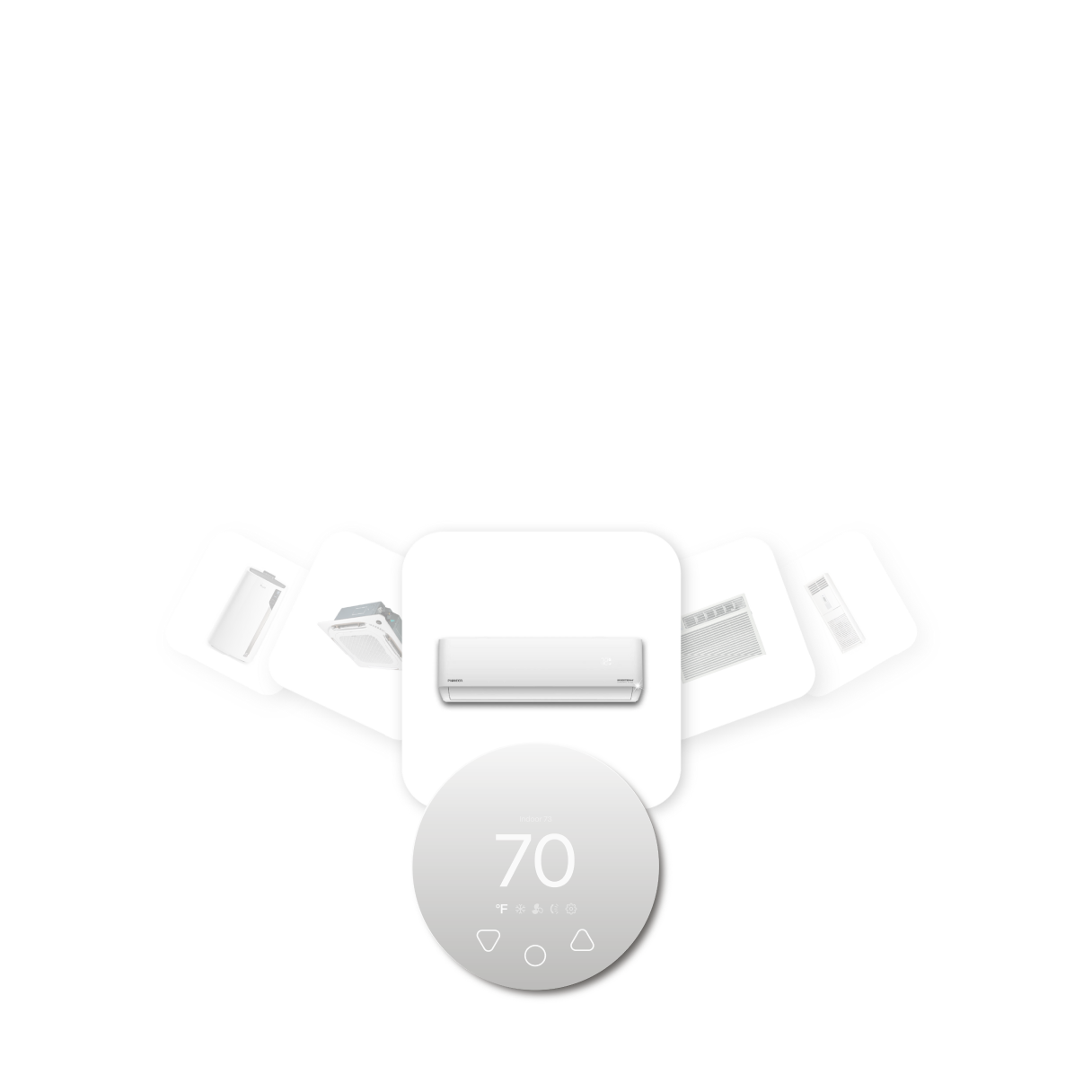
Compatible with all brands of ACs and Mini-Splits
Automate Climate Management
Control remotely
Reduce Energy Consumption
Monitor bills in realtimeKlima - Smart Home Thermostat for Mini-splits, Air Conditioners and Heatpumps
Why Efficiency Changes by Season
In summer (cooling mode): The outdoor unit must reject heat from your home into outdoor air. When outdoor air is hot (95°F / 35°C), the temperature difference the refrigerant circuit must overcome is large — the system works harder and efficiency (SEER) drops below the rated value. On mild 75°F days, efficiency is closer to or above rated values.
In winter (heating mode): The outdoor unit must extract heat from cold outdoor air. When outdoor air is very cold (5°F / −15°C), there is less available heat to extract and the compressor works harder — COP and efficiency drop. On mild 40°F days, efficiency is near or above rated values.
Efficiency at Different Seasonal Conditions
| Condition | Outdoor Temp | Cooling (SEER2 Equiv.) | Heating COP |
|---|---|---|---|
| Cool summer morning | 75°F / 24°C | Above rated | N/A |
| Hot summer afternoon | 95°F / 35°C | Below rated | N/A |
| Mild autumn / spring | 47°F / 8°C (rated condition) | Rated value | 3.5–4.5 |
| Cold winter day | 17°F / −8°C | N/A | 2.0–3.0 |
| Very cold winter day | 0°F / −18°C | N/A | 1.5–2.0 (cold-climate model) |
SEER2 and HSPF2 as Seasonal Averages
SEER2 and HSPF2 are specifically designed to account for this seasonal variation. They calculate the average efficiency over a full season across a range of representative operating conditions — not just at one ideal temperature. A SEER2 of 20 means the system delivers 20 BTU of cooling per watt-hour of electricity on average across the entire cooling season, even though efficiency is higher on mild days and lower on the hottest days.
Practical Implications
- January electricity bills will be higher than October bills for the same indoor temperature setpoint — not because something is wrong, but because cold outdoor temperatures reduce heating COP.
- The hottest August days cost more to cool than mild June days — reduced efficiency in extreme heat plus higher cooling load both contribute.
- Shoulder seasons (spring and fall) are the most efficient periods — moderate outdoor temperatures allow the system to operate near or above rated efficiency.
Stay cool and save more. Use code JONES15 to get 15% off your entire order—no strings attached.
Upgrade your comfort with a Klima today.
Frequently Asked Questions
My electricity bill spiked in January — is my mini-split malfunctioning?
Not necessarily — January is the month with the lowest outdoor temperatures, meaning the lowest heating COP. A 12,000 BTU mini-split that uses 800W on average in October may use 1,100–1,300W in January because the compressor works harder to extract heat from colder air. This is expected behaviour, not a malfunction. Compare your current kWh usage to the same month last year (or manufacturer performance curves) rather than to the previous month.
Related reading:
→ How Efficient Is a Mini-Split in Winter? Real Numbers
→ Mini-Split Heat Pump COP: What It Means and Why It Matters
→ Mini-Split HSPF Rating: What It Means for Heating Costs


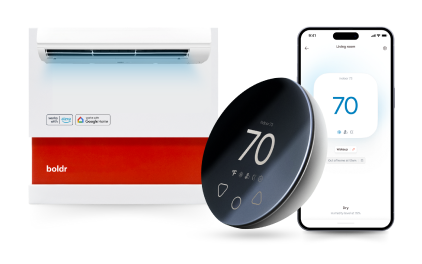
Klima - Smart Home Controller for Mini-splits, Air Conditioners and Heatpumps
Compatible with all brands of ACs and Mini-Splits Automate Climate Management Control remotely Reduce Energy Consumption Monitor bills in realtime
Try NowRecent Articles

Mini-Split Outdoor Unit Clearance 2026 Guide
A mini-split outdoor unit needs air. Lots of it. The condenser pull...
Read More
What Happens if Your Mini-Split Is Too Small?
Most homeowner sizing advice focuses on oversized mini-splits. But ...
Read More
Does a Mini-Split Need a Manual J Load Calculation?
A 500-square-foot room does not automatically need a 12,000 BTU min...
Read More
Signs Your Mini-Split May Have a Refrigerant Leak
A mini-split does not normally “use up” refrigerant the way a car u...
Read More
Mini-Split Minimum Capacity: Why It Matters
When homeowners compare mini-splits, they normally look at the bigg...
Read More