







A mini-split and wood-burning appliance can work together, but the two heat sources need to be coordinated.
A stove may make the room around it extremely warm while bedrooms and distant spaces remain cold. The nearby mini-split can then sense that the home is warm and reduce its heating output—even when other rooms still need heat.
Compatible with all brands of ACs and Mini-Splits
Automate Climate Management
Control remotely
Reduce Energy Consumption
Monitor bills in realtimeKlima - Smart Home Thermostat for Mini-splits, Air Conditioners and Heatpumps
Keep the Mini-Split Away From Direct Stove Heat
Avoid positioning the indoor head or separate temperature sensor:
- Directly above the stove
- Beside the chimney
- In the path of radiant heat
- Near a hot ceiling pocket
- Where smoke or ash enters the intake
The mini-split should measure representative room conditions rather than the hottest part of the house.
Can the Mini-Split Circulate Stove Heat?
Fan operation may help mix air within an open room.
It will not reliably distribute heat through:
- Closed bedroom doors
- Several corridors
- Multiple floors
- Thick walls
- Separate wings of a house
A ceiling fan or doorway transfer fan may improve circulation, but airflow planning should respect fire-safety and building requirements.
Use the Mini-Split as Backup Heat
A practical strategy is to set the mini-split several degrees below the desired stove-heated temperature.
For example:
- Desired stove comfort: 72°F
- Mini-split backup setting: 66°F to 68°F
The mini-split then supplies heat when the fire burns down or the homeowner is away.
The correct setback depends on the house, climate and risk of frozen plumbing.
Avoid Extreme Setbacks
Do not turn the mini-split completely off during severe weather without considering:
- Bedrooms
- Bathrooms
- Exterior-wall plumbing
- Basements
- Overnight stove burnout
- Time away from home
Wood heat requires active fuel management. The mini-split can provide more consistent background protection.
Can the Mini-Split Cool While the Stove Burns?
Running cooling against an active stove wastes energy and can create severe temperature differences.
Check for:
- Auto mode
- Cooling schedules
- Voice-assistant routines
- Another household member changing the mode
During heating season, use Heat mode rather than an automatic mode that might respond unpredictably to the hot stove room.
What About a Pellet Stove?
Pellet stoves offer more controlled output than traditional wood stoves but still create a concentrated heat source.
The same principles apply:
- Keep sensors away from direct heat.
- Maintain background heat in remote rooms.
- Avoid opposing heating and cooling commands.
- Follow ventilation and combustion-safety requirements.
Carbon Monoxide Safety
A mini-split recirculates indoor air and does not remove carbon monoxide.
Combustion appliances require correct installation, chimney maintenance and suitable carbon-monoxide alarms. A mini-split should never be treated as a ventilation or combustion-safety device.
Watch Indoor Humidity
Wood heating can coincide with dry indoor conditions during winter.
Measure humidity before adding a humidifier. Excessive moisture can condense on cold windows and building surfaces.
Do not place a humidifier where mist can enter the mini-split.
Frequently Asked Questions
Should the mini-split fan run while the stove is on?
It may help mix air in the same room, but it will not replace a properly designed heat-distribution system.
Can stove heat damage the mini-split?
Excessive direct heat, smoke and ash can affect sensors, plastics and internal cleanliness.
Should I use Auto mode?
Heat mode is generally more predictable when another heat source is operating.
Can the mini-split take over automatically when the fire dies?
It can when left in Heat mode with an appropriate backup setpoint.


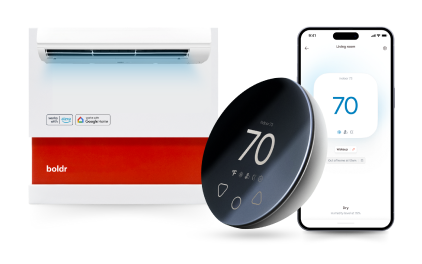
Klima - Smart Home Controller for Mini-splits, Air Conditioners and Heatpumps
Compatible with all brands of ACs and Mini-Splits Automate Climate Management Control remotely Reduce Energy Consumption Monitor bills in realtime
Try NowRecent Articles

Can You Install a Mini-Split in a Laundry Room?
A laundry room can become one of the hottest and most humid spaces ...
Read More
Mini-Splits in Rooms With Vaulted Ceilings
A room with a vaulted ceiling cannot be sized or controlled in the ...
Read More
Using a Mini-Split With a Wood Stove or Fireplace in 2026
A mini-split and wood-burning appliance can work together, but the ...
Read More
Repair or Replace Your Mini-Split? A Practical 2026 Guide
A failed mini-split does not always need to be replaced. A blocked ...
Read More
Mini-Split for 2-Car Garage: Sizing and Best Options
A two-car garage is one of the most common spaces where homeowners ...
Read More