







A failed mini-split does not always need to be replaced.
A blocked drain, damaged sensor or failed remote may justify a straightforward repair. A major refrigerant leak or compressor failure on an older system can be more difficult to justify financially.
The decision should be based on the complete system—not merely its age.
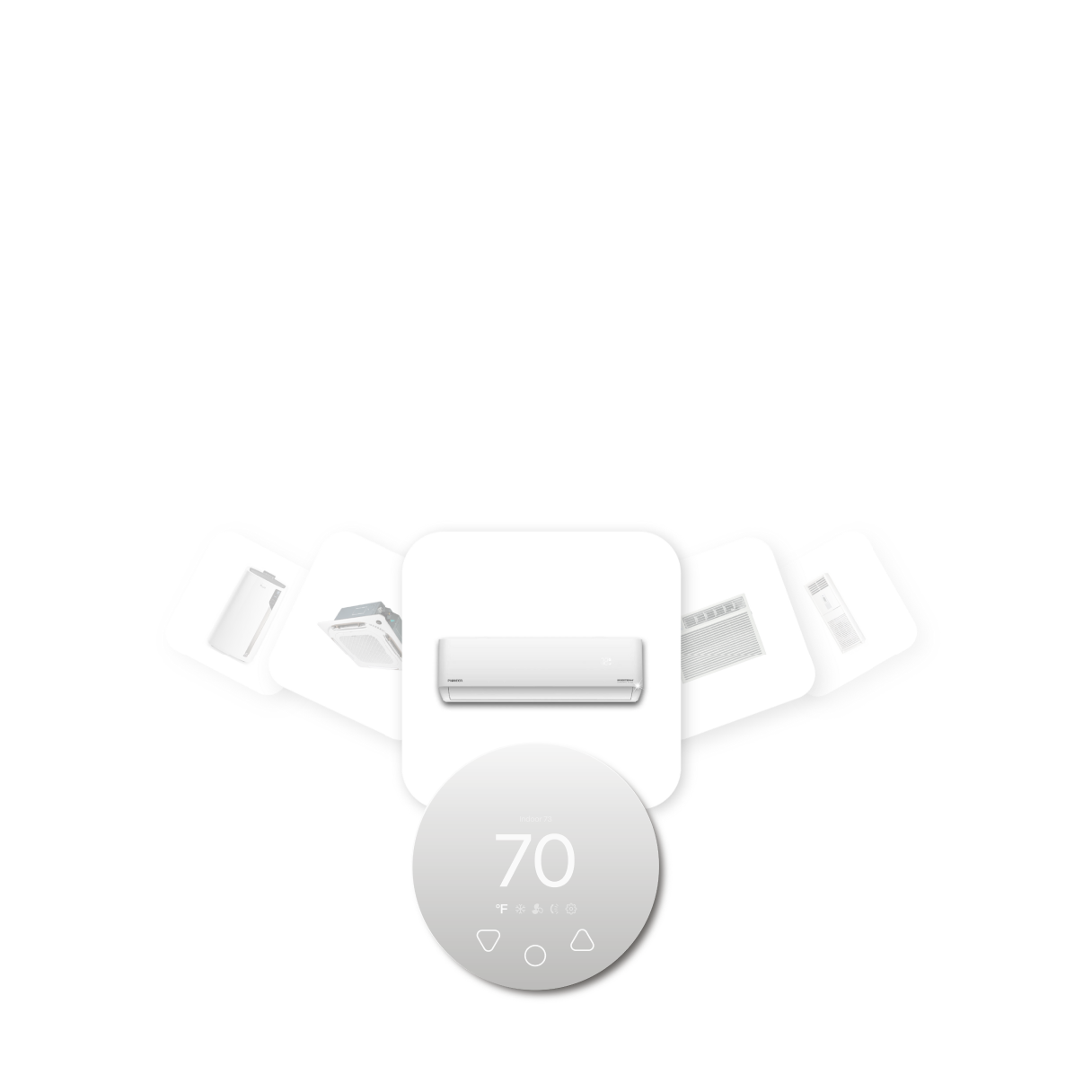
Compatible with all brands of ACs and Mini-Splits
Automate Climate Management
Control remotely
Reduce Energy Consumption
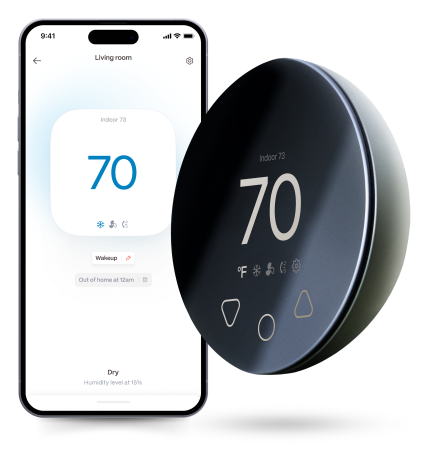
Monitor bills in realtimeKlima - Smart Home Thermostat for Mini-splits, Air Conditioners and Heatpumps
Start With a Professional Diagnosis
Do not approve a replacement before confirming what actually failed.
Ask the technician to identify:
- The failed component
- What caused the failure
- The total repair price
- Whether refrigerant is required
- Whether other components are deteriorating
- What warranty applies to the repair
- How long replacement parts may take
- Whether the same fault is likely to return
A vague diagnosis such as “the system is old” is not enough to make an informed decision.
When a Repair Usually Makes Sense
Repair may be reasonable when:
- The equipment is relatively young.
- The problem is isolated.
- Replacement parts are readily available.
- The refrigerant circuit is intact.
- The system was performing well before the failure.
- The repair carries a useful warranty.
- The equipment still suits the room.
- There have been few previous repairs.
Examples can include a remote-control problem, sensor fault, condensate blockage or replaceable fan motor.
When Replacement Deserves Serious Consideration
Replacement may make more sense when:
- The compressor has failed.
- The indoor or outdoor coil has a major leak.
- Parts are no longer available.
- Several boards or motors have failed.
- The system repeatedly loses refrigerant.
- It no longer heats adequately in local winter conditions.
- The unit is substantially oversized or undersized.
- Repair cost is a large percentage of replacement cost.
- The system has a long history of expensive faults.
ENERGY STAR advises homeowners to consider replacement when heating and cooling equipment is more than about ten years old or requires frequent repairs, although actual service life varies considerably by equipment and installation.
Consider the Entire Multi-Zone System
Replacing one indoor head on a multi-zone system may not be simple.
The new head must be compatible with:
- The existing outdoor unit
- Refrigerant type
- Control protocol
- Pipe sizes
- Approved equipment combinations
- Available outdoor-unit capacity
If one component is obsolete, replacing the complete connected system may be necessary.
Refrigerant Type Is Only One Factor
An older refrigerant does not automatically make equipment unusable.
Existing systems can generally continue to be serviced with legally available refrigerant and suitable replacement parts. Refrigerants should not be mixed or substituted casually because equipment is designed around specific pressures, lubricants and components.
Ask whether the repair includes:
- Finding the source of the leak
- Repairing the leak
- Pressure testing
- Evacuation
- Correct recharging
- A follow-up leak warranty
Repeatedly adding refrigerant without repairing a leak is not a lasting solution.
Compare Operating Performance
Replacement may offer improved:
- Low-temperature heating
- Minimum output
- Sound performance
- efficiency
- Humidity control
- Controls
- Warranty coverage
DOE’s cold-climate heat-pump programme highlights newer systems designed to retain greater heating capacity and efficiency at temperatures below 32°F.
That improvement matters most when the old system struggles in winter. It may matter less when the unit serves a lightly used room in a mild climate.
Do Not Ignore Installation Quality
A premium replacement can still perform poorly when:
- It is incorrectly sized.
- The refrigerant charge is wrong.
- Airflow is obstructed.
- The drain is poorly routed.
- The outdoor unit recirculates its own air.
- The room sensor is badly positioned.
Ask whether the replacement proposal corrects the cause of the original system’s problems.
Calculate the Real Replacement Cost
A replacement quote may include more than equipment.
Confirm whether it covers:
- Removal and disposal
- New refrigerant lines
- Electrical changes
- Wall repair
- Condensate work
- Permits
- New mounting hardware
- Line-set covers
- Commissioning
- Labour warranty
A low equipment price does not represent the final installed cost.
Frequently Asked Questions
Is a ten-year-old mini-split worth repairing?
Possibly. Consider the specific failure, repair history, part availability and installed replacement cost.
Should a leaking mini-split be replaced?
A repairable flare or connection leak differs from a severely corroded coil. Ask where the leak is and whether the repair can be warranted.
Can only the outdoor unit be replaced?
Sometimes, but the new outdoor unit must be an approved match for the existing indoor equipment.
Does a new mini-split automatically reduce electricity bills?
Not automatically. Savings depend on the equipment, sizing, installation, weather and usage.


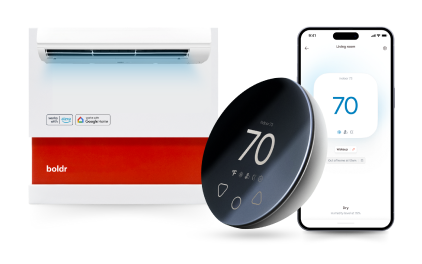
Klima - Smart Home Controller for Mini-splits, Air Conditioners and Heatpumps
Compatible with all brands of ACs and Mini-Splits Automate Climate Management Control remotely Reduce Energy Consumption Monitor bills in realtime
Try NowRecent Articles

Can You Install a Mini-Split in a Laundry Room?
A laundry room can become one of the hottest and most humid spaces ...
Read More
Mini-Splits in Rooms With Vaulted Ceilings
A room with a vaulted ceiling cannot be sized or controlled in the ...
Read More
Using a Mini-Split With a Wood Stove or Fireplace in 2026
A mini-split and wood-burning appliance can work together, but the ...
Read More
Repair or Replace Your Mini-Split? A Practical 2026 Guide
A failed mini-split does not always need to be replaced. A blocked ...
Read More
Mini-Split for 2-Car Garage: Sizing and Best Options
A two-car garage is one of the most common spaces where homeowners ...
Read More