




Quick answer: A space heater is worth it if you spend most of your time in one or two rooms and can turn the central heating down everywhere else. The main pros are low upfront cost, fast targeted warmth and lower bills from zone heating. The main cons are higher running costs if you try to heat a whole house, plus fire risk from portable models used carelessly.
Space heaters can cut your heating bill, or they can add to it. The difference comes down to the type you buy, the room you put it in and how you control it. Here are the honest pros and cons, a type-by-type comparison and a quick way to decide.
30% more cost effective than traditional heaters
Smart functions to automate home climate
Control remotely
Maintenance Free
Easy 5 minute installation
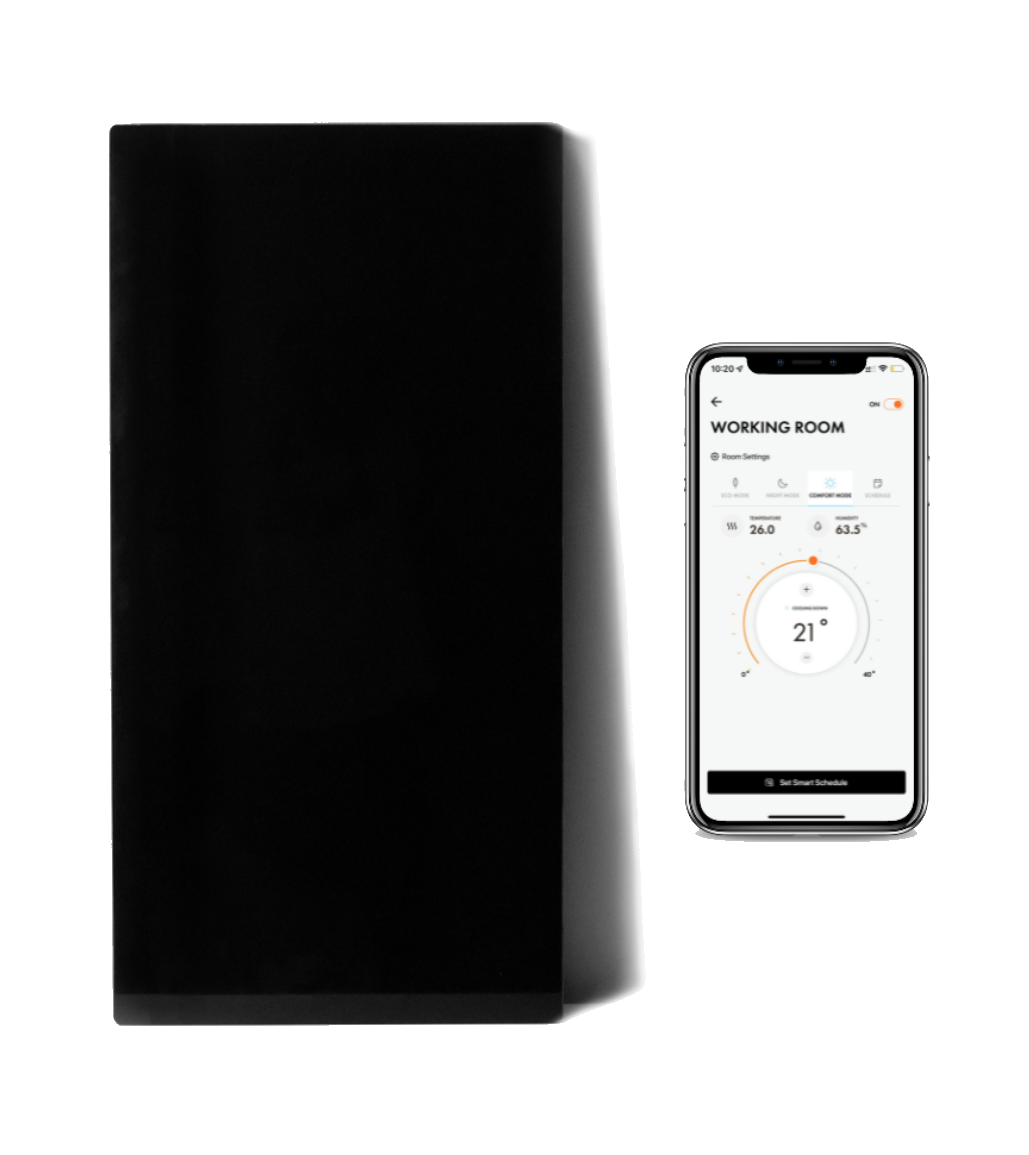
Kelvin - cost effective, smart electric heater
Stay warm and save more. Use code JONES15 to get 15% off your entire order—no strings attached.
Upgrade your comfort with a Kelvin today
What is a space heater?
A space heater is an electric heater that warms one room or area instead of the whole home. It can be portable (a fan heater, ceramic tower or oil-filled radiator) or fixed (a wall-mounted panel like Kelvin). Most plug into a standard outlet and need no ducts, contractor or permit.
What are the pros of a space heater?
- Lower bills through zone heating. Heat the room you're using and set the main thermostat back. The U.S. Department of Energy estimates that turning your thermostat back 7–10°F for 8 hours a day can save up to 10% a year on heating.
- Low upfront cost. A heater costs a fraction of a new furnace, heat pump or ductwork, and you can take it with you when you move.
- Fast warmth. Fan and infrared heaters make you comfortable within minutes, which central systems often can't do.
- Fixes problem rooms. They're useful for cold basements, converted garages, home offices over a garage and rooms at the end of a long duct run.
- No installation. Renters can use one without asking the landlord to change anything.
What are the cons of a space heater?
- Expensive for whole-house heating. Electric resistance heat costs more per unit of heat than gas or a heat pump in most of the US. Several heaters running all day can push your bill up.
- Fire and tip-over risk. Portable heaters near bedding, curtains or clutter are a leading cause of home heating fires.
- Limited reach. One heater is built for one room. Most plug-in models top out at 1,500 W, enough for about 150 sq ft with convection heating.
- Noise and drafts. Fan heaters hum and blow air, which bothers light sleepers and people on video calls.
- Weak built-in thermostats. A thermostat built into the heater reads the air next to the heater, so the heater shuts off too early or runs too long.
Which type of space heater is best?
|
Type |
How it heats |
Warm-up |
Noise |
Best for |
Watch out for |
|---|---|---|---|---|---|
|
Ceramic / fan |
Fan blows air over a hot ceramic element |
Fast |
Fan hum |
Quick bursts in small rooms |
Noise, dust circulation, tip-over |
|
Oil-filled radiator |
Heats sealed oil that radiates and convects |
Slow (20–30 min) |
Silent |
Bedrooms with long, steady use |
Heavy, hot surface, slow to react |
|
Infrared quartz / tube |
Glowing element radiates short-wave infrared |
Instant |
Silent |
Garages, workshops, spot heating |
Very hot element, bright glow |
|
Infrared wall panel |
Flat panel radiates far infrared at a lower surface temperature |
Fast |
Silent |
Bedrooms, offices, living spaces up to ~200 sq ft |
Needs a clear line of sight to the seating area |
|
Heat pump (mini-split) |
Moves heat from outside air indoors |
Moderate |
Low |
Heating a zone all winter at the lowest running cost |
$3,000+ installed, needs a contractor |
If you're unsure how radiant heat compares with the others, read how infrared heaters work.
Is a space heater worth it? A quick checklist
A space heater makes sense if:
- You spend most of the day in one room (home office, bedroom, den).
- One room is always colder than the rest of the house.
- You can turn the central heating down while the heater runs.
- You rent and can't change the heating system.
Look at other options if:
- You want to heat the entire home all winter. A heat pump or furnace will be cheaper to run.
- The room loses heat badly through drafts or poor insulation. Fix that first.
- You'd need three or more heaters on one electrical circuit.
Are space heaters good for small apartments?
Often, yes. Small apartments lose less heat and have fewer rooms to cover, so one or two well-placed heaters can replace much of the central heating. For an apartment, look for:
- Low wattage matched to the room, to avoid tripping shared circuits.
- Silent operation, which matters in studios where the heater shares a room with your bed.
- A small footprint. Wall-mounted panels free up floor space and keep heat away from pets and kids.
- Smart control, so the heater turns off when you leave and back on before you get home.
How much does a space heater cost to run?
Multiply the wattage by the hours of use and your electricity rate. At roughly 17¢/kWh (check your bill):
|
Heater |
Per hour at full power |
8 hours a day for a month |
|---|---|---|
|
1,500 W fan or ceramic heater |
~26¢ |
~$61 |
|
700 W infrared panel (Kelvin Large) |
~12¢ |
~$29 |
|
450 W infrared panel (Kelvin Standard) |
~8¢ |
~$18 |
A thermostat cycles the heater off once the room is warm, so the real cost is usually lower than these full-power figures.
How do you use a space heater safely?
- Plug it directly into a wall outlet, never an extension cord or power strip.
- Keep at least 3 feet clear of bedding, curtains, furniture and paper.
- Choose a model listed by a recognized testing lab (UL, ETL or CSA).
- For portable heaters, pick ones with tip-over and overheat shut-off, and turn them off when you leave the room.
- Consider a wall-mounted heater in kids' rooms and homes with pets, since it can't be knocked over or covered by a blanket.
Where does Kelvin fit?
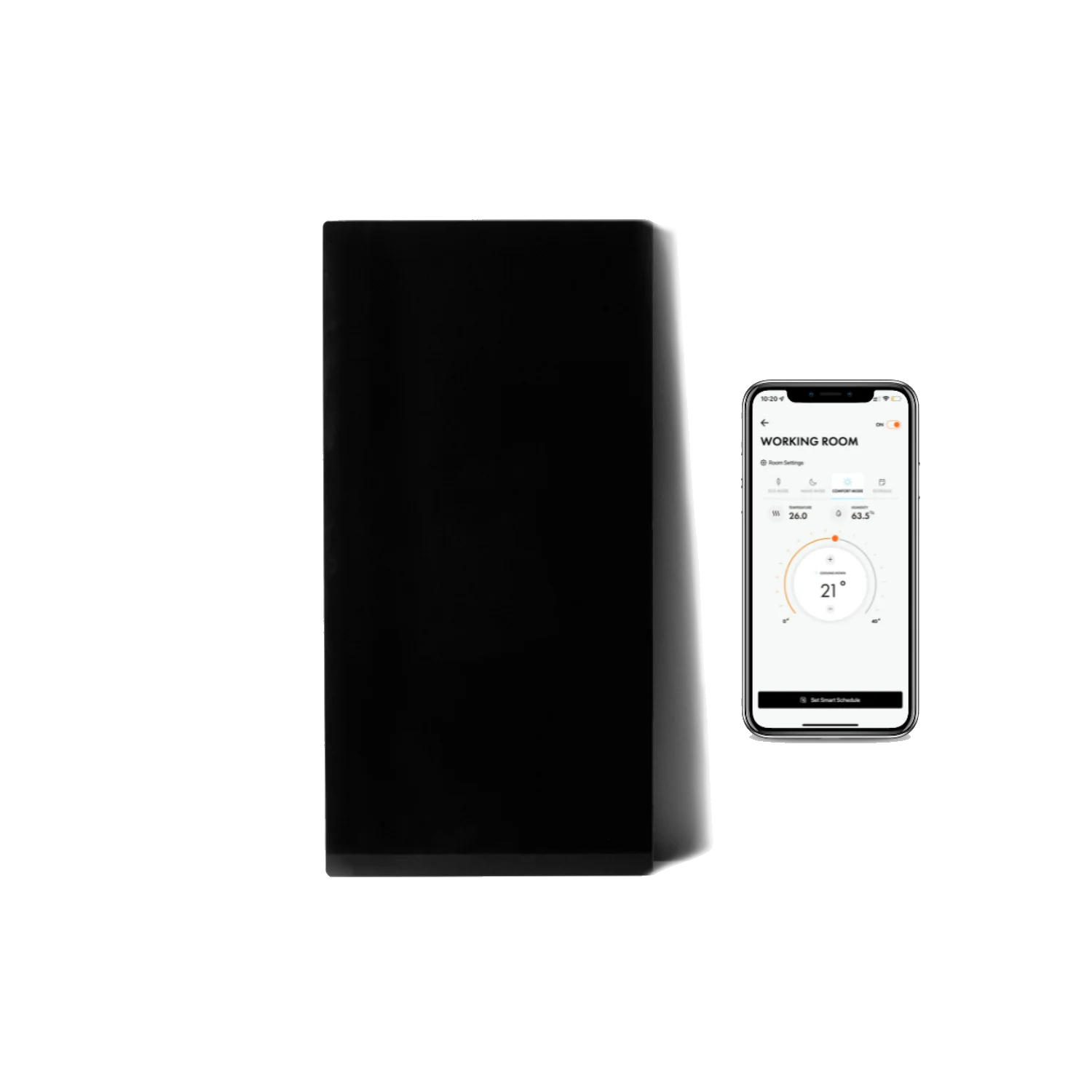
Kelvin is a smart wall-mounted space heater for one room at a time: 450 W for spaces up to about 100 sq ft, or 700 W for up to about 200 sq ft. It's silent far-infrared heat with a separate wireless room sensor, app schedules, location sensing, cost tracking and Alexa/Google control. It isn't meant to heat a whole house. It's for the room you spend your day in, so the rest of the house can stay cooler.
Stay warm and save more. Use code JONES15 to get 15% off your entire order—no strings attached.
Upgrade your comfort with a Kelvin today
Space heater FAQ
Is it cheaper to run a space heater than central heat?
It's cheaper when you heat one room and turn the central thermostat down for the rest of the house. It's more expensive if you run space heaters in every room while the central heating also runs.
What is the safest type of space heater?
Heaters with no exposed hot element that can't tip over are the lowest risk. That means wall-mounted infrared panels, and oil-filled radiators with automatic shut-off. Whatever type you choose, buy a lab-listed model and keep 3 feet of clearance.
Can a space heater heat a whole room?
Yes, if it's sized for the room. As a rough guide, a convection heater needs about 10 W per square foot. Infrared panels need less because they warm people and surfaces directly. Kelvin's 700 W panel is rated for up to about 200 sq ft.
Can I leave a space heater on all night?
Only with a heater designed for it: a fixed, thermostat-controlled unit with overheat protection, well clear of bedding. Use a schedule to drop the temperature while you sleep, and don't leave portable heaters running unattended.
Do space heaters raise your electric bill?
Yes, they add to your electric bill, but they can lower your total heating bill if they let you cut back on central heating. Track the heater's actual energy use, either in its app or with a plug-in meter, to see the real cost.
Heat the room, not the whole house
Kelvin is a silent, wall-mounted smart infrared heater with a wireless room sensor and app control. It installs in about five minutes and comes with a 2-year warranty and a 30-day money-back guarantee.


Kelvin - cost effective, smart electric heater
30% more cost effective than traditional heaters Smart functions to automate home climate Control remotely Maintenance Free Easy 5 minute installation
Try NowRecent Articles

How to Heat an ADU or Guest House: Heat Options
An accessory dwelling unit, a backyard guest house or an in-law su...
Read More
What Is the Safest Type of Space Heater? (2026)
What Is the Safest Type of Space Heater? There isn't a single safe...
Read More
Why Is This Room Always Cold? The Real Fixes, in Order
The instinct when a room runs cold is to buy a heater. The better ...
Read More
Best Heater for Airbnb; Rental Properties, No Install
Best Heater for Airbnb & Rental Properties (No Permanent Insta...
Read More
How to Heat a Basement That's Always Cold
A basement runs cold for a different reason than a drafty upstairs...
Read More