







That moment when you open your electricity bill and wonder if someone has been secretly running a bitcoin mining operation in your basement? For most households, the culprit is simpler: your air conditioner.
Air conditioning can account for 50–70% of summer electricity usage. But here’s what many homeowners don’t realize:
Two identical homes with identical AC systems can have wildly different electricity bills.
The difference isn’t the equipment.
It’s how the AC system is being used.
Below are five common ductless AC mistakes that quietly inflate cooling costs — and exactly how to fix them.
How Much Is Your AC Really Costing You?
When people ask, “How much electricity does an air conditioner use?” they expect a simple number.
There isn’t one.
AC energy consumption depends entirely on how you operate it.
A mini-split rated at 1,000 watts does not use 1,000 watts continuously. The compressor cycles on and off. Efficient usage might mean 15–20 minutes of runtime per hour. Inefficient usage? The compressor runs almost nonstop.
Here’s what different AC systems draw at full load:
|
AC Type
|
Wattage Range |
Cost Per Hour (at $0.16/kWh) |
Summer Monthly Range |
|
Window Unit (5,000 BTU)
|
450–550W |
$0.07–$0.09 |
$18–$45
|
|
Window Unit (12,000 BTU)
|
1,000–1,400W |
$0.16–$0.22 |
$40–$110 |
|
Mini-Split (9,000 BTU)
|
600–900W |
$0.10–$0.14 |
$25–$70 |
|
Mini-Split (18,000 BTU)
|
1,400–1,800W |
$0.22–$0.29 |
$55–$145 |
|
Central AC (3-ton)
|
3,000–3,500W |
$0.48–$0.56 |
$120–$280 |
Notice the range gap. That difference is behavioral.
A homeowner running a mini-split efficiently might pay $35 per month. Their neighbor with the same system making the mistakes below might pay $90.

The 5 Most Common AC Mistakes
Mistake #1: Treating the Your AC Temperature Like a Gas Pedal
You walk into a hot house and immediately drop the temperature to 64°F thinking it will cool faster.
It won’t.
Your AC runs at the same output regardless of how low you set the temperature. Lowering the temperature simply makes it run longer.
Energy impact:
Every degree below 75°F increases energy use by roughly 3–5%.
Dropping from 75°F to 70°F can increase cooling costs by 15–25%.
What works instead:
Set your baseline at 75–77°F and use ceiling fans for added comfort. Air movement creates a perceived cooling effect of 3–4°F at a fraction of the energy cost.
Mistake #2: Cooling a Leaky House
According to the U.S. Department of Energy, 25–30% of cooling energy is lost to air leaks in typical homes.
Common leak points:
-
Window AC accordion panels
-
Door sweeps
-
Electrical outlets on exterior walls
-
Recessed ceiling lights
-
Dryer vent flaps
What works:
On a windy day, use an incense stick to detect airflow around windows and doors. Seal leaks with inexpensive weatherstripping or foam gaskets.
Stopping leaks reduces runtime immediately.
Mistake #3: Ignoring Your AC Filter
When was the last time you cleaned or replaced your filter?
A clogged filter restricts airflow, forcing your system to work harder and run longer.
Research from ASHRAE shows dirty filters increase energy consumption by 5–15%.
What works:
-
Check filters monthly
-
Replace disposable filters when light cannot pass through
-
Rinse mini-split filters under running water and fully dry before reinstalling
This is a two-minute task that can reduce AC electricity costs significantly.
Mistake #4: Cooling an Empty House
How many hours per day does your ductless AC run when nobody is home?
For many households, it’s 8–10 hours.
Cooling empty rooms is one of the most expensive habits homeowners have.
What works:
Use automation instead of memory.
Geofencing technology, like the one Klima provides, adjusts your ductless AC when you leave and restores comfort before you return. This eliminates wasted runtime while avoiding the discomfort of coming home to heat.
Mistake #5: Using the Wrong Mode
Most people leave their ductless AC in “Cool” mode all summer.
That isn’t always necessary.
Cool mode runs the compressor aggressively until reaching target temperature.
Dry mode reduces humidity with less energy use. On moderately warm but humid days, dry mode can feel just as comfortable at significantly lower electricity consumption.
Fan mode circulates air with minimal energy use — ideal during cooler evenings.
What works:
Match the mode to outdoor conditions instead of defaulting to maximum cooling.
Humidity management often matters more than raw temperature.

What Is Klima?
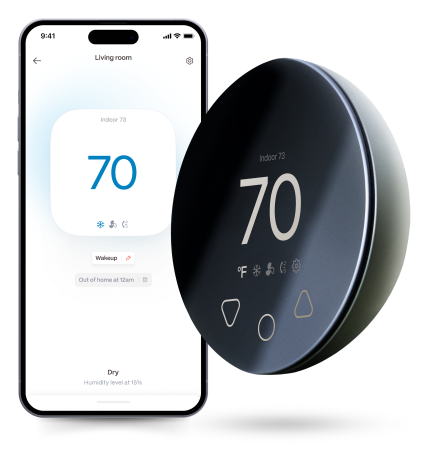
Klima is a smart controller designed specifically for all ductless AC’s like mini-splits, window air conditioners, and portable AC units.
It works with both new and older ductless AC models, allowing homeowners to upgrade control without replacing their system.
Instead of relying on manual adjustments, Klima automates temperature control to reduce energy waste and improve system efficiency.
By eliminating common AC mistakes, it helps lower electricity bills while supporting long-term system health.
Compatible with all brands of ACs and Mini-Splits
Automate Climate Management
Control remotely
Reduce Energy Consumption
Monitor bills in realtimeKlima - Smart Home Thermostat for Mini-splits, Air Conditioners and Heatpumps
Klima’s Smart Features
Location-Sensing Automation
Klima uses geofencing technology to adjust your mini-split when you leave and prepare your home before you return. This prevents hours of unnecessary runtime.
Cost Monitoring
Real-time energy tracking shows how much your AC is consuming and predicts monthly bills.
Many users reduce cooling costs by up to 30% after identifying waste patterns.

Smart Scheduling Automation
Custom schedules ensure your ductless system runs only when needed, giving your mini-split regular breaks and extending its operational life.
Remote Access
Control your AC from anywhere. If you forget to turn it off, you can prevent wasted runtime instantly.
Smart Home Compatibility
Klima integrates with Amazon Alexa, Google Home, Apple HomeKit, SmartThings, and Google Assistant for voice control and automation.

Conclusion
If your AC bill feels unusually high, the problem is rarely just the equipment.
It’s usually one or more small, compounding mistakes:
-
Setting your ductless ACs temperature too low
-
Ignoring air leaks
-
Neglecting filter maintenance
-
Cooling empty rooms
-
Using the wrong mode
Each mistake may increase costs by 10–15%. Combined, they can nearly double your electricity bill.
The most effective way to reduce ductless AC energy costs is consistency — and automation removes human inconsistency from the equation.
Smarter control leads to lower bills, better comfort, and longer system lifespan.
FAQ
Why is my AC bill so high?
Common causes include setting the temperature of your ductless AC too low, air leaks, dirty filters, cooling empty rooms, and using the wrong operating mode.
How much electricity does an air conditioner use per month?
Depending on type and usage, monthly summer costs can range from $25 for small mini-splits to $280 for central AC systems.
What temperature saves the most money in summer?
Setting your ductless AC temperature to 75–77°F while using fans for airflow provides an efficient balance between comfort and energy savings.
How often should I clean my AC filter?
Check monthly. Replace or clean when airflow of your ductless AC is visibly restricted.
Can a smart Controller lower AC bills?
Yes. Smart automation through smart home devices like Klima, reduces unnecessary runtime, improves scheduling, and prevents common operational mistakes that increase energy use.


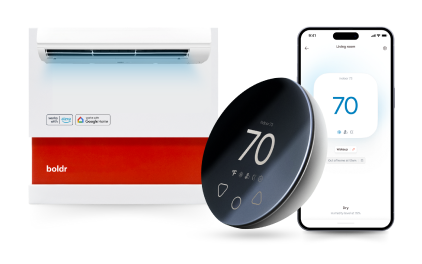
Klima - Smart Home Controller for Mini-splits, Air Conditioners and Heatpumps
Compatible with all brands of ACs and Mini-Splits Automate Climate Management Control remotely Reduce Energy Consumption Monitor bills in realtime
Try NowRecent Articles

Mini-Split Outdoor Unit Clearance 2026 Guide
A mini-split outdoor unit needs air. Lots of it. The condenser pull...
Read More
What Happens if Your Mini-Split Is Too Small?
Most homeowner sizing advice focuses on oversized mini-splits. But ...
Read More
Does a Mini-Split Need a Manual J Load Calculation?
A 500-square-foot room does not automatically need a 12,000 BTU min...
Read More
Signs Your Mini-Split May Have a Refrigerant Leak
A mini-split does not normally “use up” refrigerant the way a car u...
Read More
Mini-Split Minimum Capacity: Why It Matters
When homeowners compare mini-splits, they normally look at the bigg...
Read More