






In humid climates — Florida, Texas Gulf Coast, Louisiana, the Carolinas, and the Gulf Coast more broadly — a mini-split needs to remove large amounts of moisture from the air in addition to lowering temperature. Not all mini-splits dehumidify equally well, and choosing a system optimised for high-humidity conditions meaningfully improves comfort during the long, muggy cooling season. This guide covers what to look for and which system features matter most in humid climates.
Compatible with all brands of ACs and Mini-Splits
Automate Climate Management
Control remotely
Reduce Energy Consumption
Monitor bills in realtimeKlima - Smart Home Thermostat for Mini-splits, Air Conditioners and Heatpumps
What Makes a Mini-Split Good at Dehumidification
Dehumidification happens as a byproduct of cooling — room air passes over the cold evaporator coil, moisture condenses out, and drains away. How much moisture a mini-split removes per hour of operation depends on:
- Coil temperature: A colder coil condenses more moisture. Systems with variable-speed compressors can run at low capacity with a colder coil, removing more moisture per BTU of cooling.
- Fan speed: Slower fan speed means air spends more time in contact with the coil, removing more moisture. Lower fan speed = better dehumidification per hour.
- Dry mode: Purpose-built dehumidification mode available on all mini-splits — runs the compressor at low intermittent capacity to remove moisture without over-cooling.
- SEER2 rating: Higher-efficiency units often have more sophisticated compressor modulation, which tends to improve dehumidification performance at part-load conditions.
Key Features for Humid Climates
| Feature | Why It Matters in Humid Climates |
|---|---|
| Variable-speed inverter compressor | Allows low-speed operation for extended dehumidification without overcooling |
| Dry mode | Dedicated humidity reduction mode for muggy days that don't need full cooling |
| Anti-mould / anti-bacterial coil coating | Prevents mold growth on the evaporator coil in high-humidity environments |
| Auto-cleaning / self-dry function | Runs warm air through the coil after shutdown to dry moisture and prevent mold |
| Corrosion-resistant outdoor coil | Coastal and humid environments accelerate coil corrosion — hydrophilic or gold-fin coatings extend outdoor unit life |
| High SEER2 rating (18+) | Longer cooling seasons in humid climates mean efficiency ratings have large impact on annual electricity costs |
Brands with Strong Humid-Climate Features
Most major brands include dry mode, variable-speed compressors, and basic coil treatments as standard. For humid or coastal environments, additionally look for:
- Daikin: "Streamer" discharge technology that inhibits mold and bacteria on the coil; hydrophilic coil coating on many models; strong auto-cleaning function
- LG: Auto-cleaning function, plasmaster ionizer on select models, hydrophilic coating on outdoor coil
- Mitsubishi: i-see Sensor (on select models) that detects occupancy and adjusts operation; clean filter alert; good auto-dry performance
- Panasonic: nanoe X air purification with anti-mold function; ECONAVI sensor for occupancy-based adjustment
Frequently Asked Questions
Should I oversize a mini-split in a humid climate for more dehumidification?
No — this is a common misconception. An oversized unit cools so quickly it short-cycles, which actually reduces dehumidification because the coil doesn't run long enough to remove meaningful moisture. Proper sizing with a variable-speed inverter unit that modulates down to low capacity provides significantly better dehumidification than an oversized unit cycling on and off.
Can a mini-split replace a dehumidifier in a humid climate?
For active occupancy areas where you want both temperature and humidity control, yes — a properly sized mini-split running in cooling or dry mode handles humidity effectively. For spaces that need dehumidification without cooling (basements, off-season, unoccupied spaces), a dedicated dehumidifier is more appropriate as it operates without lowering temperature.
Related reading:
→ Mini-Split Dry Mode vs Cool Mode: What's the Difference?
→ Mini-Split Dehumidifier Mode: How It Works and When to Use It
→ Mini-Split Drain Line Clogged: Signs and How to Clear It


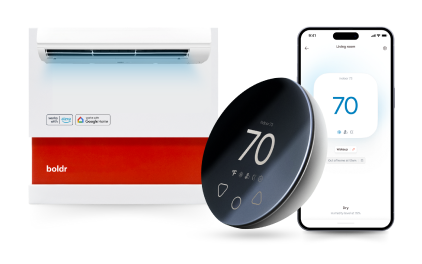
Klima - Smart Home Controller for Mini-splits, Air Conditioners and Heatpumps
Compatible with all brands of ACs and Mini-Splits Automate Climate Management Control remotely Reduce Energy Consumption Monitor bills in realtime
Try NowRecent Articles

Mini-Split Outdoor Unit Clearance 2026 Guide
A mini-split outdoor unit needs air. Lots of it. The condenser pull...
Read More
What Happens if Your Mini-Split Is Too Small?
Most homeowner sizing advice focuses on oversized mini-splits. But ...
Read More
Does a Mini-Split Need a Manual J Load Calculation?
A 500-square-foot room does not automatically need a 12,000 BTU min...
Read More
Signs Your Mini-Split May Have a Refrigerant Leak
A mini-split does not normally “use up” refrigerant the way a car u...
Read More
Mini-Split Minimum Capacity: Why It Matters
When homeowners compare mini-splits, they normally look at the bigg...
Read More