






Most mini-splits have a dedicated dehumidifier mode — sometimes called "Dry" mode — that prioritizes removing moisture from the air rather than cooling. This mode is useful in humid climates, during shoulder seasons when cooling is not needed but dampness is an issue, and in basements or rooms with high humidity. This guide explains how dry mode works, when to use it, and how it compares to a standalone dehumidifier.
Compatible with all brands of ACs and Mini-Splits
Automate Climate Management
Control remotely
Reduce Energy Consumption
Monitor bills in realtimeKlima - Smart Home Thermostat for Mini-splits, Air Conditioners and Heatpumps
How Dry Mode Works
In dry mode, the mini-split runs the compressor at low speed to cool the evaporator coil just enough to condense moisture from the air — without significantly lowering the room temperature. The fan runs at low speed to maximize contact time between humid air and the cold coil. Condensed water drains out through the normal condensate drain line.
The key difference from cooling mode: in cooling mode, the priority is lowering room temperature. In dry mode, the priority is removing moisture while keeping the room temperature approximately stable.
Dry Mode vs Cool Mode vs Standalone Dehumidifier
| Feature | Dry Mode | Cool Mode | Standalone Dehumidifier |
|---|---|---|---|
| Primary goal | Reduce humidity | Lower temperature | Reduce humidity |
| Cools the room? | Slightly | Yes | No — often warms slightly |
| Electricity use | Low | Moderate–High | Moderate |
| Noise | Very low | Low–Moderate | Moderate |
| Needs emptying? | No — drains automatically | No | Yes — unless continuously drained |
| Best for | Mild humidity, shoulder seasons | Hot + humid conditions | Extreme dampness, basements |
When to Use Dry Mode
- Spring and fall. When outdoor temperatures are mild (60–75°F) but humidity is high — running cooling mode would make the room too cold, but the dampness is uncomfortable. Dry mode removes moisture without over-cooling.
- Rainy periods. Extended rain raises indoor humidity. Dry mode addresses this without unnecessarily lowering room temperature.
- Basements. Below-grade spaces tend to be naturally cool but damp. Dry mode reduces basement humidity without making the space uncomfortably cold.
- Overnight in humid climates. When nighttime temperatures drop but humidity stays high, dry mode maintains comfort without over-cooling the bedroom.
When NOT to Use Dry Mode
- When you need cooling. Dry mode does not lower temperature significantly. On hot days, use cool mode — it dehumidifies as a byproduct while also cooling.
- Extreme humidity with water intrusion. If your humidity problem comes from active water intrusion (leaky basement, standing water), a mini-split's dry mode cannot keep up. Address the water source and use a standalone dehumidifier for extreme cases.
Tips for Effective Dehumidification
- Keep doors and windows closed. Open doors and windows introduce humid outdoor air, working against the dehumidification process.
- Clean the filter regularly. A dirty filter reduces airflow across the coil, decreasing the system's ability to condense moisture.
- Keep the drain line clear. The condensate from dry mode exits through the same drain line as cooling mode. A clogged line will cause water backup.
- Set a consistent temperature. In dry mode, the system targets a temperature setpoint while prioritizing dehumidification. A consistent setting helps the system maintain steady operation.
Frequently Asked Questions
Does dry mode use less electricity than cool mode?
Yes. In dry mode, the compressor runs at low speed and the fan runs slowly. Electricity consumption is typically 30–60% lower than cool mode for the same unit.
Can I set a target humidity level in dry mode?
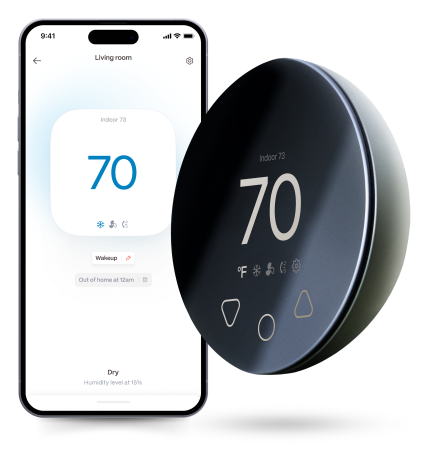
Most standard mini-split remotes do not allow setting a specific humidity percentage. The system manages dehumidification automatically based on its sensors. Some smart controllers and WiFi-connected systems allow you to monitor humidity levels and create automation rules.
Do all mini-splits have dry mode?
Almost all modern inverter mini-splits include a dry mode. It is a standard feature across all major brands — Mitsubishi, Fujitsu, Daikin, LG, Carrier, Bosch, MrCool, Gree, and Pioneer.


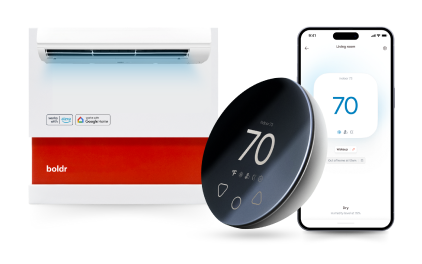
Klima - Smart Home Controller for Mini-splits, Air Conditioners and Heatpumps
Compatible with all brands of ACs and Mini-Splits Automate Climate Management Control remotely Reduce Energy Consumption Monitor bills in realtime
Try NowRecent Articles

Mini-Split Outdoor Unit Clearance 2026 Guide
A mini-split outdoor unit needs air. Lots of it. The condenser pull...
Read More
What Happens if Your Mini-Split Is Too Small?
Most homeowner sizing advice focuses on oversized mini-splits. But ...
Read More
Does a Mini-Split Need a Manual J Load Calculation?
A 500-square-foot room does not automatically need a 12,000 BTU min...
Read More
Signs Your Mini-Split May Have a Refrigerant Leak
A mini-split does not normally “use up” refrigerant the way a car u...
Read More
Mini-Split Minimum Capacity: Why It Matters
When homeowners compare mini-splits, they normally look at the bigg...
Read More