







A hissing or gurgling sound from a mini-split can be normal refrigerant flow noise — or it can indicate a refrigerant leak. The distinction matters significantly: normal refrigerant sounds require no action, while a leak requires urgent attention to prevent compressor damage. This guide explains how to tell the difference and what to do in each case.
Compatible with all brands of ACs and Mini-Splits
Automate Climate Management
Control remotely
Reduce Energy Consumption
Monitor bills in realtimeKlima - Smart Home Thermostat for Mini-splits, Air Conditioners and Heatpumps
Normal Hissing and Gurgling Sounds
| Sound | When It Occurs | Cause | Normal? |
|---|---|---|---|
| Soft gurgling or swooshing | During normal operation | Refrigerant flowing through the expansion valve — normal liquid-to-gas transition | Yes |
| Brief hiss at startup or shutdown | When system starts or stops | Refrigerant pressure equalising through the expansion valve | Yes |
| Hiss during defrost (heating mode) | When defrost cycle ends and heat resumes | Refrigerant flow direction reversal | Yes |
Hissing That May Indicate a Refrigerant Leak
| Sound Pattern | Location | Concern Level | Action |
|---|---|---|---|
| Continuous hissing while running | Near line set connections at indoor or outdoor unit | High | Call EPA-certified technician for refrigerant leak test |
| Hissing with reduced cooling performance | Anywhere on the refrigerant circuit | High | Call technician — likely refrigerant loss |
| Hissing with ice on indoor coil or lines | Indoor unit or refrigerant lines | High | Turn off unit; call technician for leak check |
How to Tell Normal from Abnormal
Normal refrigerant sounds are: Brief (at startup/shutdown), soft, coming from inside the unit (not the connections), and not accompanied by any performance change.
Potentially abnormal hissing is: Continuous while the unit runs at steady state, audible from the connection points at either unit or at a bend in the line set, accompanied by reduced cooling or heating performance, or associated with visible frost on the refrigerant lines.
What to Do If You Suspect a Leak
Turn off the unit and call an EPA Section 608 certified technician. Do not attempt to add refrigerant yourself — this is illegal for non-certified individuals and will not fix a leak. The technician will perform a pressure test or use electronic leak detection to locate the source, repair it, and recharge to the correct specification.
Stay cool and save more. Use code JONES15 to get 15% off your entire order—no strings attached.
Upgrade your comfort with a Klima today.
Frequently Asked Questions
Can refrigerant hissing be dangerous?
R-410A and R-32 refrigerants are not acutely toxic at the concentrations that would occur from a residential mini-split leak. However, in a very small, unventilated space, large refrigerant releases can displace oxygen. The more immediate concern is compressor damage from operating with insufficient refrigerant — a leak left unfixed will eventually destroy the compressor, the most expensive component in the system.
My mini-split hisses when it turns off — is that normal?
Yes. A brief hiss when the system powers down is the refrigerant pressure equalising across the expansion valve as the compressor stops. This takes only a few seconds and is one of the most common sounds homeowners ask about. It is completely normal and requires no action.
Related reading:
→ Mini-Split Refrigerant Leak: Signs, Cost and What to Do
→ Mini-Split Making Noise: What Each Sound Means
→ Mini-Split Ice Buildup: Why It Happens and How to Fix It


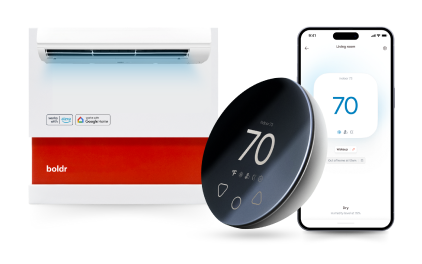
Klima - Smart Home Controller for Mini-splits, Air Conditioners and Heatpumps
Compatible with all brands of ACs and Mini-Splits Automate Climate Management Control remotely Reduce Energy Consumption Monitor bills in realtime
Try NowRecent Articles

Mini-Split Outdoor Unit Clearance 2026 Guide
A mini-split outdoor unit needs air. Lots of it. The condenser pull...
Read More
What Happens if Your Mini-Split Is Too Small?
Most homeowner sizing advice focuses on oversized mini-splits. But ...
Read More
Does a Mini-Split Need a Manual J Load Calculation?
A 500-square-foot room does not automatically need a 12,000 BTU min...
Read More
Signs Your Mini-Split May Have a Refrigerant Leak
A mini-split does not normally “use up” refrigerant the way a car u...
Read More
Mini-Split Minimum Capacity: Why It Matters
When homeowners compare mini-splits, they normally look at the bigg...
Read More