







The inverter compressor is the core technology that makes modern mini-splits dramatically more efficient, quieter, and longer-lasting than older fixed-speed systems. Understanding how it works explains why a mini-split can maintain temperature within 0.5°F of setpoint, why it uses 30–50% less electricity than a window AC, and why it lasts longer than systems that start and stop repeatedly. This guide explains inverter compressor technology in practical, accessible terms.
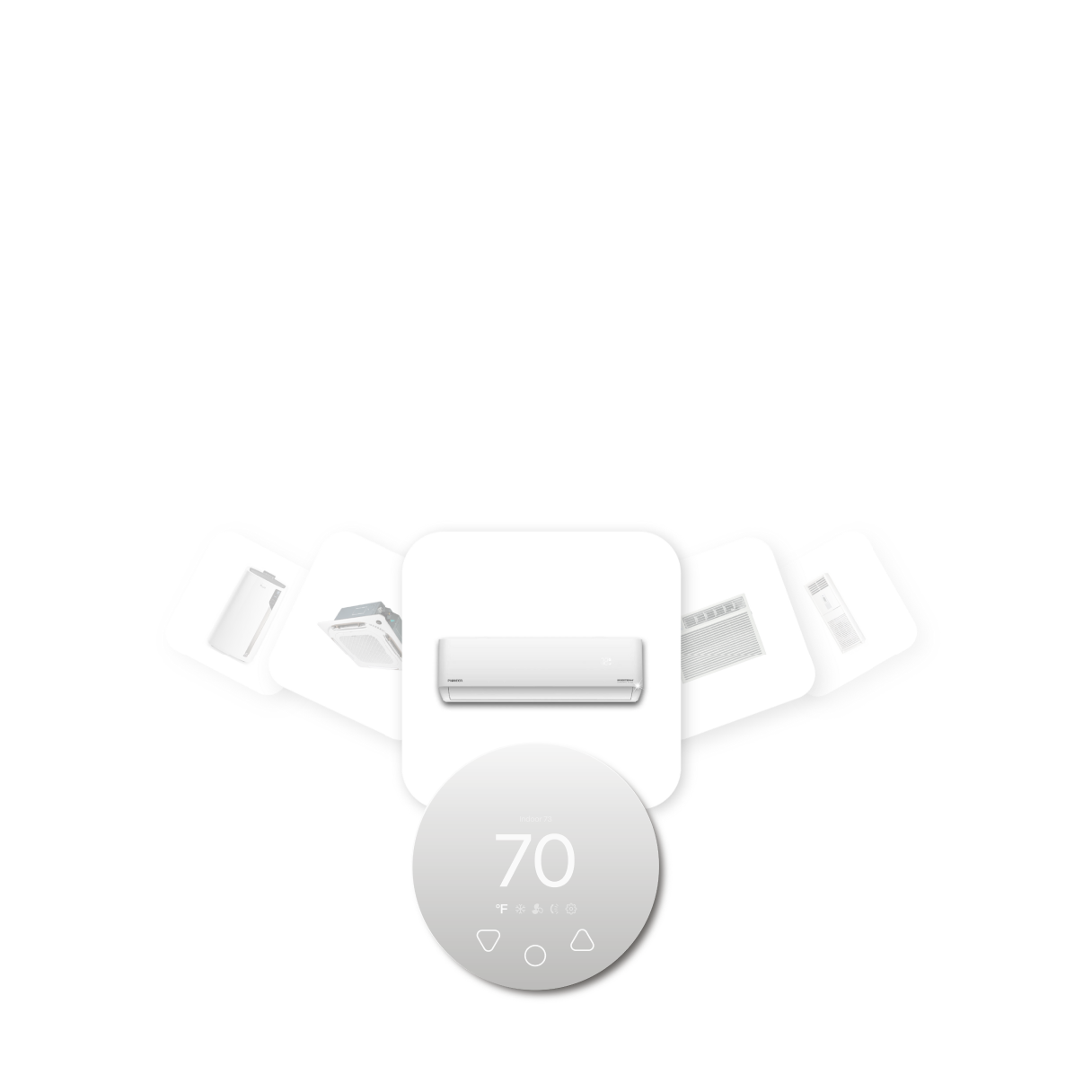
Compatible with all brands of ACs and Mini-Splits
Automate Climate Management
Control remotely
Reduce Energy Consumption
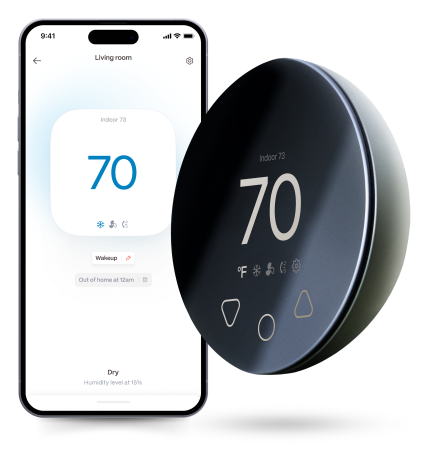
Monitor bills in realtimeKlima - Smart Home Thermostat for Mini-splits, Air Conditioners and Heatpumps
How a Standard (Fixed-Speed) Compressor Works
A standard compressor runs at one fixed speed — full power ON or completely OFF. When the room needs cooling, it starts at 100% capacity and runs until the setpoint is reached, then stops. When the room warms up again, it restarts at 100%. This cycle repeats every 10–20 minutes under normal conditions.
Problems with this approach: compressor startup draws 5–7 times the normal running current (called inrush current), causing electrical stress. Temperature swings of 4–6°F occur between cycles. The repeated start-stop generates mechanical wear. Electricity is used inefficiently — full power when often only 30% capacity is needed.
How an Inverter Compressor Works
An inverter compressor uses a variable-frequency drive (VFD) between the power supply and the compressor motor. The VFD can vary the electrical frequency delivered to the motor — changing compressor speed from as low as 1,200 RPM to as high as 7,200 RPM. This allows the system to deliver exactly as much or as little cooling/heating as currently needed:
- Large demand: Room is 85°F, setpoint is 70°F — compressor runs at high speed for fast pulldown
- Maintenance demand: Room is 71°F, setpoint is 70°F — compressor runs at 15–25% capacity, barely ticking over to maintain temperature
- No demand: Room is at setpoint — compressor may stop briefly or continue at absolute minimum speed
The Benefits of Inverter Technology
| Benefit | Fixed-Speed | Inverter |
|---|---|---|
| Temperature precision | ±3–5°F swings | ±0.5–1°F maintained continuously |
| Startup electrical draw | 5–7× normal (inrush) each cycle | Gradual ramp-up; no inrush spike |
| Average electricity use | Baseline | 30–50% less at equivalent BTU output |
| Compressor wear | High — repeated high-stress startups | Low — continuous low-stress operation |
| Indoor noise | Cycles of on/off; noticeable changes | Continuous quiet operation; barely audible |
| Dehumidification | Only when running at full power | Continuous at low speed; excellent humidity control |
Frequently Asked Questions
Do all mini-splits use inverter compressors?
Virtually all modern residential mini-splits sold in North America use inverter compressors. Fixed-speed ductless units still exist in some commercial applications and very low-cost imports, but any reputable mini-split from a recognised brand in 2026 uses an inverter. If a specification sheet does not explicitly state "inverter" or "variable speed," ask the seller to confirm before purchasing.
Why is inverter technology more expensive?
The variable-frequency drive adds electronic complexity to the outdoor unit. The inverter board, power transistors, and associated electronics cost more to manufacture than simple on/off relay controls. However, this premium is recovered through electricity savings — typically within 3–5 years vs equivalent fixed-speed equipment in most climates.
Related reading:
→ Mini-Split Inverter Technology Explained: Why It Matters
→ Mini-Split SEER Rating: What It Means and Why It Matters
→ Mini-Split vs Window AC: Cost, Efficiency and Comfort Compared


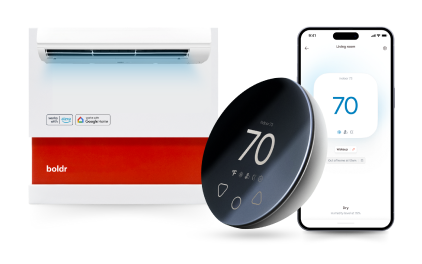
Klima - Smart Home Controller for Mini-splits, Air Conditioners and Heatpumps
Compatible with all brands of ACs and Mini-Splits Automate Climate Management Control remotely Reduce Energy Consumption Monitor bills in realtime
Try NowRecent Articles

Mini-Split Outdoor Unit Clearance 2026 Guide
A mini-split outdoor unit needs air. Lots of it. The condenser pull...
Read More
What Happens if Your Mini-Split Is Too Small?
Most homeowner sizing advice focuses on oversized mini-splits. But ...
Read More
Does a Mini-Split Need a Manual J Load Calculation?
A 500-square-foot room does not automatically need a 12,000 BTU min...
Read More
Signs Your Mini-Split May Have a Refrigerant Leak
A mini-split does not normally “use up” refrigerant the way a car u...
Read More
Mini-Split Minimum Capacity: Why It Matters
When homeowners compare mini-splits, they normally look at the bigg...
Read More