







Choosing between a mini-split and a window AC comes down to what you need from the system and how long you plan to use it. A window unit costs less upfront and installs in minutes, but a mini-split is quieter, more efficient, provides heating and cooling year-round, and lasts significantly longer. This comparison breaks down every factor so you can decide which makes sense for your situation.
Side-by-Side Comparison
| Category | Mini-Split | Window AC |
|---|---|---|
| Upfront cost (single room) | $1,500–$4,000 installed | $150–$700 (self-installed) |
| Heating capability | Yes — built-in heat pump | Cooling only (most models) |
| Energy efficiency (SEER2) | 18–42 | 10–15 |
| Noise (indoor) | 19–32 dB (whisper-quiet) | 45–55 dB (noticeable) |
| Lifespan | 15–20 years | 5–10 years |
| Installation | Professional (3–6 hours) | DIY (15–30 minutes) |
| Window required? | No — wall-mounted with small conduit | Yes — occupies a window opening |
| Dehumidification | Excellent + dedicated dry mode | Moderate |
| Security | No window compromise | Window partially open; security risk |
| Aesthetics | Sleek wall-mounted unit | Visible box in window |
| Smart home compatibility | Many models support WiFi and apps | Limited; some WiFi models exist |
Cost Comparison: Upfront vs Long-Term
The upfront cost difference is significant. A quality 12,000 BTU window AC costs between $250 and $500. A comparable 12,000 BTU mini-split system, including professional installation, typically runs $1,500 to $3,500 depending on the brand and region.
However, the long-term cost picture shifts in favor of the mini-split. According to Energy Star, a SEER2 20 mini-split uses roughly 40–50% less electricity than a SEER2 12 window unit of the same capacity. For a room that runs cooling 8 hours a day for 5 months, that efficiency gap can save $150 to $300 per year in electricity, depending on your local rates.
A mini-split also lasts two to three times longer than a window unit. Over a 15-year period, you might purchase two or three window units (total cost $500–$1,500 plus energy) versus one mini-split (total cost $1,500–$3,500 plus lower energy bills). In many scenarios, the mini-split costs less over its lifetime.
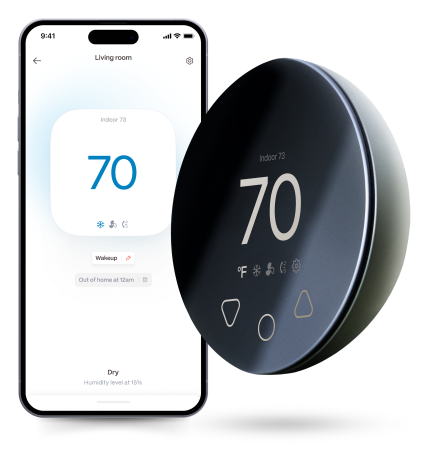
Compatible with all brands of ACs and Mini-Splits
Automate Climate Management
Control remotely
Reduce Energy Consumption
Monitor bills in realtimeKlima - Smart Home Thermostat for Mini-splits, Air Conditioners and Heatpumps
Energy Efficiency
Mini-splits use inverter-driven compressors that adjust speed continuously based on demand. Window units use fixed-speed compressors that cycle on and off. The inverter technology alone accounts for much of the efficiency difference.
Modern mini-splits carry SEER2 ratings between 18 and 42. The average window AC has a SEER2 rating between 10 and 15. SEER2 measures seasonal cooling efficiency — a higher number means less electricity used to produce the same amount of cooling.
For homeowners who use their cooling system heavily — especially in southern US states, the Gulf Coast, or during long Canadian summers — the efficiency gap translates directly into lower monthly electricity bills.
Noise Levels
This is one of the starkest differences. Mini-split indoor units operate between 19 and 32 decibels at their lowest fan speed — quieter than a library. Window units typically produce 45 to 55 decibels, which is comparable to a normal conversation. At night, the noise difference becomes especially noticeable.
The outdoor unit of a mini-split does produce some noise (typically 45–55 dB), but it is located outside the living space. A window unit's compressor and fan sit right in the window opening, with no separation between the noise source and the room.
Heating Capability
Nearly all modern mini-splits are heat pumps, meaning they can heat in winter and cool in summer. This makes them a year-round climate solution. Window ACs are almost exclusively cooling-only devices (a handful of models include resistive heating elements, but these are rare and inefficient).
For homeowners in climates where both heating and cooling are needed, a mini-split eliminates the need for a separate heating solution. In northern US states and Canada, cold-climate mini-split models can heat effectively at outdoor temperatures as low as −13°F to −22°F (−25°C to −30°C).
Installation and Flexibility
Window ACs require a compatible window — typically a double-hung sash window. They are heavy (50–80 pounds for a 12,000 BTU unit), can damage window frames, and block natural light and ventilation. Casement windows, sliding windows, and some modern window styles are not compatible without adapters.
Mini-splits mount on an interior wall and connect to the outdoor unit through a small 3-inch conduit hole. They do not require a window, do not block light, and do not compromise home security. Installation requires a licensed HVAC technician and takes 3 to 6 hours for a single-zone system.
When a Window AC Makes More Sense
A window AC is the better choice in specific situations: if you are renting and cannot make permanent modifications to the building, if you need cooling for only one season (temporary housing), if your budget is strictly limited to under $500, or if you need a solution today — window units are available at most hardware stores and install immediately.
When a Mini-Split Is the Better Investment
A mini-split is the stronger long-term choice if you own your home, plan to stay in the space for more than two to three years, want both heating and cooling from one system, value quiet operation, care about energy efficiency and monthly utility costs, or do not have a suitable window for a window unit.
Frequently Asked Questions
Is a mini-split more energy efficient than a window AC?
Yes. Mini-splits are significantly more energy efficient. A typical mini-split has a SEER2 rating of 20 or higher, while most window units are rated between 10 and 15. This means the mini-split uses 30–50% less electricity to cool the same space.
Can I install a mini-split myself?
Some brands, such as MrCool, offer DIY mini-split kits with pre-charged refrigerant lines that homeowners can install without an HVAC license. However, most mini-split installations require a professional to handle the refrigerant, electrical, and vacuum procedures. A DIY kit costs less but still runs $1,200–$2,000.
Do mini-splits add value to a home?
According to HVAC industry reporting, a mini-split system can add value to a home — especially in rooms that previously lacked dedicated climate control, such as converted garages, additions, or finished basements. The permanent, professional installation is viewed as an upgrade by many home buyers.
How long does a window AC last compared to a mini-split?
A window AC typically lasts 5 to 10 years with normal use. A mini-split system, with regular maintenance, typically lasts 15 to 20 years. The mini-split's inverter compressor runs more gently (no constant on-off cycling), which contributes to its longer lifespan.


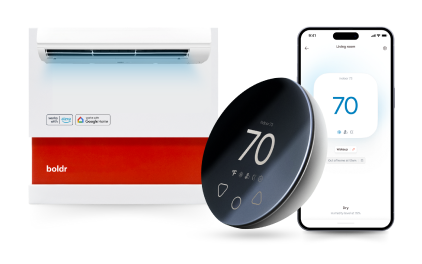
Klima - Smart Home Controller for Mini-splits, Air Conditioners and Heatpumps
Compatible with all brands of ACs and Mini-Splits Automate Climate Management Control remotely Reduce Energy Consumption Monitor bills in realtime
Try NowRecent Articles

Mini-Split Outdoor Unit Clearance 2026 Guide
A mini-split outdoor unit needs air. Lots of it. The condenser pull...
Read More
What Happens if Your Mini-Split Is Too Small?
Most homeowner sizing advice focuses on oversized mini-splits. But ...
Read More
Does a Mini-Split Need a Manual J Load Calculation?
A 500-square-foot room does not automatically need a 12,000 BTU min...
Read More
Signs Your Mini-Split May Have a Refrigerant Leak
A mini-split does not normally “use up” refrigerant the way a car u...
Read More
Mini-Split Minimum Capacity: Why It Matters
When homeowners compare mini-splits, they normally look at the bigg...
Read More