






A room with a vaulted ceiling cannot be sized or controlled in the same way as a standard eight-foot room.
The floor area may look modest, but the mini-split must condition a much larger volume of air. Warm air can also collect near the ceiling, creating a major difference between the temperature at the indoor head and the temperature where people sit.
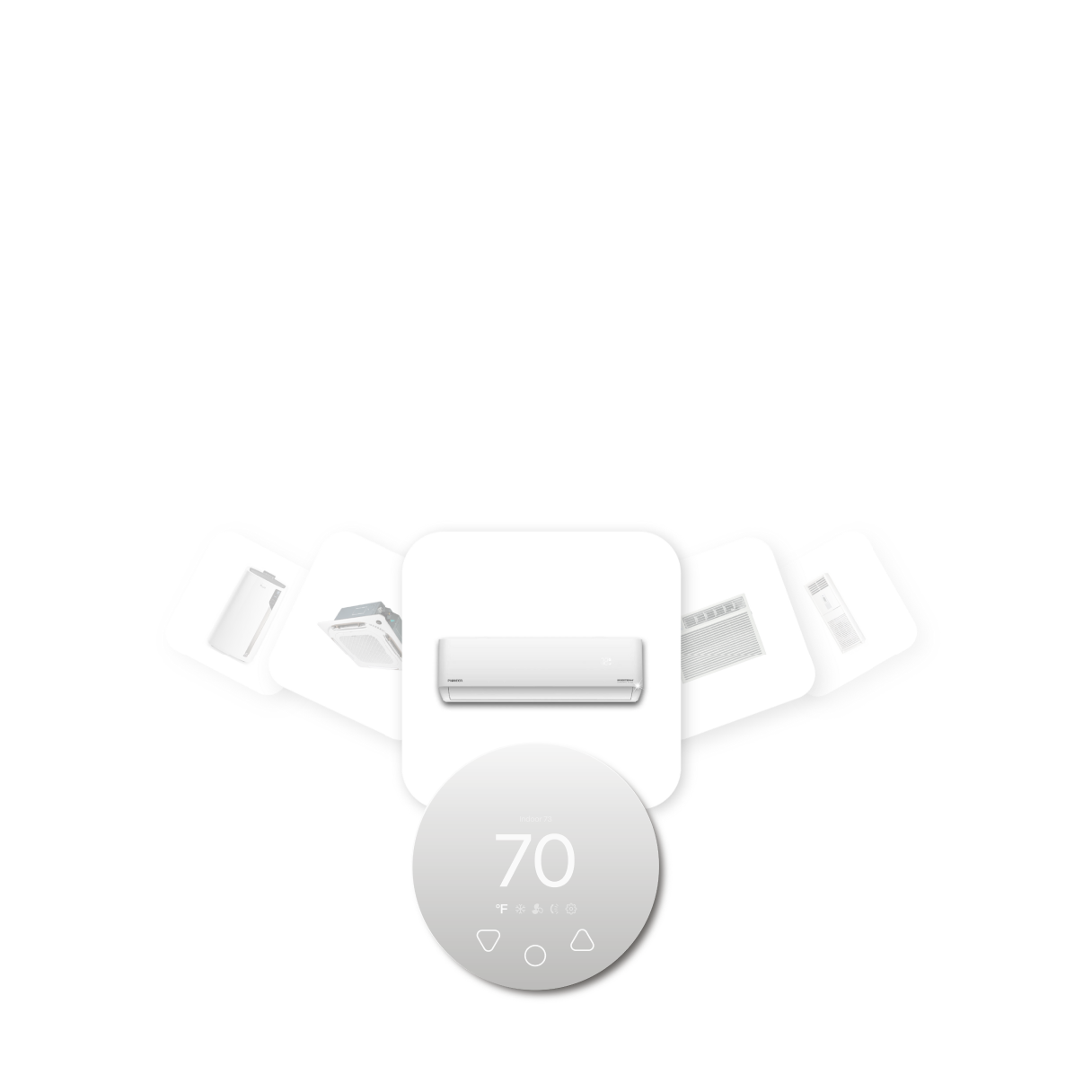
Compatible with all brands of ACs and Mini-Splits
Automate Climate Management
Control remotely
Reduce Energy Consumption
Monitor bills in realtimeKlima - Smart Home Thermostat for Mini-splits, Air Conditioners and Heatpumps
Floor Area Understates the Load
Two rooms can each have 400 square feet of floor area while containing very different air volumes.
A room with a sixteen-foot average ceiling has approximately twice the air volume of a room with an eight-foot ceiling.
Ceiling height should therefore be included in the heating and cooling load calculation.
Warm Air Collects at the Top
During heating, warm air rises toward the peak of the ceiling.
This can create:
- A warm sensor near the indoor head
- A cold occupied area
- Higher roof heat loss
- Uneven temperatures
- Longer recovery after setbacks
The mini-split may believe the room is comfortable while occupants below remain cold.
Where Should the Indoor Unit Go?
Higher is not always better.
The indoor head must meet manufacturer clearances, but placing it near the highest ceiling peak may:
- Complicate maintenance
- Create poor sensor readings
- Make filter cleaning difficult
- Leave heat trapped overhead
- Require an expensive lift for service
A lower wall position or floor console may provide better occupied-zone control in some rooms.
Is a Ceiling Cassette Better?
A cassette may distribute air in several directions, but it requires:
- Suitable ceiling structure
- Space above the finished ceiling
- Condensate drainage
- Service access
- An approved equipment combination
It is not automatically superior simply because the ceiling is high.
Use a Ceiling Fan for Destratification
A slowly operating ceiling fan can move warm air away from the ceiling and help equalise room temperatures.
During heating, a low reverse setting is commonly used to avoid a strong cooling breeze. Fan direction depends on the fan design, so check its instructions.
The fan does not add heat; it redistributes the heat already in the room.
Cooling a Tall Room
During cooling, cold air naturally descends.
A high-wall mini-split may distribute cooling effectively if it can throw air across the room before it falls.
Problems arise when:
- Beams block the airflow.
- The indoor head is tucked into an alcove.
- The fan speed is too low.
- A mezzanine interrupts circulation.
- Large upper windows add solar heat.
Consider Windows Near the Roof
Clerestory windows and skylights can create large solar gains.
The load calculation should include:
- Glass area
- Orientation
- Shading
- Glazing type
- Roof colour
- Local summer conditions
A room may need shading improvements as well as HVAC capacity.
Stay cool and save more. Use code JONES15 to get 15% off your entire order—no strings attached.
Upgrade your comfort with a Klima today.
Frequently Asked Questions
Does a high ceiling require a larger mini-split?
Often, but the exact requirement depends on total volume, insulation, glass and climate.
Should the indoor unit be installed at the ceiling peak?
Not necessarily. Comfort, airflow, access and sensor accuracy may favour a lower position.
Can one mini-split cool a loft and the room below?
It may influence both, but the two levels can develop very different loads and temperatures.
Will a ceiling fan lower energy use?
It may permit a more comfortable setpoint by improving air mixing, but savings are not guaranteed.


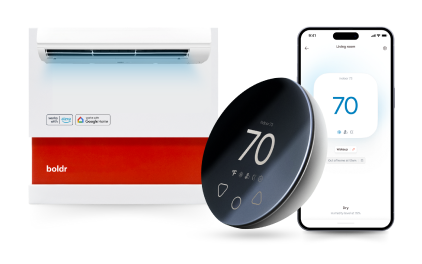
Klima - Smart Home Controller for Mini-splits, Air Conditioners and Heatpumps
Compatible with all brands of ACs and Mini-Splits Automate Climate Management Control remotely Reduce Energy Consumption Monitor bills in realtime
Try NowRecent Articles

Mini-Split Outdoor Unit Clearance 2026 Guide
A mini-split outdoor unit needs air. Lots of it. The condenser pull...
Read More
What Happens if Your Mini-Split Is Too Small?
Most homeowner sizing advice focuses on oversized mini-splits. But ...
Read More
Does a Mini-Split Need a Manual J Load Calculation?
A 500-square-foot room does not automatically need a 12,000 BTU min...
Read More
Signs Your Mini-Split May Have a Refrigerant Leak
A mini-split does not normally “use up” refrigerant the way a car u...
Read More
Mini-Split Minimum Capacity: Why It Matters
When homeowners compare mini-splits, they normally look at the bigg...
Read More