




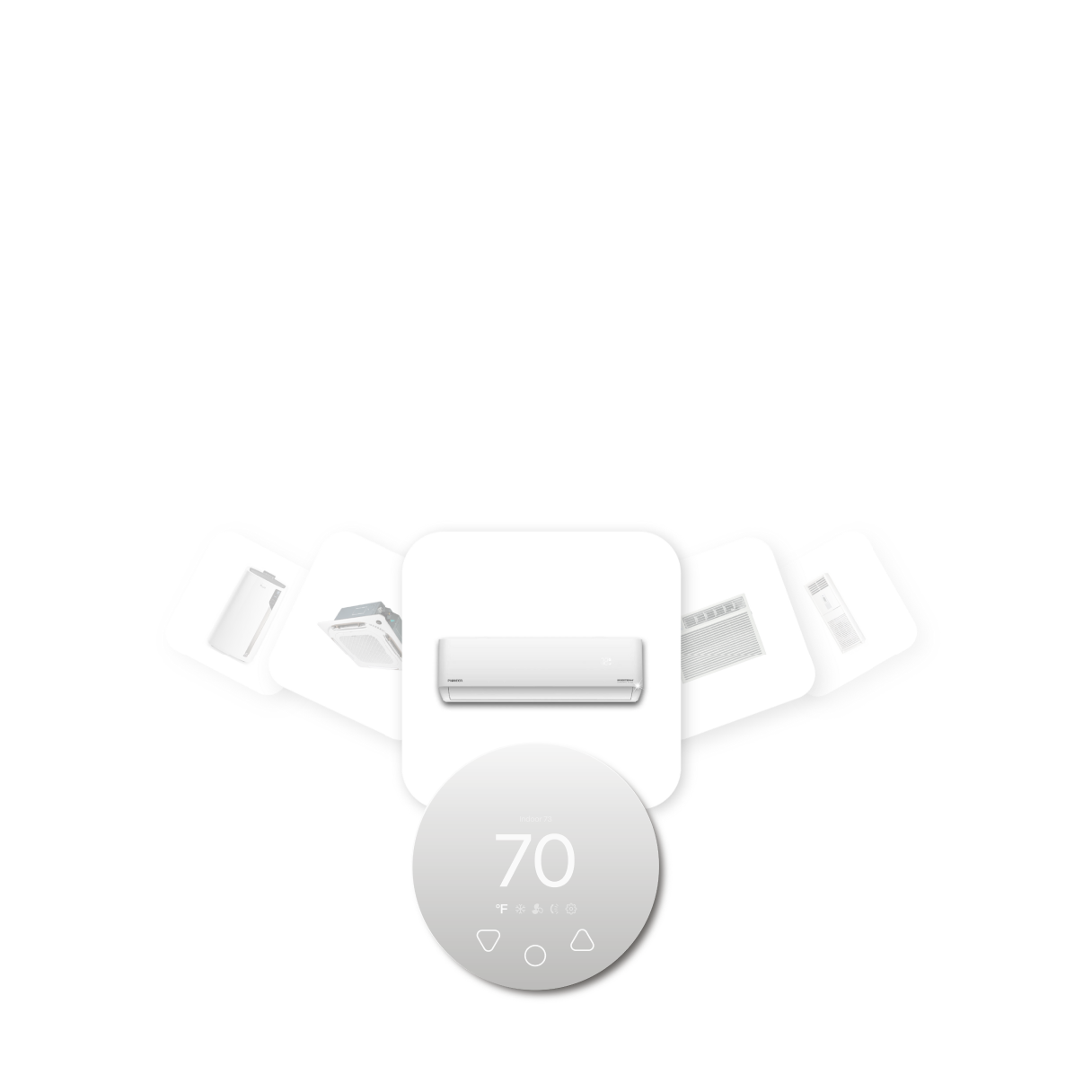



Mini-split air conditioners have been standard in Asia and Europe for decades. In the U.S., they’re finally catching on — especially as homeowners look for efficient ways to cool room additions, older homes without ducts, or spaces where extending central air would cost a fortune.
But what actually is a mini-split air conditioner? How does it differ from a window unit or central AC? And is it the right choice for your home?
This guide covers mini-split basics, the difference between ductless and ducted systems, real-world pros and cons, how to decide if a mini-split makes sense for your space, and how smart home devices like Klima can take performance and efficiency even further.
Mini-Split Basics
A mini-split air conditioner is a heating and cooling system made up of two main parts: an outdoor unit and one or more indoor air handlers. These components are connected by refrigerant lines that pass through a small hole in the wall — no ductwork required.
The “mini” refers to the compact size of the equipment compared to traditional central HVAC systems. The “split” means the system is divided between indoor and outdoor components, unlike window units or packaged systems that house everything in one box.
Instead of pushing air through ducts hidden in walls and ceilings, mini-splits deliver conditioned air directly into the room.
That matters because the U.S. Department of Energy estimates that traditional duct systems lose 25–30 percent of energy due to leaks and heat transfer. Mini-splits avoid that loss entirely.
Compatible with all brands of ACs and Mini-Splits
Automate Climate Management
Control remotely
Reduce Energy Consumption
Monitor bills in realtimeKlima - Smart Home Thermostat for Mini-splits, Air Conditioners and Heatpumps
Core Components of a Mini-Split System
Outdoor unit
This unit of your mini-split sits outside your home on a concrete pad or wall bracket.
It contains the compressor and condenser coil that manage heat exchange. One outdoor unit can support a single indoor unit (single-zone) or multiple indoor units throughout the home (multi-zone systems typically handle two to eight zones).
Indoor air handler
The indoor mini-split unit contains the evaporator coil and fan that distribute cooled or heated air. Wall-mounted units are the most common, but ceiling cassettes, floor-standing consoles, and concealed units are also available for different layouts and design preferences.
Refrigerant lines
Copper tubing carries refrigerant between the indoor and outdoor units. Along with power and a condensate drain, everything fits through a hole about three inches wide — far less invasive than installing ductwork.
Heating and Cooling in One System
Most modern mini-splits are heat pumps. They cool your home in summer and heat it in winter by reversing the direction of refrigerant flow. In cooling mode, heat is pulled from indoor air and released outside. In heating mode, the system extracts heat from outdoor air — even in cold weather — and moves it indoors. One system provides year-round comfort.
What Is the Difference Between Ductless and Ducted Mini-Splits?
When people say “mini-split,” they usually mean ductless. But ducted mini-split systems exist too, and the choice between them depends on aesthetics, budget, and how your home is built.

Ductless Mini-Splits
Ductless systems mount the indoor air handler directly in the room. Wall units are the most recognizable, but ceiling cassettes and floor consoles work well where wall mounting isn’t ideal.
Installation is relatively simple: mount the unit, drill a small hole, connect the refrigerant lines, and hook up the outdoor unit. A single-zone system can often be installed in half a day.
The tradeoff is visibility. The unit is in plain sight, which some homeowners don’t mind and others strongly dislike.
Ducted Mini-Splits
Ducted mini-splits hide the indoor unit in an attic, closet, or ceiling cavity and use short duct runs to deliver air through vents. From inside the room, it looks similar to central air — just clean vents, no visible equipment.
This option works well in homes where appearance matters or where soffits and ceiling space can conceal short ducts. New construction sometimes uses ducted mini-splits to keep systems compact and efficient.
The downside is cost. Adding ductwork increases labor and materials, and poorly sealed ducts can reduce efficiency.
Which One Should You Choose?
For most homeowners, ductless mini-splits are the better fit: faster installation, lower cost, and flexibility in almost any room.
Ducted systems cost more but keep equipment completely hidden, making them appealing for main living areas or design-focused spaces.
The Main Benefits of a Mini-Split System
Mini-split systems are popular for a reason. They solve problems that central air and window units struggle with.
1. No Ductwork Required
Installing ductwork in a home that doesn’t already have it can cost thousands and involve major construction.
Mini-splits avoid that entirely, making them ideal for older homes, additions, finished basements, attics, garages, and sunrooms.
2. Higher Efficiency Than Central Air
Mini-splits deliver air directly into the room, eliminating duct losses. Many systems offer SEER2 ratings between 20 and 30+, while central air systems typically top out around 20–22 unless you pay a premium.
Over time, that efficiency difference can significantly lower energy bills.
3. Room-by-Room Temperature Control
Each indoor unit operates independently. You can cool the bedroom at night, shut off unused rooms, and avoid conditioning the entire house for one occupied space.
No more thermostat arguments.
4. Quiet Operation
Mini-split indoor units run as quietly as 19–40 decibels, depending on fan speed — comparable to a library or quiet conversation.
Since the compressor is outside, the loudest component isn’t.

What Is Klima?
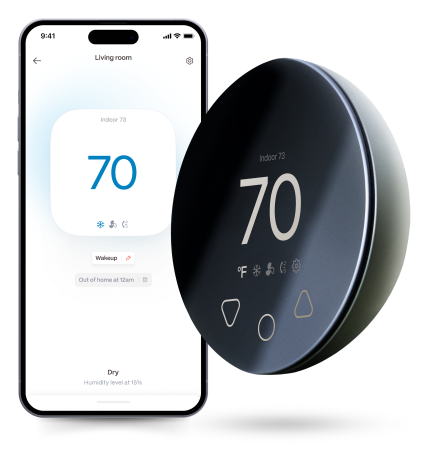
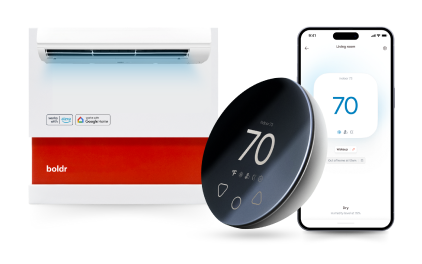
Klima is a smart thermostat designed to upgrade all ductless A/C units including mini-splits, window ACs, and heat pumps into fully smart systems.
Instead of replacing your air conditioner, Klima works with it — adding mobile control, automation, and energy-saving intelligence.
The result is better comfort, lower energy use, and easier day-to-day control.

Klima’s Smart Features
Klima enhances mini-split systems with tools that make efficiency and comfort effortless.
1. Remote access from anywhere
Adjust your home’s temperature from your phone, whether you’re at work or traveling with Klima’s Remote Access feature.
2. Location-based automation
Klima uses geofencing technology to turn mini-split systems off when no one is home and prepare a comfortable temperature before you return.
3. Energy and cost monitoring
Track real-time usage of your mini-split, receive bill predictions, and spot opportunities to save with Klima’s Cost Monitoring feature.
4. Smart scheduling automation
Set custom schedules of your mini-split for different rooms and routines without constant manual adjustments.
5. Mini-split health monitoring
Get insights into performance issues early of your mini-split to extend equipment lifespan.
6. Guest access and Guardian Mode
Share control of your mini-split with others and set maximum and minimum temperature limits to protect your budget through the Boldr Energy app.
Klima works with all ductless AC models and integrates with Apple Home, Google Home, HomeKit, Google Assistant and Amazon Alexa.

Conclusion
Mini-split air conditioners offer efficient, flexible comfort without the need for ductwork.
They’re quieter, more energy-efficient, and better suited to modern living than many traditional systems — especially when paired with smart controls like Klima.
If you’re upgrading an older home, finishing a new space, or simply want better control over your comfort and energy use, a mini-split system is often the smartest path forward.
FAQ
What is a mini-split system?
A mini-split is a heating and cooling system with an outdoor unit and one or more indoor air handlers, connected without ductwork.
How do mini-split systems work?
They transfer heat using refrigerant, cooling in summer and heating in winter by reversing refrigerant flow.
Do ductless air conditioners pull air from outside?
No. They recirculate indoor air and exchange heat with the outdoor unit.
Does a ductless AC need to be vented?
No traditional venting is required. Refrigerant lines pass through a small wall opening.
Does a ductless AC purify air?
Mini-splits filter dust and particles but don’t replace dedicated air purifiers.
Do mini-splits produce carbon monoxide?
No. They run on electricity and do not burn fuel.
How long do ductless mini-splits last?
With proper maintenance, most systems last 15–20 years.


Klima - Smart Home Thermostat for Mini-splits, Air Conditioners and Heatpumps
Compatible with all brands of ACs and Mini-Splits Automate Climate Management Control remotely Reduce Energy Consumption Monitor bills in realtime
Try NowRecent Articles

Mini-Split Outdoor Unit Clearance 2026 Guide
A mini-split outdoor unit needs air. Lots of it. The condenser pull...
Read More
What Happens if Your Mini-Split Is Too Small?
Most homeowner sizing advice focuses on oversized mini-splits. But ...
Read More
Does a Mini-Split Need a Manual J Load Calculation?
A 500-square-foot room does not automatically need a 12,000 BTU min...
Read More
Signs Your Mini-Split May Have a Refrigerant Leak
A mini-split does not normally “use up” refrigerant the way a car u...
Read More
Mini-Split Minimum Capacity: Why It Matters
When homeowners compare mini-splits, they normally look at the bigg...
Read More