




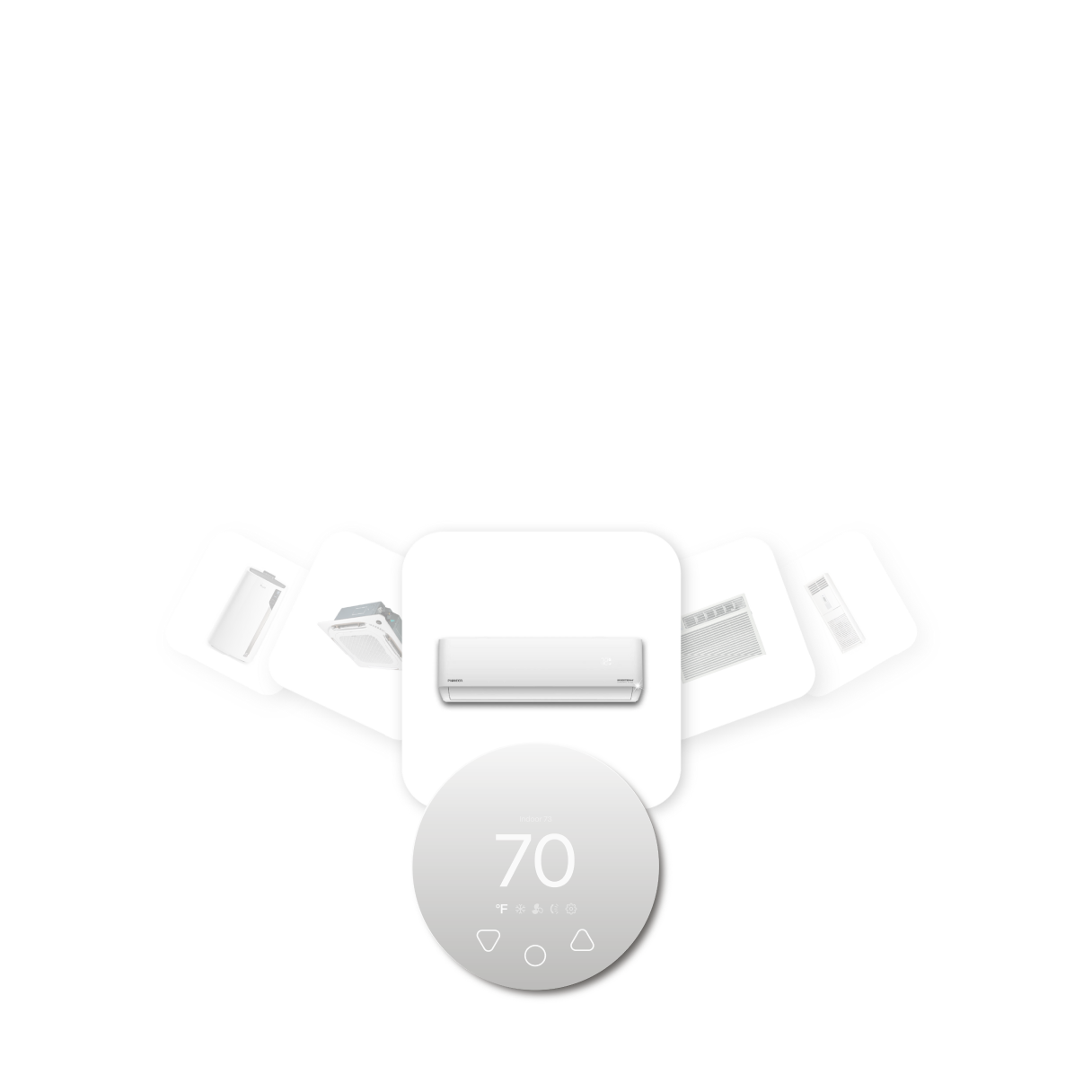



Shopping for a new heating and cooling system can get confusing fast. If you’ve been researching your options, you’ve probably run into the heat pump vs. mini-split debate everywhere — and most explanations make it sound far more complicated than it really is.
Here’s the truth most people miss: mini-splits and ducted heat pumps use the same core technology. Both move heat instead of generating it, which is why they’re so efficient. The real difference comes down to one thing — ducts.
Ducted heat pumps push air through your home’s ductwork. Mini-splits skip ducts entirely and deliver heating and cooling directly into individual rooms.
This guide breaks down how each system works, their real-world differences, costs, efficiency, and how to decide which one fits your home best — plus how smart home devices like Klima can make a mini-split more efficient than it already is.
What Is a Mini-Split System?
Picture this: an outdoor compressor sits beside your home. Slim refrigerant lines run through a small, three-inch hole in the wall. Inside, a compact unit mounted high on the wall heats or cools that room directly.
No ductwork. No major renovations. Just targeted comfort where you need it.
Here’s where the terminology gets confusing. Most mini-splits are heat pumps. They heat in winter and cool in summer by reversing the refrigeration cycle. The industry just decided that “heat pump” usually means ducted, while “mini-split” means ductless — even though the technology is the same.
Mini-splits are especially useful for problem spaces:
-
Garage workshops that freeze in winter
-
Bedrooms that never cool evenly
-
Finished attics or basements with no HVAC connection
-
Home offices, additions, and sunrooms
Instead of extending ductwork or overhauling your system, a mini-split solves the issue with minimal disruption.
What Is a Ducted Heat Pump?
From the outside, a ducted heat pump looks almost identical to a traditional central air conditioner. There’s an outdoor unit near your home and an indoor air handler connected to your existing ductwork.
Inside, warm or cool air travels through ducts and exits through vents in your floors, walls, or ceilings — just like central HVAC.
What makes it different from older systems is how it heats. Rather than burning fuel or using electric resistance heat, a ducted heat pump pulls heat from the outdoor air and moves it inside. Even cold air contains usable heat energy. Modern cold-climate systems can operate efficiently in temperatures as low as -15°F.
From a design standpoint, ducted heat pumps have a clear advantage. All the mechanical components stay hidden. Inside your home, all you see are vents — no visible equipment on the walls.
Compatible with all brands of ACs and Mini-Splits
Automate Climate Management
Control remotely
Reduce Energy Consumption
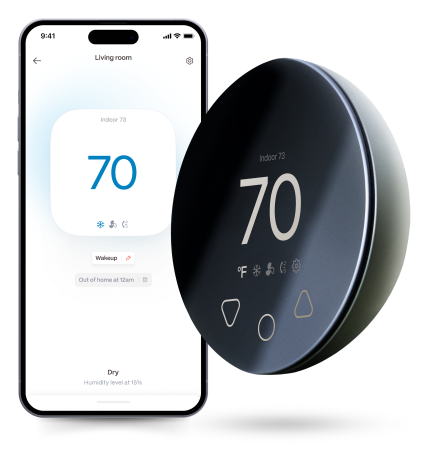
Monitor bills in realtimeKlima - Smart Home Thermostat for Mini-splits, Air Conditioners and Heatpumps
What Are the Differences Between a Mini-Split and a Ducted Heat Pump?
While the technology is shared, the experience of living with each system is very different.
1. Efficiency Comparison
This is where mini-splits often shine.
Ductwork is a major source of energy loss, especially when it runs through hot attics or unconditioned crawl spaces. The U.S. Department of Energy estimates that over 30 percent of heating and cooling energy is lost through ducts in many homes.
Mini-splits avoid this entirely. Refrigerant travels directly to each indoor unit through insulated lines.
-
Mini-splits: commonly reach 20–33 SEER2
-
Ducted heat pumps: typically land around 15–20 SEER2, depending on duct quality
Both systems benefit from inverter compressors, which adjust output continuously instead of cycling on and off. That alone can reduce energy use by roughly 30 percent compared to older equipment.
2. Installation and Cost Differences
Installing a single-zone mini-split is usually fast. An experienced technician can complete it in a few hours.
Ducted systems are more complex. If ductwork already exists and is in good condition, installation is straightforward. If not, expect construction, longer timelines, and higher costs.
Typical installed costs:
-
Single-zone mini-split: $2,000–$5,000
-
Whole-home mini-split system: $10,000–$20,000
-
Ducted heat pump with existing ducts: $4,000–$8,000
-
Ducted heat pump with new ducts: $10,000–$25,000
3. Zoning and Visual Impact
Mini-splits excel at zoning. Each indoor unit runs independently, so you can heat or cool only the rooms you’re using. Bedrooms, living areas, and offices can all have different temperatures — no thermostat battles required.
Ducted systems usually treat the house as one zone unless you add motorized dampers and controls, which increases cost and complexity.
Visually, ducted systems disappear into the structure of the home. Mini-splits are visible — typically a white unit mounted high on the wall. Some homeowners stop noticing them after a week. Others never love the look.
Which HVAC System Should You Choose?
The right choice depends less on technology and more on your home’s layout.
Choose a mini-split if:
-
Your home doesn’t have ductwork
-
You’re adding or converting a space
-
You need targeted comfort in specific rooms
-
Running ducts would require major demolition
Choose a ducted heat pump if:
-
Your home already has well-sealed ductwork
-
You want whole-home comfort from one system
-
Visible indoor units are a dealbreaker
-
You prefer a familiar central-air look and feel

How to Make Your Ductless HVAC System Smart With Klima
Klima is a smart thermostat designed to upgrade ductless A/C systems like mini-splits, window ACs, and other systems into intelligent, connected devices.
Instead of replacing your mini-split, Klima enhances it — adding automation, remote access, and energy insights that help reduce waste and improve comfort.
Klima’s Smart Benefits
Klima adds advanced smart control and energy efficiency intelligent features to both mini-splits and ductless heat pumps:
1. Remote access from anywhere
Adjust your home’s temperature from your phone, whether you’re at work or traveling with Klima’s Remote Access feature.
2. Location-based automation
Klima uses geofencing technology to turn mini-split systems off when no one is home and prepare a comfortable temperature before you return.
3. Energy and cost monitoring
Track real-time usage of your mini-split, receive bill predictions, and spot opportunities to save with Klima’s Cost Monitoring feature.

4. Smart scheduling automation
Set custom schedules of your mini-split for different rooms and routines without constant manual adjustments.
5. Mini-split health monitoring
Get insights into performance issues early of your mini-split to extend equipment lifespan.
6. Guest access and Guardian Mode
Share control of your mini-split with others and set maximum and minimum temperature limits to protect your budget through the Boldr Energy app.
Klima works with all ductless AC models and integrates with Apple Home, Google Home, HomeKit, Google Assistant and Amazon Alexa.

Conclusion
The heat pump vs. mini-split decision really comes down to your walls.
If your home already has quality ductwork, a ducted heat pump is often the simplest and cleanest solution. If you’re starting from scratch or dealing with hard-to-condition spaces, mini-splits deliver better efficiency and flexibility without major construction.
One last thing most homeowners overlook: smart controls often matter more than the HVAC system itself. A well-sized mini-split system paired with intelligent automation, like Klima, will outperform a larger, less efficient setup running on outdated schedules — every time.
FAQ
Is a mini-split the same thing as a heat pump?
Most mini-splits are heat pumps. The difference is ductless vs. ducted air delivery.
Which system costs less to operate monthly?
Mini-splits usually cost less due to higher efficiency and no duct losses.
Can I install a mini-split myself?
Some DIY systems exist, but professional installation is recommended for performance, safety, and warranty protection.
How long do mini-split systems typically last?
With proper maintenance, mini-splits last 15–20 years.
Do mini-splits work in extremely cold climates?
Yes. Cold-climate models operate efficiently down to about -15°F, though backup heat may be needed in extreme conditions.


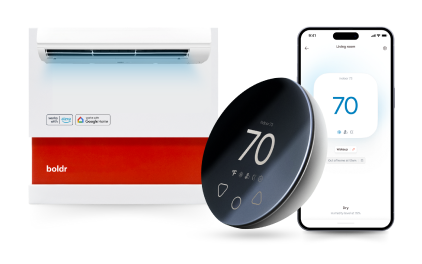
Klima - Smart Home Thermostat for Mini-splits, Air Conditioners and Heatpumps
Compatible with all brands of ACs and Mini-Splits Automate Climate Management Control remotely Reduce Energy Consumption Monitor bills in realtime
Try NowRecent Articles

Mini-Split Outdoor Unit Clearance 2026 Guide
A mini-split outdoor unit needs air. Lots of it. The condenser pull...
Read More
What Happens if Your Mini-Split Is Too Small?
Most homeowner sizing advice focuses on oversized mini-splits. But ...
Read More
Does a Mini-Split Need a Manual J Load Calculation?
A 500-square-foot room does not automatically need a 12,000 BTU min...
Read More
Signs Your Mini-Split May Have a Refrigerant Leak
A mini-split does not normally “use up” refrigerant the way a car u...
Read More
Mini-Split Minimum Capacity: Why It Matters
When homeowners compare mini-splits, they normally look at the bigg...
Read More