






A window air conditioner looks simple from the outside—plug it in, press “Cool,” enjoy cold air. But inside, it’s a compact machine that’s constantly pulling dust, pollen, grease, and moisture through tight spaces.
Over time, that buildup doesn’t just make the unit less effective—it can shorten its lifespan, raise your energy bills, and even affect your indoor air quality.
If you’ve ever wondered whether cleaning your window AC is really worth the effort, the answer is yes.
And if you’ve ever been afraid of damaging delicate fins or causing leaks, don’t worry—this guide walks you through what to clean, how to clean it safely, and what most people forget.
The Real Cost of Skipping This Chore
Most window AC units don’t die from old age—they suffocate.
Dust on coils blocks heat transfer, forcing your compressor to run longer cycles. Even moderate buildup has measurable costs:
-
A moderately dirty filter adds $8–$12 per month to the electric bill of a 10,000 BTU unit.
-
Grimy coils add another $10–$15 per month.
Over a five-month cooling season, that’s $90–$135 wasted—and that’s before you factor in the long-term damage.
The mechanical toll adds up fast:
-
Clogged drains cause water to back up and corrode connections.
-
Dirty coils strain the compressor, cutting a typical 10–12 year lifespan down to 6–8 years.
-
Restricted airflow can cause freeze-ups that crack refrigerant lines.
And there’s an invisible cost: your air quality. Damp coils and drain pans are prime mold territory.
That “old gym bag” smell isn’t just unpleasant—it can mean spores are being pushed into your room every time the unit runs.
Warning signs that cleaning can’t wait:
-
Ice on coils or refrigerant lines
-
Water dripping indoors instead of outside
-
Slower cooling than last season
-
Musty odors when the unit starts
-
New rattling, buzzing, or grinding noises
The Filter Situation
Identify what you have
Window units usually use one of three filter types:
-
Foam filters: spongy, compressible, washable
-
Mesh filters: rigid screen material over a frame, washable
-
Pleated filters: paper-like accordion folds, usually disposable
How to clean each type
-
Foam: soak in warm soapy water, gently squeeze (don’t wring), rinse until water runs clear
-
Mesh: blast with water first, then scrub lightly with dish soap and a soft brush
-
Pleated: replace—water ruins them, and vacuuming won’t restore performance
The drying mistake that creates mold
Even slightly damp filters can grow mold within 48 hours.
-
Foam filters need 24–48 hours to fully dry (faster with a fan)
-
Mesh filters typically dry in 4–6 hours
Before reinstalling, make sure there’s no cool dampness and no visible moisture.
Cleaning schedule
-
Monthly during active use is the safe baseline
-
Every 2 weeks if you have pets, allergies, dust, or constant runtime
Replace foam when it tears, won’t spring back, or holds odor even after washing.
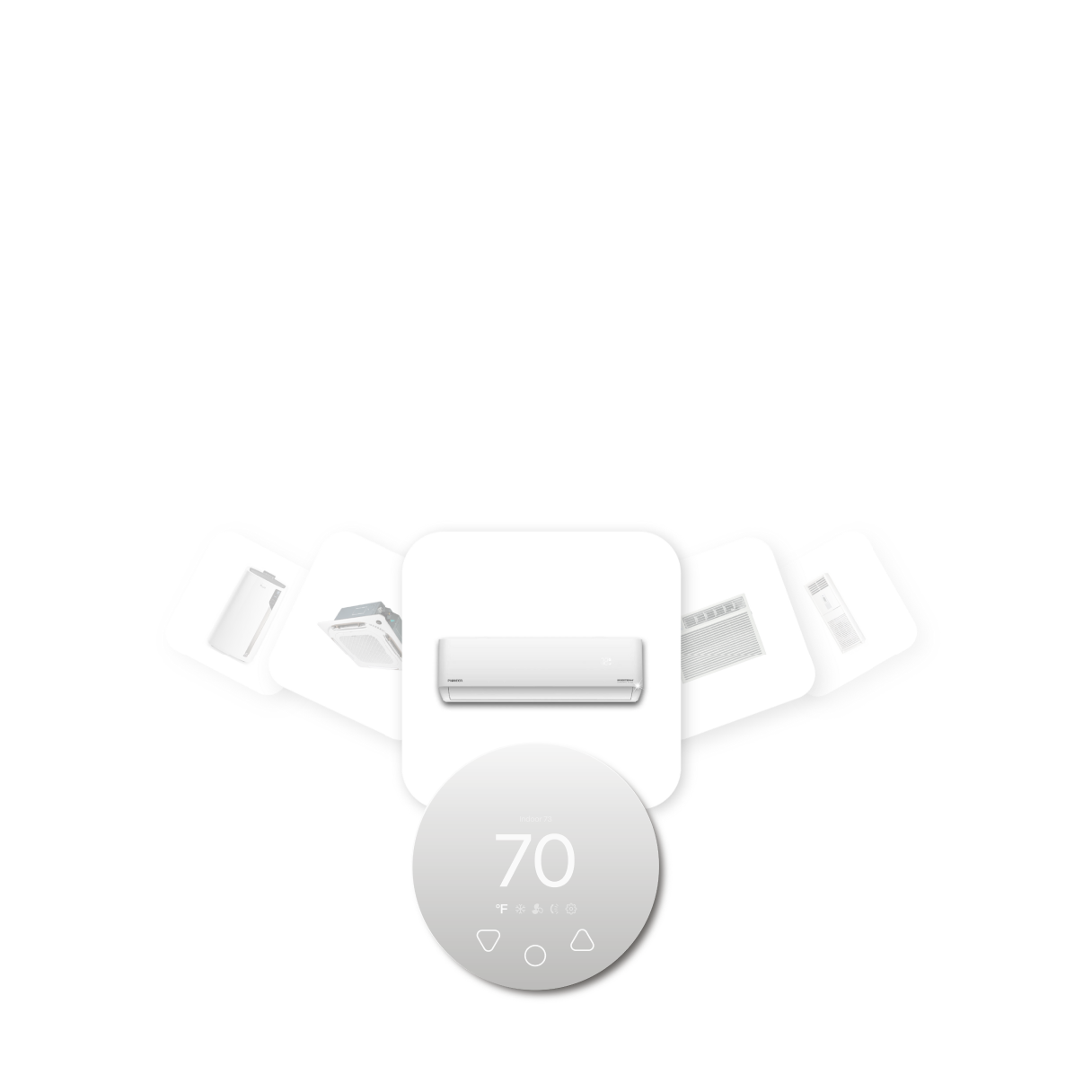
Compatible with all brands of ACs and Mini-Splits
Automate Climate Management
Control remotely
Reduce Energy Consumption
Monitor bills in realtimeKlima - Smart Home Thermostat for Mini-splits, Air Conditioners and Heatpumps
Tackling Window AC Coils Without Any Damage
Why both sides matter
Your unit has two sets of coils:
-
Evaporator coils (front): absorb heat from indoor air
-
Condenser coils (back): release that heat outside
If either side is dirty, efficiency drops. Clean one coil set and ignore the other, and you’ve only solved half the problem.
Moderate buildup can cause a 30–40% efficiency drop—and the grime isn’t just dust. It can be kitchen grease, smoke residue, and outdoor pollution that clings like a sticky film.
Safe coil cleaning process
-
Unplug the unit and wait 10 minutes.
-
Vacuum coils first using a brush attachment, moving in the direction of the fins.
-
Apply foaming coil cleaner (optional but worth it if it’s been a year+). Let sit 10–15 minutes.
-
Rinse carefully if needed (especially for the back coils during deep cleaning). Use a gentle spray—never pressure wash.
Fixing bent fins
Bent fins restrict airflow even when clean. A fin comb can straighten them quickly:
-
Match the fin spacing (often 14–16 fins per inch).
-
Pull upward gently through bent sections.
What NOT to use
-
Bleach: corrodes metals and damages coils long-term
-
Pressure washers: bend fins beyond repair
-
Abrasive brushes: scratch protective coatings
-
Ammonia cleaners: can damage refrigerant components
Drying requirements
Let coils air dry 2–3 hours minimum before reassembly. Trapped water can corrode metal and create electrical issues.
The Parts Most People Forget
Drain channels
A window AC can produce up to 2 gallons of condensation per day in humid climates. That water needs to exit through drain channels.
If drain holes clog, water backs up into electrical components—or drips into your room.
How to clear them:
-
Use a pipe cleaner, thin wire, or turkey baster
-
Flush with diluted vinegar (1:1 vinegar + water)
-
Confirm flow exits out the back—if it pools, keep clearing
Optional prevention: algae tablets designed for AC drain lines can reduce buildup.
Exterior vents and case
Dust and grime on the case trap heat and reduce the unit’s ability to shed warmth. Clean vents and louvers too—grit builds up in the pivots and restricts airflow direction.
Fan blades
Dirty fan blades cause vibration, noise, and reduced airflow. If accessible, wipe each blade with a damp cloth. Keep water away from the motor shaft.
Window track and seals
While the unit is out, clean the window sill, side panels, and foam seals. Dirty tracks and worn seals let hot air leak in, forcing longer run cycles.
When cleaning isn’t enough
If odors return quickly, mold may be inside coil channels or behind insulation where you can’t reach. In older units (7–8+ years), persistent mold may cost more to remediate than replacing the unit.
Also check drainage and tilt: the unit should angle slightly backward so water drains out instead of pooling.

A Guide to Seasonal Cleaning Calendar
Monthly during active use (10 minutes)
-
Inspect and clean filter
-
Wipe front vents and exterior
-
Check drainage: water should drip out the back in humid conditions
-
Listen for new noises (rattles, buzzing, grinding)
Pre-summer deep clean (45–60 minutes)
Do this in late April or early May:
-
Remove the unit (if possible)
-
Clean both coil sets thoroughly
-
Straighten bent fins
-
Flush drain channels with vinegar
-
Inspect seals and side panels
-
Clean accessible fan blades
This sets your efficiency baseline for the hottest months.
Mid-season maintenance (July/August)
If you run it heavily or live in dust/pet environments, repeat coil cleaning mid-summer. Otherwise, filter and drainage checks are usually enough.
End-of-season shutdown (September/October)
-
Clean everything thoroughly
-
Run fan-only mode for 2–3 hours to dry internal moisture
-
Store upright indoors in a dry place
-
Avoid sealed plastic covers (they trap moisture)
Off-season check (January/February)
Look for:
-
Rust spots
-
Pest nests
-
Musty odors indicating moisture problems
Catching issues in winter prevents panic when the first heat wave hits.

What Is Klima?
Cleaning your window A/C keeps it efficient and healthy—but how you use your unit matters just as much as how clean it is. That’s where Klima comes in.
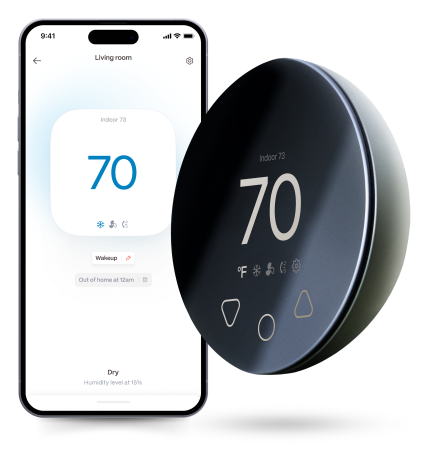
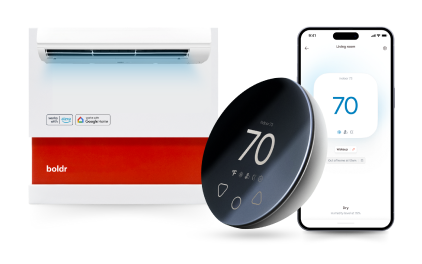
Klima is a smart controller that upgrades any window A/C into a smart, app-controlled cooling system.
Klima gives you the access to control your window AC remotely, through the Boldr Energy app, giving you smarter automation, better comfort, and less wasted energy.
Instead of manually turning the unit on and off, guessing the best temperature, or accidentally running it all day in an empty room, Klima helps you ensure your window A/C runs only when it actually needs to—which can lead to savings of up to 30% on cooling costs while keeping comfort consistent.
Klima also integrates with smart home systems like Google Home, Google Assistant, HomeKit, Apple Home, SmartThings and Amazon Alexa for voice control and centralized control.

Conclusion
A clean window air conditioner isn’t just about better airflow—it’s about lower energy bills, longer equipment life, and healthier indoor air.
Most window A/C failures aren’t sudden defects. They’re the result of neglected filters, clogged drain channels, dirty coils, and unnoticed moisture buildup. A simple routine—monthly filter checks and a thorough seasonal deep clean—can prevent efficiency loss, reduce mold risk, and extend your unit’s lifespan by years.
But maintenance is only half the equation.
Even a perfectly cleaned window A/C can waste energy if it runs at the wrong times, cools empty rooms, or operates longer than necessary.
That’s where Klima adds a second layer of protection. By turning your window unit into a smart, app-controlled system, Klima helps automate schedules, prevent unnecessary runtime with geofencing and open-window detection, and monitor energy usage in real time.
FAQ
Can I clean my window AC without removing it from the window?
Yes. Monthly filter cleaning and light vacuuming can be done in place. Remove the unit for deep cleaning if there’s visible mold, serious odors, leaks, or heavy coil buildup.
My filter looks fine but the unit still smells musty. What’s wrong?
Odors usually come from moisture and mold in coils, drain pans, or window tracks. Check drainage flow and treat visible mold with vinegar solution.
How long should I wait before turning on my AC after cleaning?
Wait until everything is fully dry. Coils should air dry at least 2–3 hours, and filters must be completely dry (often 4–48 hours depending on type).
Why does water drip from the front of my AC instead of the back?
Usually the unit isn’t tilted properly, or drain channels are clogged. The AC should tilt slightly backward so condensation drains outside.
Is it worth paying for professional cleaning versus doing it myself?
If you have persistent mold, severe coil buildup, leaks, or a hard-to-remove unit, professional cleaning may be worth it.
For routine maintenance, DIY cleaning is usually effective and affordable.


Klima - Smart Home Thermostat for Mini-splits, Air Conditioners and Heatpumps
Compatible with all brands of ACs and Mini-Splits Automate Climate Management Control remotely Reduce Energy Consumption Monitor bills in realtime
Try NowRecent Articles

Mini-Split Outdoor Unit Clearance 2026 Guide
A mini-split outdoor unit needs air. Lots of it. The condenser pull...
Read More
What Happens if Your Mini-Split Is Too Small?
Most homeowner sizing advice focuses on oversized mini-splits. But ...
Read More
Does a Mini-Split Need a Manual J Load Calculation?
A 500-square-foot room does not automatically need a 12,000 BTU min...
Read More
Signs Your Mini-Split May Have a Refrigerant Leak
A mini-split does not normally “use up” refrigerant the way a car u...
Read More
Mini-Split Minimum Capacity: Why It Matters
When homeowners compare mini-splits, they normally look at the bigg...
Read More