







Mini-splits and solar panels are a natural combination — a solar array generates free electricity during peak sun hours, and a mini-split is one of the most electricity-efficient ways to heat and cool a home. Together, they can dramatically reduce or eliminate HVAC electricity costs. This guide covers how the combination works, what system sizes are needed, and how to design an effective solar + mini-split setup.
Compatible with all brands of ACs and Mini-Splits
Automate Climate Management
Control remotely
Reduce Energy Consumption
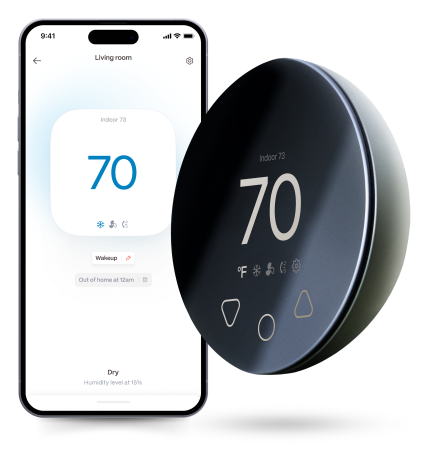
Monitor bills in realtimeKlima - Smart Home Thermostat for Mini-splits, Air Conditioners and Heatpumps
How Mini-Splits and Solar Work Together
A solar photovoltaic (PV) system generates DC electricity that is converted to AC through an inverter and fed into your home's electrical panel. The mini-split draws from that panel the same way any other appliance does — it simply uses electricity, regardless of whether that electricity came from solar panels or the grid. When the solar system produces more electricity than the home uses, the excess is typically exported to the grid (net metering) or stored in a battery. When the home uses more than the solar produces (at night, during cloudy weather), it draws from the grid.
Stay cool and save more. Use code JONES15 to get 15% off your entire order—no strings attached.
Upgrade your comfort with a Klima today.
Solar System Sizing for a Mini-Split
| Mini-Split Size | Annual kWh (Mixed Climate) | Solar Panels Needed to Offset* | Solar System Size |
|---|---|---|---|
| 9,000 BTU | 800–1,200 kWh | 3–5 panels | ~1.0–1.5 kW |
| 12,000 BTU | 1,000–1,800 kWh | 4–6 panels | ~1.5–2.0 kW |
| 18,000 BTU | 1,500–2,600 kWh | 5–9 panels | ~2.0–3.0 kW |
| Whole home (multi-zone) | 3,000–6,000 kWh | 10–20 panels | ~3.5–7.0 kW |
*Assumes 400W panels at average US solar irradiance. Actual panel count varies significantly by geographic location and roof orientation.
The Solar + Mini-Split Advantage
The timing of mini-split peak demand often aligns well with solar peak production:
- Summer cooling: Peak cooling demand occurs on hot, sunny days — exactly when solar panels produce maximum output. The alignment is nearly ideal.
- Winter heating: Less ideal — solar production is lower in winter when heating demand is highest. Battery storage or net metering is needed to bridge this gap.
- Overall: A well-sized solar system with net metering can offset 80–100% of annual mini-split electricity consumption in most US and Canadian markets.
Frequently Asked Questions
Can I run a mini-split directly off solar panels without a grid connection?
Yes, with a sufficient battery storage system. A mini-split requires a stable AC power supply — you cannot run it directly from DC solar panels without an inverter. An off-grid system needs enough battery storage to power the mini-split through the night and through cloudy periods. For a 12,000 BTU mini-split averaging 800W, running 10 hours/day requires at least 8 kWh of usable battery storage plus solar production to recharge it.
Do solar panels and a mini-split qualify for federal incentives separately?
Yes — in the US, solar panels qualify for the 30% IRA Section 25D investment tax credit (unlimited), while a qualifying mini-split qualifies for a separate up to $2,000 IRA Section 25C tax credit. Both credits can be claimed in the same tax year on the same return, making a combined solar + heat pump installation particularly attractive from an incentive standpoint.
Related reading:
→ Mini-Split Annual Energy Use: How Many kWh?
→ Do Mini-Splits Save Money? Real Numbers for US and Canada
→ Mini-Split ROI: When Does It Pay for Itself?


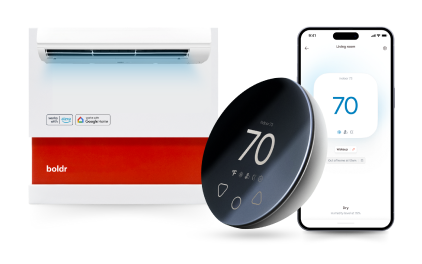
Klima - Smart Home Controller for Mini-splits, Air Conditioners and Heatpumps
Compatible with all brands of ACs and Mini-Splits Automate Climate Management Control remotely Reduce Energy Consumption Monitor bills in realtime
Try NowRecent Articles

Mini-Split Outdoor Unit Clearance 2026 Guide
A mini-split outdoor unit needs air. Lots of it. The condenser pull...
Read More
What Happens if Your Mini-Split Is Too Small?
Most homeowner sizing advice focuses on oversized mini-splits. But ...
Read More
Does a Mini-Split Need a Manual J Load Calculation?
A 500-square-foot room does not automatically need a 12,000 BTU min...
Read More
Signs Your Mini-Split May Have a Refrigerant Leak
A mini-split does not normally “use up” refrigerant the way a car u...
Read More
Mini-Split Minimum Capacity: Why It Matters
When homeowners compare mini-splits, they normally look at the bigg...
Read More