







A server room or IT closet has unique climate control requirements — precision temperature maintenance, 24/7 operation, low humidity, and often a small, enclosed space that generates significant heat from equipment. A mini-split can be an effective and energy-efficient solution for server room cooling, but the application requires careful attention to sizing, redundancy, condensate management, and 24/7 reliability. This guide covers everything you need to know before installing a mini-split in a server room.
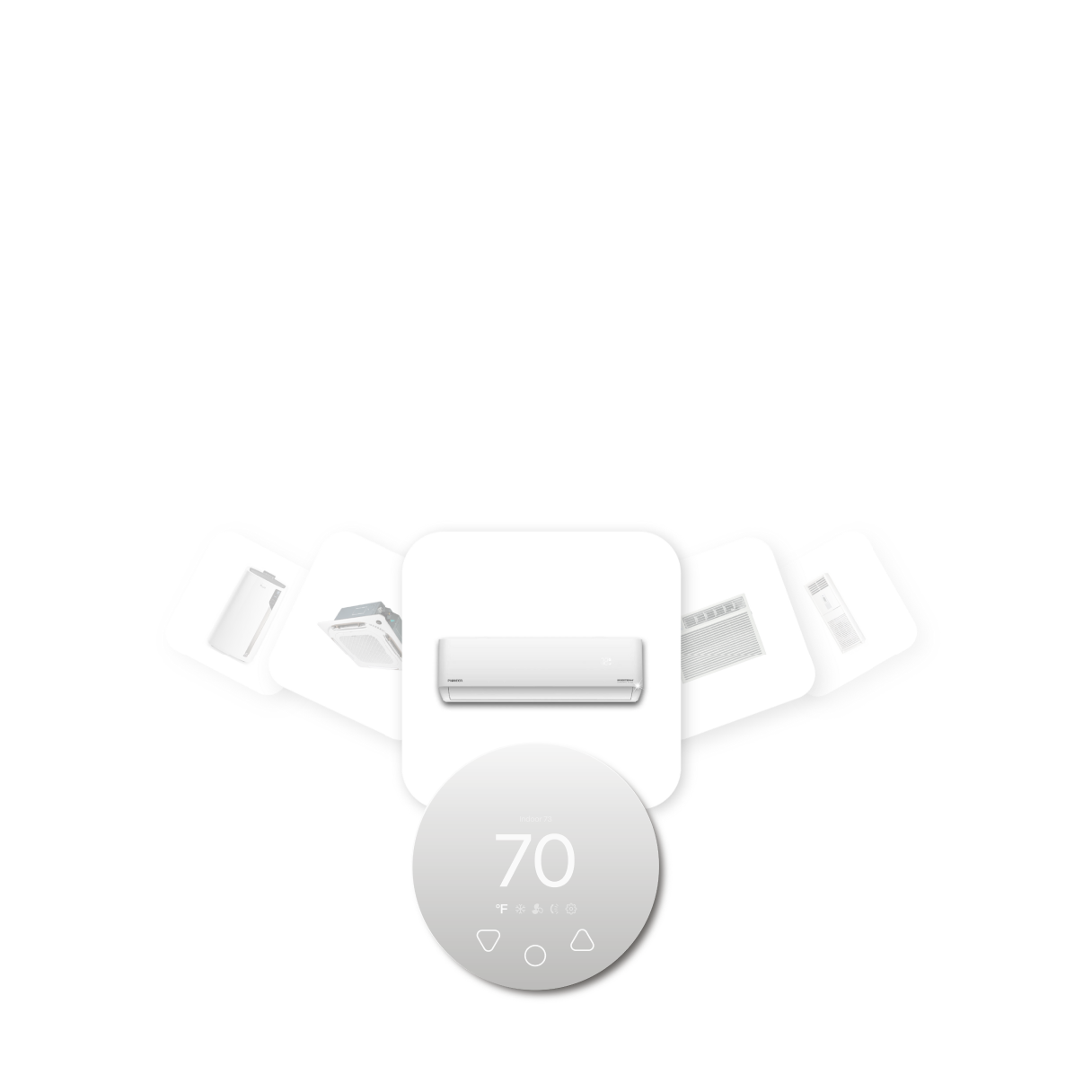
Compatible with all brands of ACs and Mini-Splits
Automate Climate Management
Control remotely
Reduce Energy Consumption
Monitor bills in realtimeKlima - Smart Home Thermostat for Mini-splits, Air Conditioners and Heatpumps
Why Mini-Splits Work Well for Server Rooms
- Precise temperature control: Mini-split inverter technology maintains temperature within ±1°F of setpoint — more precise than central HVAC systems that serve multiple zones
- 24/7 operation capability: Commercial-grade mini-splits are designed for continuous operation — they are not limited to residential duty cycles
- No ductwork required: Eliminates the fire suppression and air quality complications of ductwork in server environments
- Independent from building HVAC: A dedicated mini-split for the server room is not affected by the building's general HVAC schedule — critical for after-hours cooling
- Energy efficiency: COP 3.0–4.0 is significantly more efficient than precision air conditioning units traditionally used in server environments
Sizing a Mini-Split for a Server Room
Server room cooling is primarily a sensible heat removal problem — the heat load comes almost entirely from equipment, not people or solar gain. Calculate BTU requirements from equipment heat output:
- Servers: Heat output ≈ power consumption (watts) × 3.41 BTU/hour per watt
- Networking equipment: Same calculation — wattage × 3.41
- UPS / power supply: Include inefficiency losses — typically add 10–15% above rated load
- Add 20% safety margin for future equipment additions
Example: A server room with 5 × 500W servers + 300W networking equipment = 2,800W × 3.41 = approximately 9,548 BTU/hr. A 12,000 BTU mini-split with a 20% safety margin provides comfortable overhead.
Important Considerations for Server Room Applications
| Consideration | Requirement |
|---|---|
| Redundancy | Install two mini-splits if uptime is critical — one as backup. A single point of failure in cooling can result in overheating and equipment shutdown within minutes |
| Condensate management | Server rooms run continuously — the condensate drain must be routed reliably with no risk of overflow. Use a condensate pump if gravity drain is not available |
| Humidity control | Server rooms typically target 45–55% relative humidity. Mini-splits dehumidify during cooling operation — monitor humidity with a data logger and add a dehumidifier if needed in humid climates |
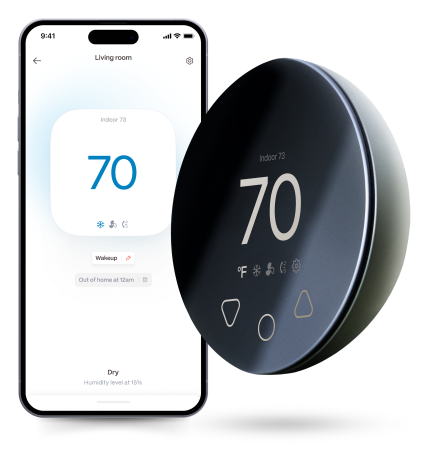
| Remote monitoring | Connect the mini-split to a smart controller with remote monitoring — temperature alerts sent to your phone protect against unnoticed cooling failures |
| 24/7 rated units | Commercial-grade or commercial-warranty mini-splits are preferred for server room duty; some residential warranties exclude continuous commercial operation |
Frequently Asked Questions
What temperature should a server room be kept at?
ASHRAE's recommended temperature range for data centres is 64.4–80.6°F (18–27°C) with a recommended range of 59–77°F (15–25°C) for most equipment. Mini-splits can maintain this range precisely and continuously. Setting the mini-split to 68–72°F (20–22°C) is typical for small server rooms.
Related reading:
→ Mini-Split for Workshop: Complete Buying Guide 2026
→ Mini-Split for Garage: Sizing, Cost and Best Picks
→ Mini-Split Annual Energy Use: How Many kWh?


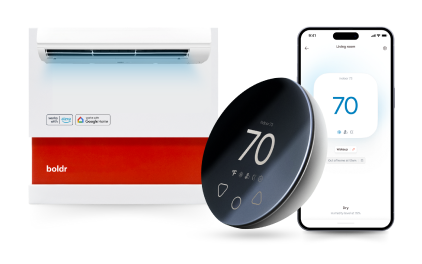
Klima - Smart Home Controller for Mini-splits, Air Conditioners and Heatpumps
Compatible with all brands of ACs and Mini-Splits Automate Climate Management Control remotely Reduce Energy Consumption Monitor bills in realtime
Try NowRecent Articles

Mini-Split Outdoor Unit Clearance 2026 Guide
A mini-split outdoor unit needs air. Lots of it. The condenser pull...
Read More
What Happens if Your Mini-Split Is Too Small?
Most homeowner sizing advice focuses on oversized mini-splits. But ...
Read More
Does a Mini-Split Need a Manual J Load Calculation?
A 500-square-foot room does not automatically need a 12,000 BTU min...
Read More
Signs Your Mini-Split May Have a Refrigerant Leak
A mini-split does not normally “use up” refrigerant the way a car u...
Read More
Mini-Split Minimum Capacity: Why It Matters
When homeowners compare mini-splits, they normally look at the bigg...
Read More