





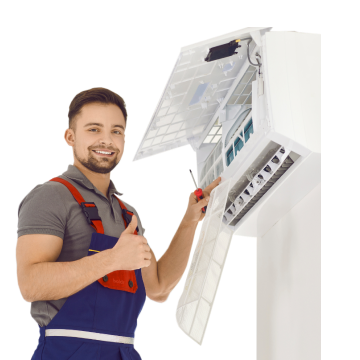

If your mini-split is not heating, the most common causes are the unit being set to the wrong mode, a dirty filter restricting airflow, or the outdoor temperature being below the system's rated operating range. Other causes include a normal defrost cycle, low refrigerant, a failed reversing valve, or an electrical fault. Work through the eight causes below before scheduling a service call — most can be resolved in minutes without a technician.
Compatible with all brands of ACs and Mini-Splits
Automate Climate Management
Control remotely
Reduce Energy Consumption
Monitor bills in realtimeKlima - Smart Home Thermostat for Mini-splits, Air Conditioners and Heatpumps
1. Wrong Operating Mode
Mini-splits have distinct operating modes: Heat, Cool, Dry, Fan Only, and Auto. If set to Cool or Fan Only, the unit will not heat regardless of the temperature setting.
Fix: Press the Mode button on your remote until the flame symbol (🔥) or "Heat" appears on the display. Set the temperature several degrees above the current room temperature. The compressor should engage within 2–3 minutes.
2. Dirty or Blocked Air Filter
A heavily clogged filter restricts airflow enough to prevent effective heat distribution and can trigger a safety shutoff in heating mode.
Fix: Remove, rinse, and fully dry the filter. Reinstall and test heating operation.
3. Defrost Cycle Running
When the outdoor unit's coil frosts over — common at temperatures between 20°F and 40°F (−7°C to 4°C) — the system automatically enters a defrost cycle. During this 3–10 minute process, the indoor unit temporarily blows cool or neutral air. This is normal, expected behaviour.
Fix: Wait 10–15 minutes. Heating resumes automatically. If defrost cycles occur more than once per hour in mild weather, call a technician — this indicates a potential refrigerant or sensor issue.
4. Outdoor Temperature Below Operating Range
Standard mini-splits are rated for heating to approximately 5°F (−15°C). Cold-climate designated models from various brands are rated to −13°F (−25°C) or lower. Below the unit's rated minimum, heating capacity drops sharply or the unit may shut down.
Fix: Check the outdoor temperature against your unit's rated heating specifications in the product manual or on the manufacturer's website. If your climate regularly falls below the unit's operating range, a cold-climate model or a backup heat source may be appropriate.
5. Low Refrigerant
In heating mode, refrigerant carries heat from outdoors to indoors. A refrigerant leak reduces heating capacity, causes longer run times without reaching temperature, and can cause icing on the outdoor coil in winter.
Fix: Requires a licensed HVAC technician. Signs include the outdoor coil icing over when it should not, and the unit running continuously without reaching the set temperature.
6. Failed Reversing Valve
The reversing valve switches refrigerant flow direction between cooling and heating modes. A failed valve can leave the unit stuck in cooling mode — producing cool or room-temperature air even when set to Heat.
Symptom: Unit performs normally in Cool mode but produces no heat in Heat mode.
Fix: Requires a technician. Reversing valve replacement typically costs $250–$600 for parts and labour.
7. Thermostat Set Below Current Room Temperature
If the set temperature is lower than or equal to the current room temperature, the unit has no reason to activate heating — the space is already at or above target.
Fix: Set the temperature at least 3–5°F (1–3°C) above the current room temperature and wait for the compressor to engage.
8. Tripped Breaker or Electrical Fault
A tripped breaker at the outdoor unit stops the compressor entirely — the indoor unit may still appear to function (circulating air) while producing no heat.
Fix: Check and reset the circuit breaker for the outdoor unit. If it trips again, do not reset — call a technician. An error code may appear on the indoor unit display; refer to your brand's error code guide for specific fault information.

What Is the Boldr Smart Controller?
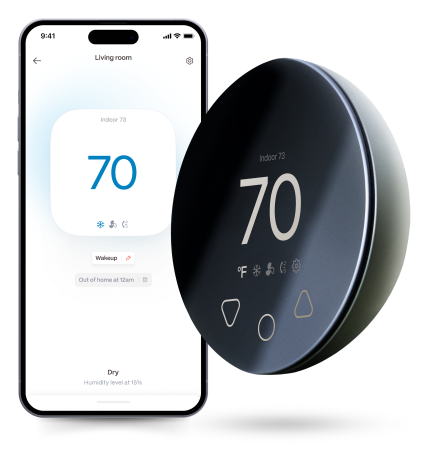
Mode errors — accidentally leaving your mini-split in Cool or Fan Only when you need heat — are among the most common and easily avoided mini-split problems. The Boldr Smart Controller shows your mini-split's current mode, temperature setting, and energy use in real time from your phone. If something is set incorrectly, you can see and correct it remotely no matter where you are — before you arrive home to a cold house.
→ Monitor and control your mini-split remotely with Boldr Smart Controller
Frequently Asked Questions
Why is my mini-split blowing cold air in heat mode?
The most common reason is the defrost cycle — the unit temporarily shifts operation for 3–10 minutes to remove ice from the outdoor coil, which is normal behaviour in cold weather. If cold air continues beyond 15 minutes, check the mode setting first, then check for refrigerant issues or a potential reversing valve fault.
At what outdoor temperature does a mini-split stop heating?
Standard mini-splits lose significant heating capacity below 5°F (−15°C). Cold-climate designated models maintain full heating capacity to −13°F (−25°C) and can operate to −22°F (−30°C). Always check your specific model's cold-weather heating specifications for your climate zone.
Does a mini-split heat as well as a gas furnace?
In mild to moderate climates above 10°F (−12°C), cold-climate mini-splits deliver comparable comfort to gas furnaces at lower operating cost per BTU. In climates regularly below −13°F (−25°C), gas furnaces maintain higher peak heating capacity. Many Canadian homeowners use a cold-climate mini-split as primary heat with a gas furnace as backup for the coldest periods of winter.
Related reading:
→ Mini-Split Not Cooling? 10 Reasons and Fixes
→ Mini-Split Error Codes: Complete Guide by Brand
→ Do Mini-Splits Work in Cold Weather? (Canada + Northern US)


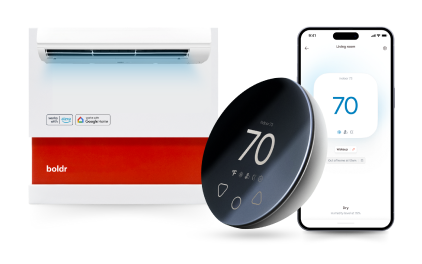
Klima - Smart Home Controller for Mini-splits, Air Conditioners and Heatpumps
Compatible with all brands of ACs and Mini-Splits Automate Climate Management Control remotely Reduce Energy Consumption Monitor bills in realtime
Try NowRecent Articles

Mini-Split Outdoor Unit Clearance 2026 Guide
A mini-split outdoor unit needs air. Lots of it. The condenser pull...
Read More
What Happens if Your Mini-Split Is Too Small?
Most homeowner sizing advice focuses on oversized mini-splits. But ...
Read More
Does a Mini-Split Need a Manual J Load Calculation?
A 500-square-foot room does not automatically need a 12,000 BTU min...
Read More
Signs Your Mini-Split May Have a Refrigerant Leak
A mini-split does not normally “use up” refrigerant the way a car u...
Read More
Mini-Split Minimum Capacity: Why It Matters
When homeowners compare mini-splits, they normally look at the bigg...
Read More