






If you're still quoting jobs like it's 2023, stop. The refrigerant your shop has run for the last decade is no longer the default answer, and the sooner your crews are fluent in why, the fewer expensive surprises show up on a Friday afternoon service call.
Here's the short version: R-410A, the refrigerant that replaced R-22 and became the backbone of residential and light-commercial systems for twenty years, is being phased down under the EPA's AIM Act in the US and equivalent Kigali Amendment commitments in Canada. Its replacement in most new equipment is R-454B — and it doesn't behave, handle, or price out the same way. This isn't a future problem to plan around. For new residential and light-commercial systems, it's already the rule.
What Actually Changed
The AIM Act gave the EPA authority to phase down high-global-warming-potential (GWP) hydrofluorocarbons across the US, the same way the Montreal Protocol phased out CFCs and HCFCs a generation ago. R-410A has a GWP of about 2,088. Under the Technology Transitions Rule, new residential and light-commercial air conditioning and heat pump systems manufactured for install can no longer use refrigerants above a 700 GWP threshold.
R-410A doesn't clear that bar. R-454B does, at roughly 466 GWP — about 78% lower. That's why manufacturers converged on it (alongside R-32, which several brands are using instead) as the default charge in new equipment.
Two things to keep straight, because customers and even some techs conflate them:
This is an installation rule, not a service ban. You can still legally service, recharge, and maintain existing R-410A systems already in the field. Nobody is coming to rip a working system out of a customer's attic. What's restricted is putting new high-GWP equipment into the ground going forward.
"New" means the equipment, not just the refrigerant. You can't solve this by simply asking a distributor for an R-410A drop-in replacement in a new install. The systems themselves — compressors, metering devices, line set specifications — are engineered around the refrigerant they ship with. There is no field-legal way to charge a new R-454B-rated unit with R-410A, or vice versa.
R-454B vs. R-410A, Side by Side
- GWP: R-410A ~2,088. R-454B ~466 — about a 78% reduction.
- ASHRAE safety classification: R-410A is A1 (non-flammable). R-454B is A2L — mildly flammable, with a slow burn velocity compared to true flammable refrigerants like propane (R-290), but flammable enough that it changes handling rules.
- Operating pressure: Broadly similar to R-410A, which is one reason the transition has been more manageable than the R-22-to-R-410A shift — but always follow manufacturer charge charts rather than assuming a 1:1 swap.
- Refrigerant charge: Systems are engineered for specific charge amounts; R-454B systems are not simply "topped off" the way older R-22 systems sometimes were.
- Equipment compatibility: Not interchangeable. A2L-rated equipment, line sets, and components are required.
What A2L Actually Requires in the Field
The "mildly flammable" classification is the part that changes your day-to-day operations, not just your refrigerant order.
Leak detection. A2L systems installed in certain occupied spaces require refrigerant detection and mitigation systems that can trigger ventilation or shut down the unit if a leak is detected. Know which install scenarios trigger this requirement under the applicable mechanical code in your jurisdiction — it varies by space type and refrigerant charge size.
Recovery and handling equipment. Standard recovery machines rated for A1 refrigerants aren't automatically rated for A2L service. Check your recovery equipment, gauges, and hoses against manufacturer specifications for A2L compatibility before your first job.
Electrical and ignition sources. Because A2L refrigerants carry a flammability rating, spark-producing components near refrigerant lines and reversing valves are being redesigned across the industry, and jobsite practices (open flame brazing procedures, ventilation during recovery) deserve a refresher even for veteran techs who've done this a thousand times with R-410A.
Training and certification. EPA Section 608 certification remains the baseline, but A2L-specific safety training is quickly becoming table stakes — some manufacturers are tying warranty registration and dealer program eligibility to proof of A2L training completion. If your techs haven't been through it yet, this is the year.
What This Costs Your Shop
Budget for three line items, not one:
Tooling. Recovery machines, leak detectors, and gauges rated for A2L refrigerants aren't optional accessories — they're the new baseline kit. Depending on your current equipment age, this can be a meaningful capital outlay per truck.
Training time. A2L safety training isn't a five-minute toolbox talk. Budget real hours, and treat it as billable investment, not overhead you eat quietly.
Inventory complexity. For the next several years, your shop will likely be running both A2L equipment for new installs and legacy R-410A service for existing systems in the field. That means two refrigerant types, two sets of recovery cylinders, and more careful inventory tracking than you're probably used to. Distributors are already adjusting stocking strategies for exactly this overlap — worth a direct conversation with your rep about how they're managing it regionally.
How to Talk to Customers About This Without Losing the Sale
Customers don't care about GWP thresholds. They care about whether this is going to cost them more and whether their contractor knows what they're doing. Two things work:
Frame it as an industry-wide equipment generation change, not a Boldr-specific or even an HVAC-specific event — car manufacturers, refrigeration, and commercial cooling are all going through the same shift. That normalizes it instead of making it sound like a sales pitch.
Be straight about the cost delta if there is one, and be straight that their existing system is not at risk of forced removal. The fastest way to lose trust on this topic is to let a customer think their working system is suddenly illegal — it isn't.
Where Smart Controls Fit Into the Conversation
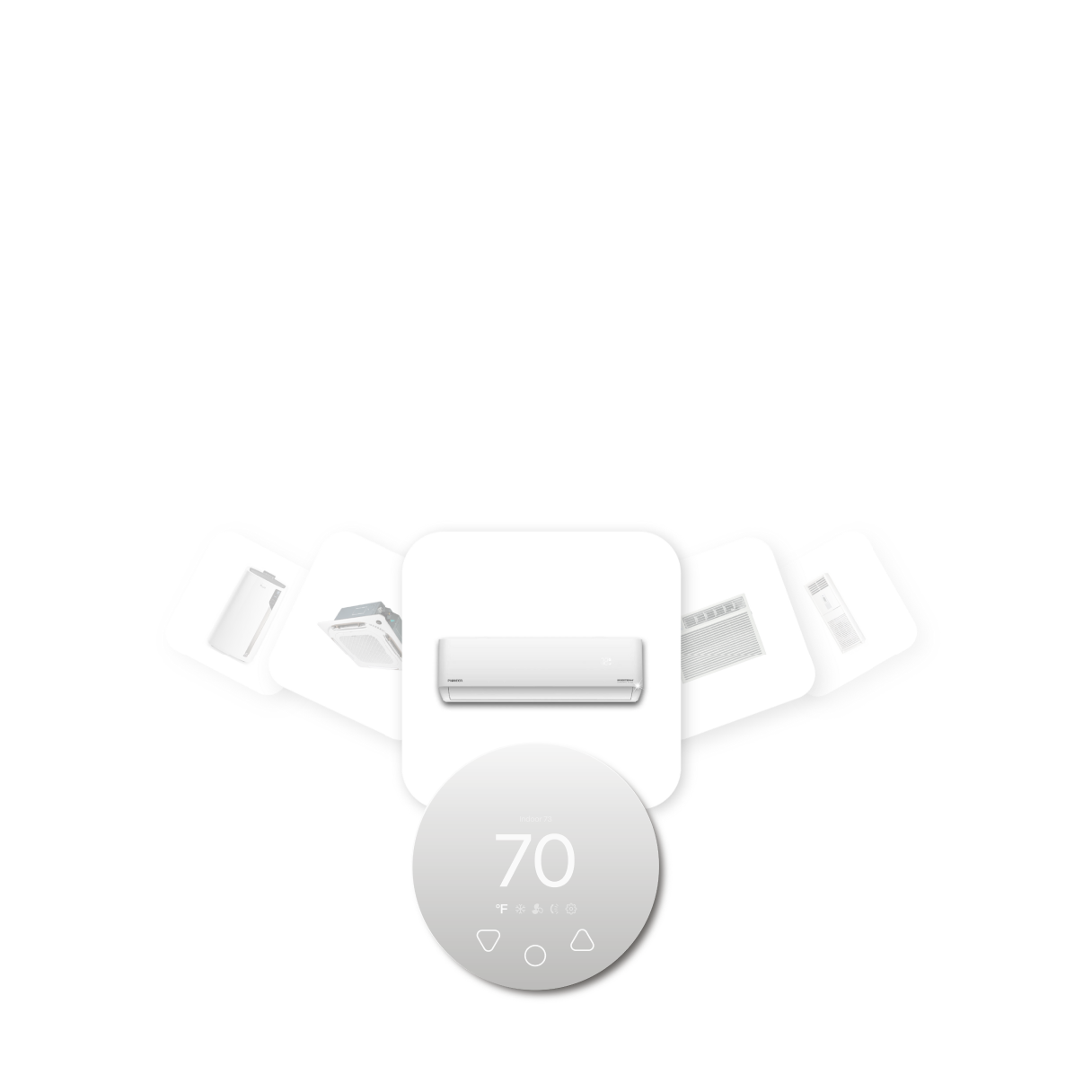
Every A2L-compliant system you install is also a system your customer is paying more for — which makes it a natural moment to talk about getting more visibility and control out of that investment, not just a bigger check. A unified control layer that works across the mixed fleet of equipment you'll be running for the next several years — new A2L systems alongside legacy R-410A units already in the field — is worth having in the conversation. That's exactly the gap the Boldr Universal Thermostat is built to close: one control platform across ducted, ductless, and mixed-refrigerant systems, so your customers (and your service techs) aren't relearning a new interface every time the equipment underneath changes.
The refrigerant transition is a code and tooling problem. Don't let it also become a "which remote goes with which system" problem for your team six months from now.


Recent Articles

Mini-Split Outdoor Unit Clearance 2026 Guide
A mini-split outdoor unit needs air. Lots of it. The condenser pull...
Read More
What Happens if Your Mini-Split Is Too Small?
Most homeowner sizing advice focuses on oversized mini-splits. But ...
Read More
Does a Mini-Split Need a Manual J Load Calculation?
A 500-square-foot room does not automatically need a 12,000 BTU min...
Read More
Signs Your Mini-Split May Have a Refrigerant Leak
A mini-split does not normally “use up” refrigerant the way a car u...
Read More
Mini-Split Minimum Capacity: Why It Matters
When homeowners compare mini-splits, they normally look at the bigg...
Read More