






The best mini-split temperature in summer is usually between 74°F and 78°F, but the right setting depends on your climate, humidity, insulation and personal comfort.
For most households, the goal should not be to find the coldest possible setting. It should be to find the highest temperature that still feels comfortable.
That gives your mini-split a better opportunity to maintain the room without running at high output unnecessarily.
What Temperature Should You Set a Mini-Split To?
A useful starting point is:
-
78°F when trying to reduce energy use
-
75°F to 77°F for everyday comfort
-
72°F to 75°F for sleeping, depending on personal preference
-
A slightly higher setting while the room is empty
These are starting points rather than universal rules. A humid room may feel warmer than a dry room at the same temperature, while moving air from a ceiling or portable fan may allow you to use a higher setpoint comfortably.
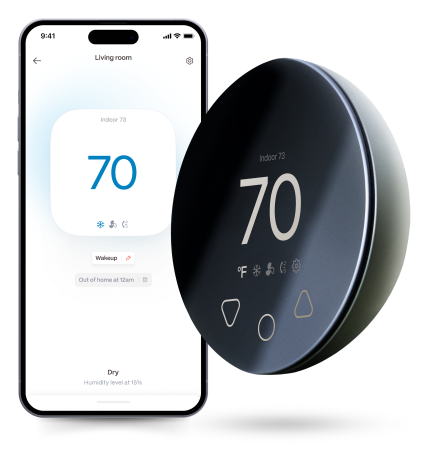
Compatible with all brands of ACs and Mini-Splits
Automate Climate Management
Control remotely
Reduce Energy Consumption
Monitor bills in realtimeKlima - Smart Home Thermostat for Mini-splits, Air Conditioners and Heatpumps
Does Setting a Mini-Split Lower Cool the Room Faster?
Usually, no.
Setting your mini-split to 60°F does not necessarily make it cool faster than setting it to 74°F. The system will still cool according to its available capacity.
The lower setting simply tells the unit to continue operating until it reaches a much colder target.
This can lead to:
-
Longer operating periods
-
Higher electricity consumption
-
An uncomfortably cold room
-
More frequent manual adjustments
-
Condensation problems in some environments
Set the temperature you actually want rather than choosing the lowest available number.
Why Mini-Splits Often Run for a Long Time
Many modern mini-splits use inverter-driven compressors. Instead of switching between completely on and completely off, the compressor can adjust its output to match the room’s cooling demand.
Once the room approaches the selected temperature, the unit may continue running at a lower speed.
This longer, gentler operation is not automatically a sign of inefficiency. It can help maintain a steadier temperature and reduce the repeated starts associated with traditional single-stage equipment.
Should You Change the Temperature When You Leave?
For a brief absence, there may be little benefit in switching the mini-split completely off and allowing the room to become extremely hot.
For a longer absence, raise the cooling temperature by several degrees. A setting around 80°F to 85°F may be appropriate for some homes, provided there are no pets, plants, humidity concerns or heat-sensitive belongings that require a lower temperature.
A schedule can make these changes automatically.
For example:
-
76°F while getting ready for work
-
82°F after leaving
-
76°F shortly before returning
-
73°F at bedtime
-
75°F overnight
The right schedule depends on your building and routine.
Temperature at the Unit vs Temperature in the Room
A mini-split often measures temperature using a sensor inside the wall-mounted head.
Because the unit is positioned high on the wall, that reading may differ from the temperature near your sofa, bed or desk.
Warm air rises, so the unit may detect a warmer temperature than the person sitting several feet below it. Direct sunlight, cooking equipment and poor airflow can increase the difference.
A smart mini-split controller with its own room sensor may provide a more representative temperature reading when positioned correctly.
Avoid placing a temperature sensor:
-
In direct sunlight
-
Above a television
-
Beside a window
-
Near a kitchen appliance
-
Directly in the mini-split’s airflow
-
Behind furniture or curtains
The Most Efficient Mini-Split Setting
The most efficient setting is generally the one that:
-
Keeps the room comfortable.
-
Does not create an unnecessarily large difference between indoor and outdoor temperatures.
-
Remains reasonably consistent.
-
Adjusts automatically when the room is empty.
-
Accounts for humidity as well as temperature.
The Department of Energy recommends ductless mini-splits as a flexible option for zoned cooling, particularly in buildings without existing ducts. Proper sizing and installation remain essential to achieving expected performance.
How to Make Your Mini-Split More Comfortable
Try these adjustments before lowering the temperature again:
-
Clean the indoor filters.
-
Close exterior doors and windows.
-
Block intense afternoon sunlight.
-
Increase the fan speed temporarily.
-
Change the louver direction.
-
Use a ceiling fan.
-
Check that the unit is in cooling mode.
-
Reduce heat from ovens and appliances.
-
Create a schedule around room occupancy.
Stay cool and save more. Use code JONES15 to get 15% off your entire order—no strings attached.
Upgrade your comfort with a Klima today.
Frequently Asked Questions
Is 72°F too cold for a mini-split?
Not necessarily, but it may use more electricity than a setting of 75°F or 78°F. Begin with a moderate temperature and lower it gradually only when needed.
Is 78°F a good mini-split temperature?
For many households, 78°F is a useful energy-conscious starting point. Humidity, airflow and personal preference will affect whether it feels comfortable.
Should I use Auto or Cool mode?
Use Cool mode when you specifically want air conditioning. Auto mode may switch between heating and cooling on some systems, which can cause unexpected operation during changing weather.
Can a smart controller lower mini-split energy use?
A controller cannot change the equipment’s underlying efficiency. However, schedules, geofencing and occupancy-based adjustments can help reduce operation when cooling is not needed.


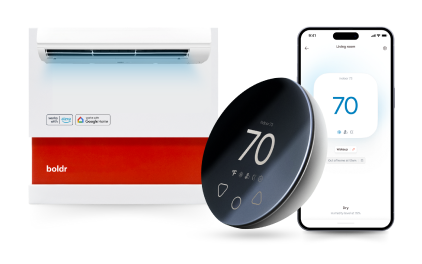
Klima - Smart Home Controller for Mini-splits, Air Conditioners and Heatpumps
Compatible with all brands of ACs and Mini-Splits Automate Climate Management Control remotely Reduce Energy Consumption Monitor bills in realtime
Try NowRecent Articles

Mini-Split Outdoor Unit Clearance 2026 Guide
A mini-split outdoor unit needs air. Lots of it. The condenser pull...
Read More
What Happens if Your Mini-Split Is Too Small?
Most homeowner sizing advice focuses on oversized mini-splits. But ...
Read More
Does a Mini-Split Need a Manual J Load Calculation?
A 500-square-foot room does not automatically need a 12,000 BTU min...
Read More
Signs Your Mini-Split May Have a Refrigerant Leak
A mini-split does not normally “use up” refrigerant the way a car u...
Read More
Mini-Split Minimum Capacity: Why It Matters
When homeowners compare mini-splits, they normally look at the bigg...
Read More