





The E1 error code on a mini-split almost universally indicates a high pressure fault — the refrigerant pressure on the high-pressure side of the system has exceeded the safe operating threshold, triggering a protective shutdown. This article explains what causes E1, how to fix the most common causes yourself, and when to call a technician.
What Does E1 Mean on a Mini-Split?
All major mini-split brands use E1 to indicate high pressure protection across their lineups, including Mitsubishi, Daikin, Fujitsu, LG, Gree, Midea, MrCool, Pioneer, Senville, and others. When the discharge pressure exceeds the system's rated maximum (typically 600–650 psi for R-410A systems), the high pressure switch opens and the system shuts down to prevent compressor damage.
Common Causes of E1
| Cause | How Common | DIY Fix? | Action |
|---|---|---|---|
| Blocked outdoor unit airflow | Very common | Yes | Clear debris, vegetation, or snow from outdoor unit; ensure 12" clearance on all sides |
| Dirty outdoor coil | Common | Yes | Rinse outdoor coil fins with garden hose (low pressure, top-down) |
| Outdoor unit installed in direct sun with no airflow | Common in summer | Partially | Add shade structure or relocate unit; ensure minimum clearances |
| Outdoor fan not spinning | Occasional | Partially | Check for debris jammed in fan; call tech if fan motor is faulty |
| Refrigerant overcharge | Less common (usually post-service) | No | Call technician — refrigerant must be recovered to correct charge |
| Non-condensable gases in refrigerant circuit | Less common | No | Call technician — system must be evacuated and recharged |
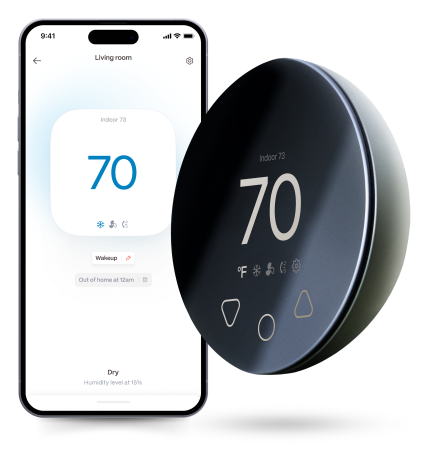
Compatible with all brands of ACs and Mini-Splits
Automate Climate Management
Control remotely
Reduce Energy Consumption
Monitor bills in realtimeKlima - Smart Home Thermostat for Mini-splits, Air Conditioners and Heatpumps
How to Fix E1 Step by Step
Step 1 — Go outside and check the outdoor unit. Confirm the area around all four sides has at least 12 inches of clear space. Remove any leaves, grass clippings, cardboard, or debris that has accumulated against the unit.
Step 2 — Check the outdoor fan. Is the fan spinning? If the fan is stopped with the unit running, the motor may have failed or something is jammed in the blades. Turn off at the breaker before inspecting the fan.
Step 3 — Rinse the outdoor coil. Using a garden hose on low pressure, rinse the coil fins from the top downward. Do not use a pressure washer — high pressure can bend the delicate aluminium fins. Allow the unit to air dry for 15 minutes.
Step 4 — Reset at the breaker. After clearing any airflow obstruction, switch the breaker off for 30 seconds, restore power, wait 3 minutes, and test.
Step 5 — Monitor. If E1 returns within the same day after clearing the outdoor unit, the issue is likely refrigerant overcharge or non-condensables — both require a certified technician.
E1 on Specific Brands
| Brand | E1 Meaning | Notes |
|---|---|---|
| Mitsubishi | High pressure protection | Also appears as P8 on some models |
| Daikin | Outdoor unit PCB (may vary by model) | Daikin uses E3 for high pressure on some models |
| LG | High pressure protection | Consistent across most LG ductless models |
| Gree / Midea / Pioneer / MrCool | High pressure protection | Consistent across Midea-platform brands |
Stay cool and save more. Use code JONES15 to get 15% off your entire order—no strings attached.
Upgrade your comfort with a Klima today.
Frequently Asked Questions
Can I keep running my mini-split with E1 showing?
No. E1 shuts the compressor down to prevent damage. The unit will not cool or heat while E1 is active. Attempting to force operation with persistent high pressure will damage the compressor — the most expensive component in the system.
E1 appears only on very hot days — is that normal?
An E1 that only appears on the hottest summer days (above 95°F / 35°C) may indicate the outdoor unit is undersized for the heat load, the coil is partially clogged with dirt, or the installation location has insufficient airflow. Cleaning the outdoor coil and improving ventilation around the unit often resolves intermittent heat-day E1 faults.
Related reading:
→ Mini-Split Error Codes: Complete Guide by Brand
→ Mini-Split Not Cooling? 10 Reasons and How to Fix
→ Mini-Split Maintenance Guide: What to Do Every Season


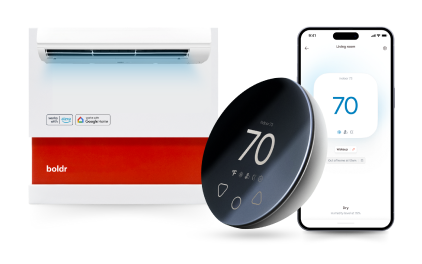
Klima - Smart Home Controller for Mini-splits, Air Conditioners and Heatpumps
Compatible with all brands of ACs and Mini-Splits Automate Climate Management Control remotely Reduce Energy Consumption Monitor bills in realtime
Try NowRecent Articles

Mini-Split Outdoor Unit Clearance 2026 Guide
A mini-split outdoor unit needs air. Lots of it. The condenser pull...
Read More
What Happens if Your Mini-Split Is Too Small?
Most homeowner sizing advice focuses on oversized mini-splits. But ...
Read More
Does a Mini-Split Need a Manual J Load Calculation?
A 500-square-foot room does not automatically need a 12,000 BTU min...
Read More
Signs Your Mini-Split May Have a Refrigerant Leak
A mini-split does not normally “use up” refrigerant the way a car u...
Read More
Mini-Split Minimum Capacity: Why It Matters
When homeowners compare mini-splits, they normally look at the bigg...
Read More