







A mini-split is one of the most practical ways to heat and cool a basement because it operates independently from the home's central system, requires no ductwork, and handles the unique conditions of below-grade spaces — consistent cool temperatures, higher humidity, and limited ventilation. This guide covers sizing, cost, installation considerations, and the features that matter most for basement installations.
Why Mini-Splits Work Well for Basements
Basements present a unique heating and cooling profile. They stay naturally cooler in summer (often 10–15°F below the main floor) but can feel cold and damp in winter. Most basements are not connected to the home's ductwork, or the duct runs to the basement are undersized. A mini-split solves both problems — it heats in winter, cools in summer, and dehumidifies year-round — all without ductwork.
Compatible with all brands of ACs and Mini-Splits
Automate Climate Management
Control remotely
Reduce Energy Consumption
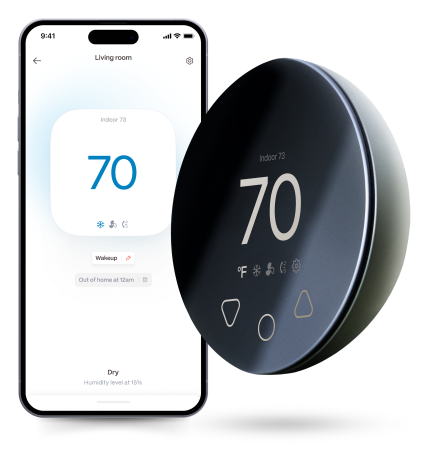
Monitor bills in realtimeKlima - Smart Home Thermostat for Mini-splits, Air Conditioners and Heatpumps
What Size Mini-Split for a Basement?
| Basement Size | Recommended BTU | Notes |
|---|---|---|
| 300–500 sq ft | 9,000–12,000 | Standard finished basement room |
| 500–800 sq ft | 12,000–18,000 | Open-plan finished basement |
| 800–1,200 sq ft | 18,000–24,000 | Full walkout or large basement |
| 1,200+ sq ft | 24,000+ or multi-zone | Consider 2 zones for even coverage |
Basements typically require less cooling capacity than above-grade rooms (the earth keeps them cooler) but similar or greater heating capacity in cold climates. If your primary use is heating, size to the heating load.
Installation Cost
| Component | Typical Range (US) |
|---|---|
| Equipment (12,000 BTU) | $700–$2,000 |
| Installation labour | $1,200–$2,500 |
| Electrical (dedicated circuit) | $200–$600 |
| Condensate pump (if gravity drain not possible) | $100–$200 |
| Total | $2,500–$5,500 |
Basement-Specific Installation Considerations
- Condensate drainage: In a basement, the indoor unit may be below the outdoor drain exit. If gravity drainage is not possible, a condensate pump ($100–$200) is required to push water up and out.
- Line set routing: The outdoor unit must be at ground level or higher. The line set runs from the basement indoor unit up through the rim joist or foundation wall to the outdoor unit. Longer line runs may be needed, adding $100–$200 to the install.
- Moisture and dehumidification: Basements tend to be more humid. A mini-split's cooling mode naturally dehumidifies, and many units have a dedicated "dry" mode that prioritizes moisture removal. This can reduce or eliminate the need for a standalone dehumidifier.
- Window wells and egress: If the outdoor unit is placed near a window well, ensure it does not block egress requirements. Position it at least 3 feet from any egress window.
Frequently Asked Questions
Is a mini-split better than a space heater for a basement?
Yes. A mini-split provides both heating and cooling, is 2–3 times more efficient for heating than a space heater, does not pose a fire risk, and dehumidifies — which is particularly important in basements prone to dampness.
Can I install a mini-split in an unfinished basement?
Yes, but the heating and cooling load will be higher due to uninsulated walls and floors. Insulating the basement walls (even with rigid foam) before installing a mini-split will significantly improve comfort and reduce the required BTU size.
Do I need a separate dehumidifier if I have a mini-split?
In most cases, a mini-split's cooling and dry modes remove enough moisture to keep a finished basement comfortable. In extremely damp basements with active water intrusion issues, a standalone dehumidifier may still be needed to supplement.


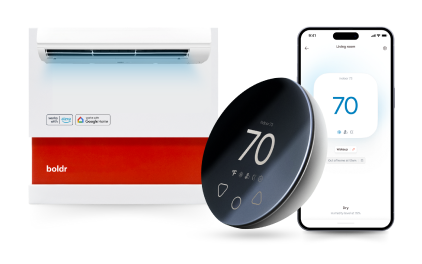
Klima - Smart Home Controller for Mini-splits, Air Conditioners and Heatpumps
Compatible with all brands of ACs and Mini-Splits Automate Climate Management Control remotely Reduce Energy Consumption Monitor bills in realtime
Try NowRecent Articles

Mini-Split Outdoor Unit Clearance 2026 Guide
A mini-split outdoor unit needs air. Lots of it. The condenser pull...
Read More
What Happens if Your Mini-Split Is Too Small?
Most homeowner sizing advice focuses on oversized mini-splits. But ...
Read More
Does a Mini-Split Need a Manual J Load Calculation?
A 500-square-foot room does not automatically need a 12,000 BTU min...
Read More
Signs Your Mini-Split May Have a Refrigerant Leak
A mini-split does not normally “use up” refrigerant the way a car u...
Read More
Mini-Split Minimum Capacity: Why It Matters
When homeowners compare mini-splits, they normally look at the bigg...
Read More