







A barndominium presents one of the most challenging residential HVAC scenarios: a large open-plan metal building with high ceilings, minimal thermal mass, significant solar gain through a metal roof, and often a wide temperature swing between daytime and nighttime. Mini-splits are the most practical HVAC solution for barndominiums — but sizing and zoning correctly for the specific challenges of a metal building is essential. This guide covers everything specific to barndominium HVAC.
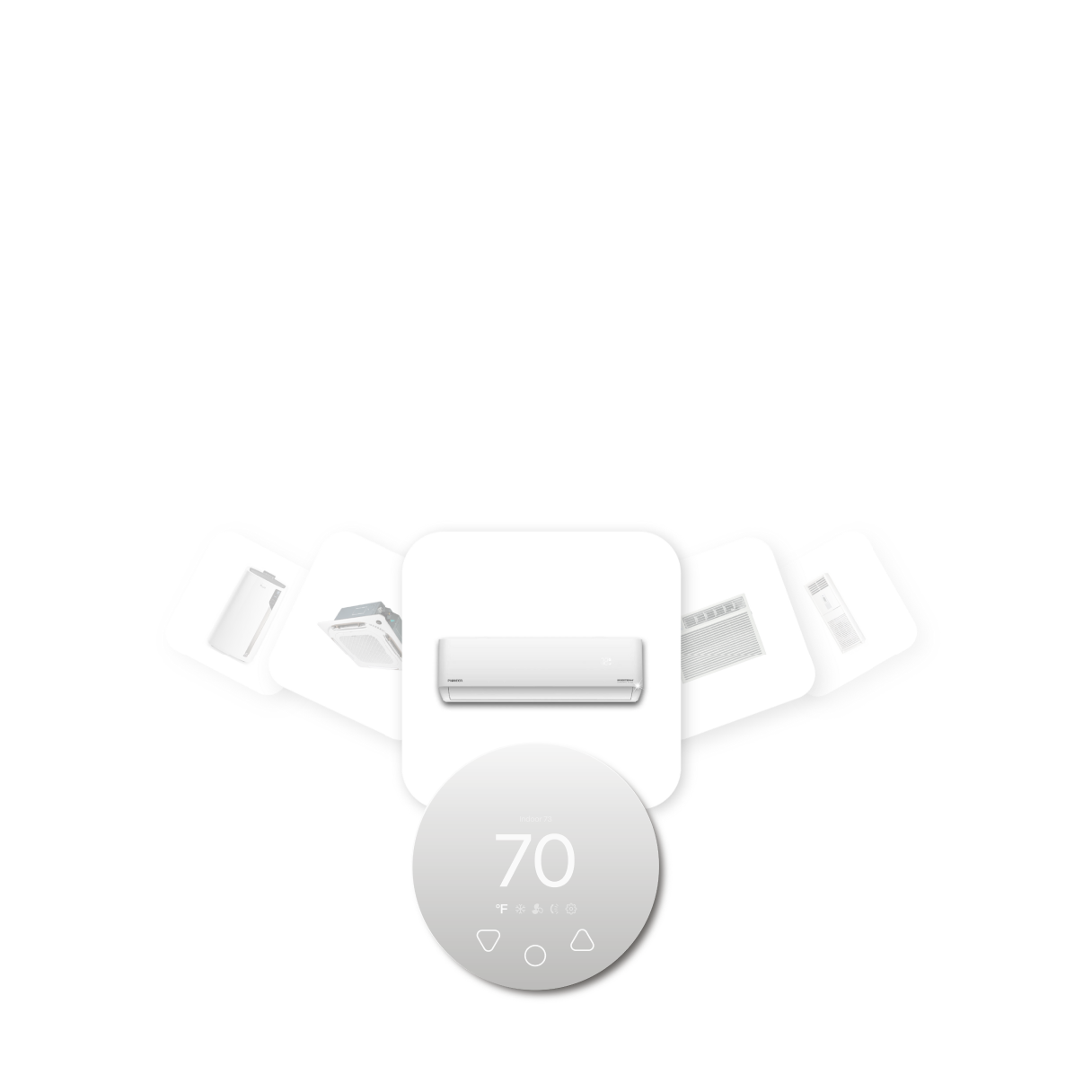
Compatible with all brands of ACs and Mini-Splits
Automate Climate Management
Control remotely
Reduce Energy Consumption
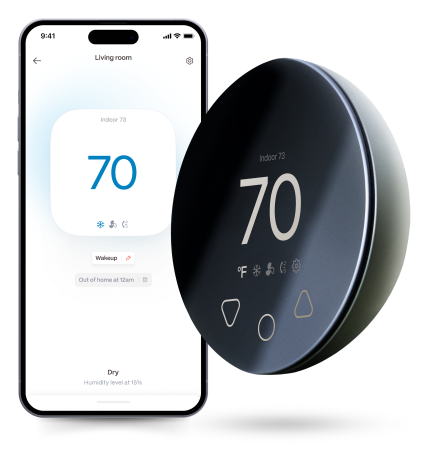
Monitor bills in realtimeKlima - Smart Home Thermostat for Mini-splits, Air Conditioners and Heatpumps
Why Barndominiums Are Harder to Condition Than Standard Homes
- Metal conducts heat aggressively: An uninsulated metal roof and walls transmit outdoor temperature changes rapidly — the building heats up and cools down much faster than wood-frame construction with standard insulation
- High ceilings trap heat: 14–20ft ceilings mean a large volume of air — and in summer, heat stratifies at ceiling level while the living zone stays hot
- Open plan limits zoning: The open floor plan that defines the barndominium aesthetic makes it difficult to zone temperature by room — air conditioning one area tends to condition the whole space
- Large doors (shop doors, roll-up doors): Every time a large door opens, the conditioned air is exchanged with outdoor air instantly
Insulation Is the Priority Before Sizing
The most important step for barndominium HVAC is insulation — before purchasing any equipment. Spray foam on the underside of the metal roof deck is the single most impactful upgrade. Without it, solar heat load through a metal roof on a summer afternoon can reach 50–80 BTU/sq ft — far beyond what any reasonable mini-split installation can overcome economically. With 2–3 inches of closed-cell spray foam on the roof deck, that load drops to 15–25 BTU/sq ft — a manageable level.
Sizing for a Barndominium
| Barndominium Size | Insulation Level | Recommended Total BTU | Zone Approach |
|---|---|---|---|
| Under 1,000 sq ft | Spray foam roof + walls | 24,000–36,000 BTU | 1–2 units strategically placed |
| 1,000–2,000 sq ft | Spray foam roof + walls | 36,000–60,000 BTU | 2–3 zone multi-split or separate single-zone units |
| 2,000–4,000 sq ft | Any | 60,000–120,000 BTU | Multiple separate systems; consider ducted mini-split for living zones |
Ceiling Cassettes vs Wall-Mount Units for Barndominiums
Wall-mount units work well for living areas under 14ft ceiling height. For the high-ceiling open-plan areas (shop space, great room, open kitchen-living), a wall-mount unit struggles to distribute air to the far corners of a large square footage.
Ceiling cassettes installed in the ceiling distribute air in four directions and handle high-ceiling open-plan spaces far more effectively. They are the preferred choice for the main open area of a barndominium, with wall-mount units in bedrooms and bathrooms.
Frequently Asked Questions
Can a single multi-zone mini-split handle an entire 2,000 sq ft barndominium?
In most cases, no — not adequately. A 60,000 BTU 5-zone system can handle 2,000 sq ft of well-insulated standard construction, but a barndominium's higher heat load (metal roof, large doors, high ceilings) and the need to distribute air effectively across a large open space typically requires either multiple systems or a combination of mini-splits and supplemental ceiling fans for air distribution. Consult an HVAC contractor familiar with metal building HVAC for a proper Manual J load calculation.
Related reading:
→ Mini-Split Sizing Guide: How to Choose the Right BTU
→ Mini-Split for Detached Garage: Sizing, Wiring and Best Picks
→ Mini-Split for Shipping Container Home or Office


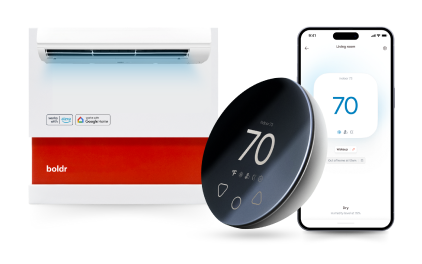
Klima - Smart Home Controller for Mini-splits, Air Conditioners and Heatpumps
Compatible with all brands of ACs and Mini-Splits Automate Climate Management Control remotely Reduce Energy Consumption Monitor bills in realtime
Try NowRecent Articles

Mini-Split Auto Mode Explained: What Does It Actually Do?
Auto mode on a mini-split allows the system to decide whether to he...
Read More
Heat Pump vs Mini-Split: What's the Difference in 2026?
Heat pump vs mini-split is one of the most commonly searched HVAC q...
Read More
Replacing Oil Based Heaters With a Mini-Split (2026 Guide)
Replacing an oil-fired furnace or boiler with a heat pump mini-spli...
Read More
Mini-Split for Wine Cellar: What Works and What Doesn't
A barndominium presents one of the most challenging residential HVA...
Read More
Mini-Split WiFi Keeps Disconnecting: Causes and Permanent Fix
A mini-split's WiFi disconnecting repeatedly — losing connection to...
Read More