







A mini-split leaking water inside is almost always caused by a clogged condensate drain line, a frozen evaporator coil, or an installation problem. The good news is that most causes are fixable without a technician. This guide walks through every common cause, how to identify which one applies to your unit, and step-by-step fixes.
Why Mini-Splits Produce Water
During cooling mode, your mini-split removes moisture from the air. This moisture condenses on the cold evaporator coil inside the indoor unit — just like water droplets forming on a cold glass. The water drips into a drain pan beneath the coil and flows out through a condensate drain line to the outside of your home. When any part of this drainage path is blocked, the water backs up and leaks inside.
Compatible with all brands of ACs and Mini-Splits
Automate Climate Management
Control remotely
Reduce Energy Consumption
Monitor bills in realtimeKlima - Smart Home Thermostat for Mini-splits, Air Conditioners and Heatpumps
Most Common Causes and Fixes
| Cause | How Common | DIY Fix? | Cost to Fix |
|---|---|---|---|
| Clogged condensate drain line | ~80% of cases | Yes | $0 (vinegar + vacuum) |
| Frozen evaporator coil | Common | Partially | $0–$300+ |
| Improper installation angle | Occasional | Difficult | $100–$300 (remount) |
| Cracked or disconnected drain pan | Rare | Sometimes | $30–$150 |
| Condensate pump failure | Only if pump installed | Yes | $50–$150 (replacement) |
1. Clogged Condensate Drain Line (Most Common)
Dust, algae, mold, and debris build up inside the drain line over time, restricting or completely blocking water flow. When water cannot drain, it backs up in the drain pan and overflows inside the room.
How to fix it: Locate the drain line exit on the outside of your home. Use a wet/dry vacuum to suction the clog from the outdoor end for 30–60 seconds. After clearing, pour a cup of distilled white vinegar into the drain pan inside the unit to kill algae and mold. Wait 30 minutes, run the unit, and verify water flows freely from the outdoor end.
2. Frozen Evaporator Coil
If the evaporator coil freezes, ice builds up. When the unit cycles off, the ice melts rapidly — producing more water than the drain pan can handle. Common causes include a dirty air filter restricting airflow, low refrigerant from a slow leak, or running cooling mode when outdoor temperatures are below 60°F (15°C).
How to fix it: Turn off the unit and let the ice melt completely (1–3 hours). Clean or replace the air filter. Restart and monitor. If the coil freezes again with a clean filter, call a technician — the issue is likely low refrigerant or a fan motor problem.
3. Improper Installation Angle
The indoor unit must be mounted with a slight tilt toward the drain side so water flows to the drain pan outlet. If level or tilted the wrong direction, water pools on the opposite side and drips into the room.
How to fix it: Check the unit with a level. The drain side should be 2–3 mm lower than the opposite side. Adjusting the mounting plate may require removing and remounting the unit.
4. Cracked Drain Pan or Disconnected Hose
The plastic drain pan can crack from thermal cycling over time. In rare cases, the drain hose disconnects from the pan. Open the front panel and inspect visually. A crack can be temporarily sealed with waterproof epoxy, but replacement is the correct long-term fix.
5. Condensate Pump Failure
Some installations use a condensate pump when gravity drainage is not possible. If the pump fails, water backs up. Check that the pump is powered, the float switch moves freely, and the reservoir is clean. If the motor does not run when the float rises, the pump needs replacement ($50–$150).
How to Prevent Future Leaks
- Clean the air filter every 2–4 weeks. Proper airflow prevents coil freezing and excessive condensation.
- Flush the drain line with vinegar every 3–6 months. This prevents clogs before they start.
- Schedule annual professional maintenance. A technician inspects the drain system, checks refrigerant, and cleans the coil.
- Install a drain line safety switch. A float switch shuts the unit off if the drain pan overfills, preventing water damage when you are away.
Frequently Asked Questions
Is water leaking from my mini-split an emergency?
Not usually — but address it promptly. Water can damage walls, flooring, and electrical components. Turn off the unit, place a towel or container under the leak, and diagnose before restarting.
Can I use bleach instead of vinegar to clear the drain line?
Diluted bleach (1:10 ratio) works but vinegar is gentler on plastic components and preferred by most HVAC professionals. Never pour undiluted bleach.
Why does my mini-split only leak at night?
Humidity often rises overnight while the unit runs at lower fan speed in sleep mode. Lower airflow means more condensation. If the drain is partially restricted, the increased water volume at night is enough to cause a leak. Clean the drain line to solve this.


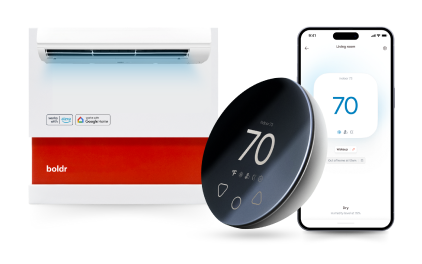
Klima - Smart Home Controller for Mini-splits, Air Conditioners and Heatpumps
Compatible with all brands of ACs and Mini-Splits Automate Climate Management Control remotely Reduce Energy Consumption Monitor bills in realtime
Try NowRecent Articles

Mini-Split Outdoor Unit Clearance 2026 Guide
A mini-split outdoor unit needs air. Lots of it. The condenser pull...
Read More
What Happens if Your Mini-Split Is Too Small?
Most homeowner sizing advice focuses on oversized mini-splits. But ...
Read More
Does a Mini-Split Need a Manual J Load Calculation?
A 500-square-foot room does not automatically need a 12,000 BTU min...
Read More
Signs Your Mini-Split May Have a Refrigerant Leak
A mini-split does not normally “use up” refrigerant the way a car u...
Read More
Mini-Split Minimum Capacity: Why It Matters
When homeowners compare mini-splits, they normally look at the bigg...
Read More