







A mini-split heat pump and a gas furnace are fundamentally different systems. A gas furnace burns natural gas to generate heat and requires ductwork to distribute it. A mini-split uses electricity to move heat between indoors and outdoors — providing both heating and cooling without ducts. This guide compares them on cost, efficiency, comfort, and suitability for different homes and climates.
Side-by-Side Comparison
| Factor | Mini-Split Heat Pump | Gas Furnace |
|---|---|---|
| Fuel source | Electricity | Natural gas |
| Heating + Cooling? | Yes — both from one unit | Heating only (needs separate AC) |
| Ductwork required? | No | Yes |
| Efficiency | COP 2.5–4.0 (250–400%) | 80–98% AFUE |
| Installed cost (single zone) | $3,000–$5,500 | $3,000–$6,000 (furnace only) |
| Annual operating cost | $600–$1,200 (heating + cooling) | $800–$1,800 (heating only) |
| Lifespan | 15–20 years | 15–25 years |
| Carbon emissions | Depends on electricity grid | Direct combustion emissions |
| Zone control | Yes — room-by-room | Limited — one thermostat |
When a Mini-Split May Be the Better Choice
- No existing ductwork. If your home lacks ducts, a mini-split is far less expensive than installing a furnace plus ductwork.
- You want heating and cooling from one system. A gas furnace only heats — you still need a separate air conditioner.
- Moderate climate. In regions where winters are mild to moderate, a mini-split provides efficient heating at lower operating cost than gas.
- Zone control matters. A mini-split lets you heat and cool rooms independently rather than conditioning the whole house.
- No gas line available. Homes without natural gas service have no option for a gas furnace.
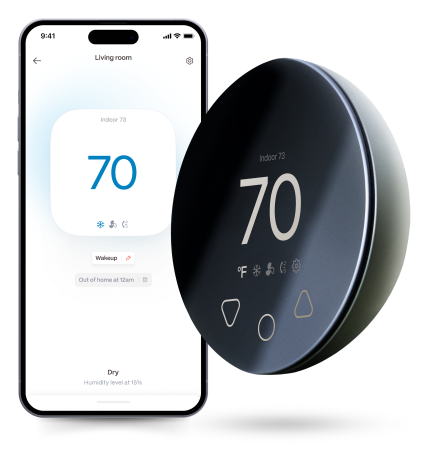
Compatible with all brands of ACs and Mini-Splits
Automate Climate Management
Control remotely
Reduce Energy Consumption
Monitor bills in realtimeKlima - Smart Home Thermostat for Mini-splits, Air Conditioners and Heatpumps
When a Gas Furnace May Be the Better Choice
- Extremely cold climate with very cheap gas. In regions where natural gas is under $0.60/therm and winter temperatures regularly drop below −20°F, a high-efficiency gas furnace can be less expensive to operate than a heat pump at those extremes.
- Existing ductwork in good condition. If your home already has ducts, replacing the furnace is typically less expensive than installing a multi-zone mini-split system.
- Very large open-plan homes. Duct-based distribution may cover large open spaces more evenly than wall-mounted mini-split heads.
The Hybrid Approach
Many homeowners in cold climates use both: a mini-split heat pump handles 80–90% of heating hours efficiently, and the gas furnace fires only during the coldest periods when the heat pump's capacity drops. This dual-fuel setup captures the efficiency of the heat pump for most of the winter while keeping the furnace as backup for extremes.
Frequently Asked Questions
Is a mini-split cheaper to run than a gas furnace?
In most markets, yes. A mini-split with a COP of 3.0 delivers 3 watts of heat per watt of electricity — making it roughly 3 times more efficient than electric resistance heating and competitive with gas at most electricity-to-gas price ratios. The answer depends on your local electricity and gas rates — use your utility bills to compare cost per BTU.
Can a mini-split replace a gas furnace entirely?
In mild to moderate climates, yes. In very cold climates (below −15°F regularly), a cold-climate mini-split can handle most heating but may need backup for the coldest days. Many homeowners keep their existing furnace as a backup and use the mini-split as the primary heat source.


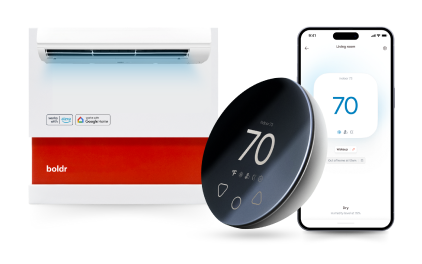
Klima - Smart Home Controller for Mini-splits, Air Conditioners and Heatpumps
Compatible with all brands of ACs and Mini-Splits Automate Climate Management Control remotely Reduce Energy Consumption Monitor bills in realtime
Try NowRecent Articles

Mini-Split Outdoor Unit Clearance 2026 Guide
A mini-split outdoor unit needs air. Lots of it. The condenser pull...
Read More
What Happens if Your Mini-Split Is Too Small?
Most homeowner sizing advice focuses on oversized mini-splits. But ...
Read More
Does a Mini-Split Need a Manual J Load Calculation?
A 500-square-foot room does not automatically need a 12,000 BTU min...
Read More
Signs Your Mini-Split May Have a Refrigerant Leak
A mini-split does not normally “use up” refrigerant the way a car u...
Read More
Mini-Split Minimum Capacity: Why It Matters
When homeowners compare mini-splits, they normally look at the bigg...
Read More