






A mini-split is a type of heat pump — so the question is not really "vs" but rather "what kind." The term heat pump describes the technology: a system that moves heat rather than generating it, working in both heating and cooling modes. A mini-split describes the physical configuration: a ductless system with a separate indoor and outdoor unit connected by a refrigerant line set. This article clarifies the relationship and explains the differences between mini-splits and other heat pump configurations.
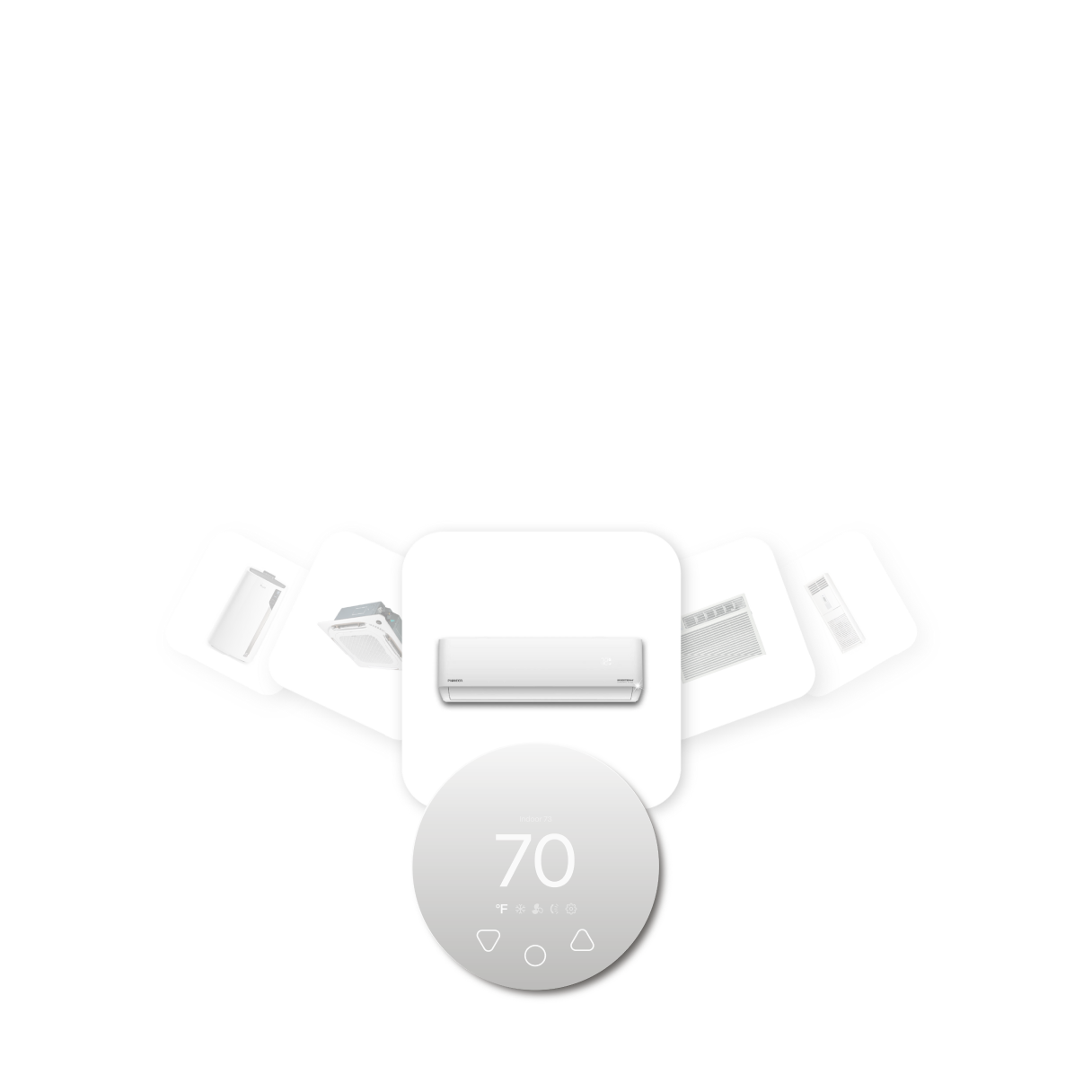
Compatible with all brands of ACs and Mini-Splits
Automate Climate Management
Control remotely
Reduce Energy Consumption
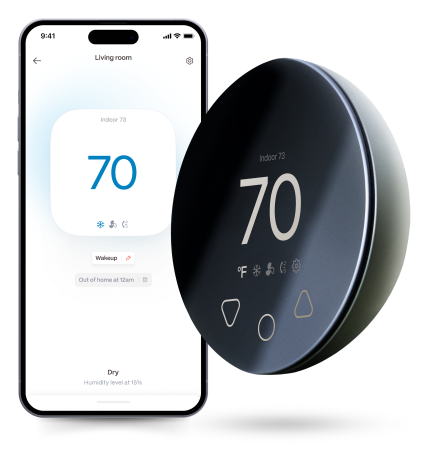
Monitor bills in realtimeKlima - Smart Home Thermostat for Mini-splits, Air Conditioners and Heatpumps
The Relationship Between Mini-Splits and Heat Pumps
All mini-splits are heat pumps. Not all heat pumps are mini-splits. Heat pumps come in several configurations:
| System Type | Technology | Ductwork Required? | Best For |
|---|---|---|---|
| Mini-split (ductless) | Heat pump | No | Additions, older homes, zone control |
| Ducted heat pump | Heat pump | Yes | Whole-home replacement in homes with existing ducts |
| Ground source (geothermal) | Heat pump | Usually yes | High efficiency; high upfront cost; large properties |
| Air-source heat pump (ASHP) | Heat pump | Usually yes | Central whole-home heating and cooling |
How Heat Pumps (Including Mini-Splits) Work
A heat pump does not generate heat by burning fuel or using resistance coils. Instead, it moves heat from one place to another using a refrigerant circuit. In cooling mode, it moves heat from inside the building to the outdoors. In heating mode, it reverses the process — extracting heat from cold outdoor air and moving it inside. Even at 0°F, outdoor air contains thermal energy that a heat pump can extract.
Stay cool and save more. Use code JONES15 to get 15% off your entire order—no strings attached.
Upgrade your comfort with a Klima today.
Mini-Split vs Ducted Heat Pump: Key Differences
| Factor | Mini-Split | Ducted Heat Pump |
|---|---|---|
| Ductwork | Not required | Required — existing or new |
| Zone control | Individual room control (one unit per zone) | Typically one thermostat for the whole house |
| Installation cost | Lower when no ductwork exists | Lower when ductwork already exists |
| Duct losses | None | 10–30% energy loss through duct leakage |
| Filtration | Filter in each indoor unit | Central air handler filter |
| Aesthetics | Visible wall units in each room | Hidden system; only grilles visible |
Frequently Asked Questions
Is a mini-split the same as a heat pump?
A mini-split is a specific type of heat pump — specifically a ductless air-source heat pump. The term "heat pump" is broader and includes ducted systems, geothermal systems, and water-source systems. When someone says "heat pump," they often mean a ducted central system; when they say "mini-split," they specifically mean a ductless system with wall-mounted indoor units.
Do mini-splits work well as heat pumps in cold climates?
Standard mini-splits work down to approximately 0°F to −4°F (−18 to −20°C) at reduced capacity. Cold-climate models (Mitsubishi H2i, Daikin Aurora, LG LGRED°, Fujitsu Halcyon) are rated to −13°F (−25°C) and are used as primary heat sources across Canada and the northern US.
Stay cool and save more. Use code JONES15 to get 15% off your entire order—no strings attached.
Upgrade your comfort with a Klima today.
Related reading:
→ Mini-Split Heat Pump: How It Works, Costs and Best Brands
→ Do Mini-Splits Work in Cold Weather?
→ Mini-Split SEER Rating: What It Means and Why It Matters


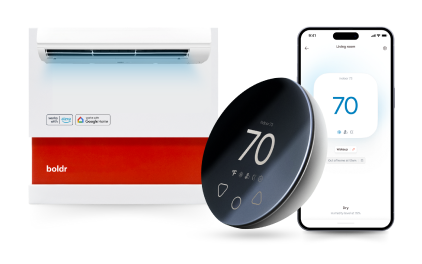
Klima - Smart Home Controller for Mini-splits, Air Conditioners and Heatpumps
Compatible with all brands of ACs and Mini-Splits Automate Climate Management Control remotely Reduce Energy Consumption Monitor bills in realtime
Try NowRecent Articles

Mini-Split Outdoor Unit Clearance 2026 Guide
A mini-split outdoor unit needs air. Lots of it. The condenser pull...
Read More
What Happens if Your Mini-Split Is Too Small?
Most homeowner sizing advice focuses on oversized mini-splits. But ...
Read More
Does a Mini-Split Need a Manual J Load Calculation?
A 500-square-foot room does not automatically need a 12,000 BTU min...
Read More
Signs Your Mini-Split May Have a Refrigerant Leak
A mini-split does not normally “use up” refrigerant the way a car u...
Read More
Mini-Split Minimum Capacity: Why It Matters
When homeowners compare mini-splits, they normally look at the bigg...
Read More