







The E6 error on a Mitsubishi mini-split indicates a communication failure between the indoor and outdoor units — the two units cannot exchange the signals needed to coordinate operation. E6 is one of the most common Mitsubishi fault codes and in the majority of cases is caused by a loose, reversed, or damaged signal wire at one of the terminal blocks. This guide covers every cause, the correct diagnostic sequence, and when to call a technician.
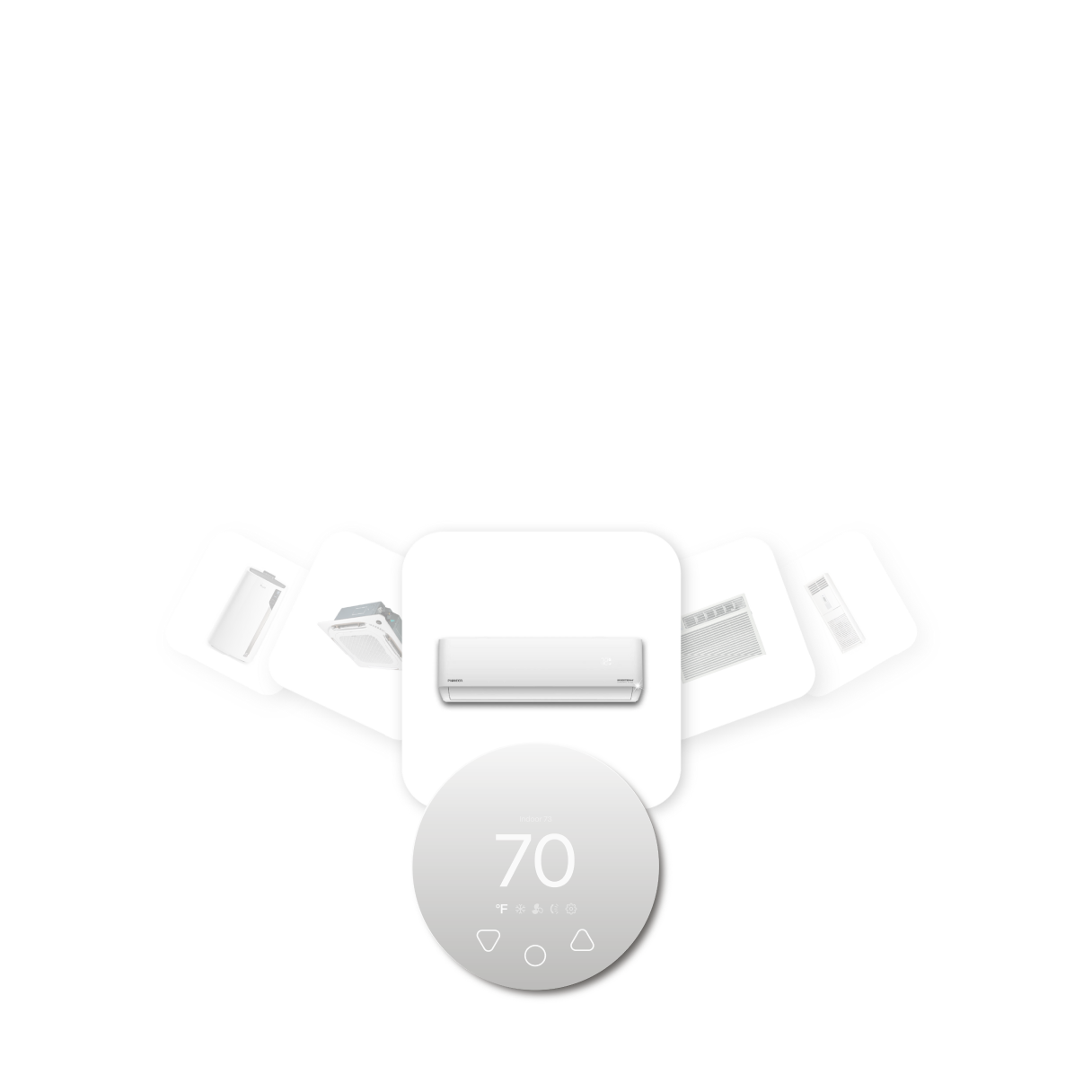
Compatible with all brands of ACs and Mini-Splits
Automate Climate Management
Control remotely
Reduce Energy Consumption
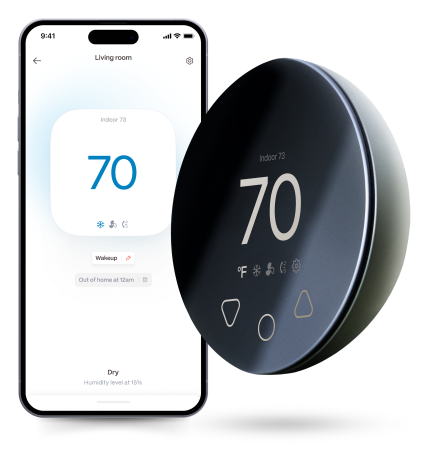
Monitor bills in realtimeKlima - Smart Home Thermostat for Mini-splits, Air Conditioners and Heatpumps
What E6 Means on Mitsubishi
Mitsubishi uses E6 specifically for indoor-to-outdoor communication errors across most of their residential ductless lineup (MSZ, MSY, MUZ series). The indoor unit transmits operating commands to the outdoor unit through a dedicated 2-wire signal cable (typically terminal S on both units). When this communication fails, the system shuts down and displays E6.
Causes in Order of Likelihood
| Cause | When It Occurs | DIY Fix? |
|---|---|---|
| Loose signal wire at terminal S (indoor or outdoor) | Most common — after installation or vibration over time | Yes — inspect and reseat |
| Reversed polarity at terminal block | Common on new installations — wire crossed at one end | Yes — verify wiring matches diagram |
| Post-power-outage handshake failure | Appears after outage; clears with full breaker reset | Yes — breaker reset resolves it |
| Damaged or broken signal wire (line set run) | After physical damage, pest activity, or UV degradation | Partially — visual inspection; tech for repair |
| Failed indoor PCB communication circuit | After confirmed good wiring; E6 persists | No — technician required |
| Failed outdoor PCB communication circuit | After confirmed good wiring and indoor board | No — technician required |
Step-by-Step Diagnostic
Step 1 — Reset first. Perform a full breaker reset (off 30 seconds, on, wait 3 minutes). If E6 does not return, it was a post-outage communication glitch — monitor for recurrence.
Step 2 — If E6 returns, check the signal wire. Turn off the breaker completely. Open the indoor unit panel and locate the terminal block. The Mitsubishi signal wire connects at terminal S (sometimes labelled S1-S2 or COM). Confirm the wire is firmly seated and matches the wiring diagram in your installation manual. Repeat at the outdoor unit terminal block.
Step 3 — Check for wire damage. Visually inspect the full length of the inter-unit cable where accessible. Look for pinched sections, UV cracking, rodent damage, or cuts.
Step 4 — If wiring checks out, call a Mitsubishi Diamond Dealer. Persistent E6 with confirmed good wiring requires a technician with Mitsubishi service tools to determine whether the indoor or outdoor PCB has a communication circuit fault.
Frequently Asked Questions
My Mitsubishi showed E6 immediately after installation — what does that mean?
E6 on a brand-new installation almost always means the signal wire was not correctly connected at one of the terminal blocks. Open both units (with power off), locate terminal S at each unit, and verify the wire is firmly seated with no loose strands and that both ends match the wiring diagram. A single reversed or loose terminal at either end causes E6 and prevents the system from operating entirely.
Can E6 appear on a Mitsubishi multi-zone system for just one zone?
Yes — in a multi-zone system, E6 typically identifies which indoor unit has the communication fault. The fault code may display on the specific indoor unit experiencing the issue, while other zones continue to operate normally. This helps localise the wiring inspection to the affected zone's signal wire.
Related reading:
→ Mini-Split E6 Error Code: Communication Fault — All Brands
→ Mitsubishi Mini-Split Error Codes: Full Reference
→ How to Reset a Mini-Split: Step-by-Step for Every Brand


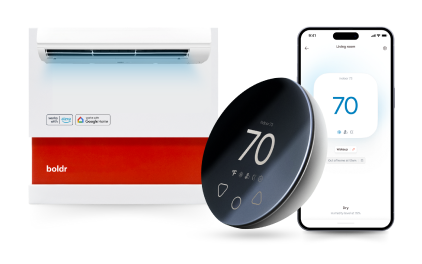
Klima - Smart Home Controller for Mini-splits, Air Conditioners and Heatpumps
Compatible with all brands of ACs and Mini-Splits Automate Climate Management Control remotely Reduce Energy Consumption Monitor bills in realtime
Try NowRecent Articles

Mini-Split Outdoor Unit Clearance 2026 Guide
A mini-split outdoor unit needs air. Lots of it. The condenser pull...
Read More
What Happens if Your Mini-Split Is Too Small?
Most homeowner sizing advice focuses on oversized mini-splits. But ...
Read More
Does a Mini-Split Need a Manual J Load Calculation?
A 500-square-foot room does not automatically need a 12,000 BTU min...
Read More
Signs Your Mini-Split May Have a Refrigerant Leak
A mini-split does not normally “use up” refrigerant the way a car u...
Read More
Mini-Split Minimum Capacity: Why It Matters
When homeowners compare mini-splits, they normally look at the bigg...
Read More