







Replacing an oil-fired furnace or boiler with a heat pump mini-split is the single most financially rewarding HVAC switch available to Canadian homeowners in 2026 — federal and provincial rebates for oil-to-heat-pump conversions are the most generous in the country, with eligible households in Atlantic Canada sometimes receiving more in rebates than the system costs to install. This guide covers the performance comparison, the complete rebate picture, and what the conversion process actually involves.
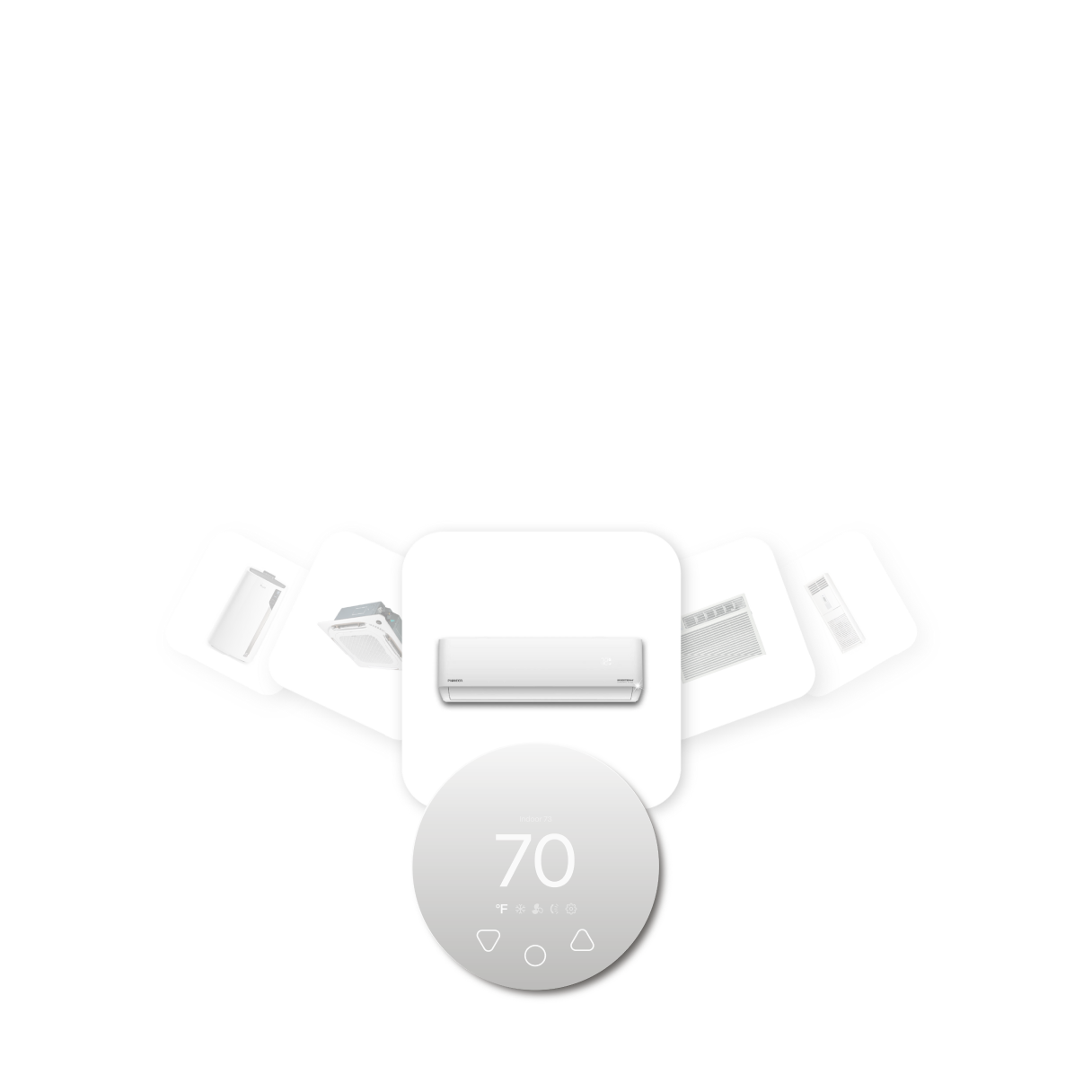
Compatible with all brands of ACs and Mini-Splits
Automate Climate Management
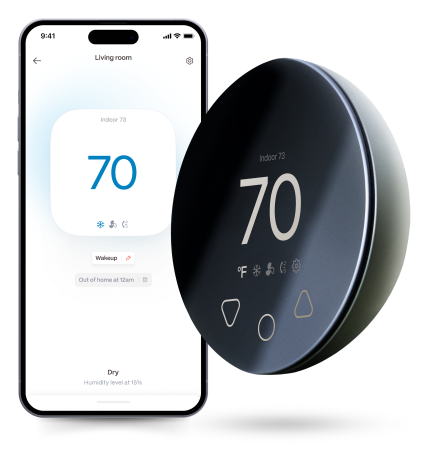
Control remotely
Reduce Energy Consumption
Monitor bills in realtimeKlima - Smart Home Thermostat for Mini-splits, Air Conditioners and Heatpumps
Oil Heat vs Heat Pump Mini-Split: Performance Comparison
| Factor | Oil Furnace / Boiler | Cold-Climate Mini-Split |
|---|---|---|
| Heating efficiency (COP) | 0.78–0.95 (AFUE) | 1.5–3.5 COP (season average) |
| Heating cost per million BTU (CAD, 2026 avg.) | $35–$55 (oil at ~$1.40/L) | $12–$25 (electricity at $0.15/kWh at COP 2.0–3.0) |
| Cooling provided? | No — separate system needed | Yes — same unit cools in summer |
| Cold-climate performance (−25°C) | Full capacity — not temperature-dependent | Reduced but functional on cold-climate models; backup heat needed below −25°C in extreme climates |
| Carbon emissions | High — combustion-based | Depends on grid; near-zero on hydro-powered grids (QC, BC, MB) |
Federal Oil-to-Heat-Pump Rebate (2026)
The Canada Oil to Heat Pump Affordability (OHPA) program provides up to CAD $10,000 for households switching from oil to an eligible heat pump. Key details:
- Amount: CAD $5,000 standard; up to $10,000 for lower-income households
- Eligibility: Oil-fired primary heating system being replaced by a qualifying air-source heat pump mini-split
- Equipment: Must appear on the NRCan Approved Equipment List
- Application: Through NRCan at nrcan.gc.ca — no pre-evaluation required (unlike Greener Homes Grant)
- Stacking: Can be combined with the Greener Homes Grant AND provincial rebates in the same year
Combined Rebate Potential by Province (Oil Replacement)
| Province | Federal OHPA | Provincial/Utility | Greener Homes | Potential Total |
|---|---|---|---|---|
| Nova Scotia | Up to $10,000 | Up to $5,000 (EfficiencyNS) | Up to $5,000 | Up to $20,000 |
| New Brunswick | Up to $10,000 | Up to $4,000 (NB Power) | Up to $5,000 | Up to $19,000 |
| PEI | Up to $10,000 | Up to $3,000 | Up to $5,000 | Up to $18,000 |
| Quebec | Up to $10,000 | Up to $4,500 (Rénover Vert) | Up to $5,000 | Up to $19,500 |
What the Conversion Involves
An oil-to-heat-pump conversion does not require removing the oil tank immediately — many homeowners retain the oil system as emergency backup heating for the first 1–2 winters while they verify the heat pump meets their comfort needs. The mini-split is installed as primary heating; the oil system remains available but is not the default. Over time, most homeowners decommission and remove the oil tank (required by provincial regulations within a defined period — check with your provincial environment ministry).
Stay cool and save more. Use code JONES15 to get 15% off your entire order—no strings attached.
Upgrade your comfort with a Klima today.
Frequently Asked Questions
Can a heat pump mini-split fully replace oil heat in Atlantic Canada?
Yes — with a cold-climate model rated to −25°C or better. Atlantic Canada's design temperatures (Halifax: −14°C; Fredericton: −23°C; Charlottetown: −18°C) are within the operating range of cold-climate mini-splits from Mitsubishi, Daikin, Fujitsu, LG, and Senville. Many NS and NB homeowners have replaced oil as their sole heat source with cold-climate mini-splits and report reliable performance even in the coldest weeks. A small electric backup heater (baseboard or panel heater) in the coldest room provides additional security at minimal cost.
Related reading:
→ Mini-Split for Canadian Winter: What You Actually Need to Know
→ Nova Scotia Heat Pump Rebate 2026: EfficiencyNS Complete Guide
→ Mini-Split Rebates Canada 2026: Federal + Provincial Guide


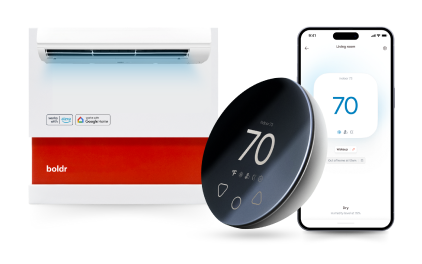
Klima - Smart Home Controller for Mini-splits, Air Conditioners and Heatpumps
Compatible with all brands of ACs and Mini-Splits Automate Climate Management Control remotely Reduce Energy Consumption Monitor bills in realtime
Try NowRecent Articles

Mini-Split Outdoor Unit Clearance 2026 Guide
A mini-split outdoor unit needs air. Lots of it. The condenser pull...
Read More
What Happens if Your Mini-Split Is Too Small?
Most homeowner sizing advice focuses on oversized mini-splits. But ...
Read More
Does a Mini-Split Need a Manual J Load Calculation?
A 500-square-foot room does not automatically need a 12,000 BTU min...
Read More
Signs Your Mini-Split May Have a Refrigerant Leak
A mini-split does not normally “use up” refrigerant the way a car u...
Read More
Mini-Split Minimum Capacity: Why It Matters
When homeowners compare mini-splits, they normally look at the bigg...
Read More