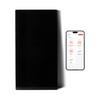







Every contractor running a mixed book of business knows this truck-stock problem intimately: one thermostat model for standard single-stage systems, a different one for multi-stage, something else entirely for heat pumps with dual fuel or emergency heat, a separate line for light-commercial fan coils, and often a completely different device family when the job is a ductless retrofit. Multiply that across every manufacturer's proprietary quirks, and "which stat do I have in the truck for this job" becomes its own small tax on every service call.
The Boldr Universal Thermostat is built to eliminate that question entirely — one platform, engineered to cover the systems you actually run into in the field, not just the easy ones.
Built for the Job You're Actually On, Not the Textbook Install
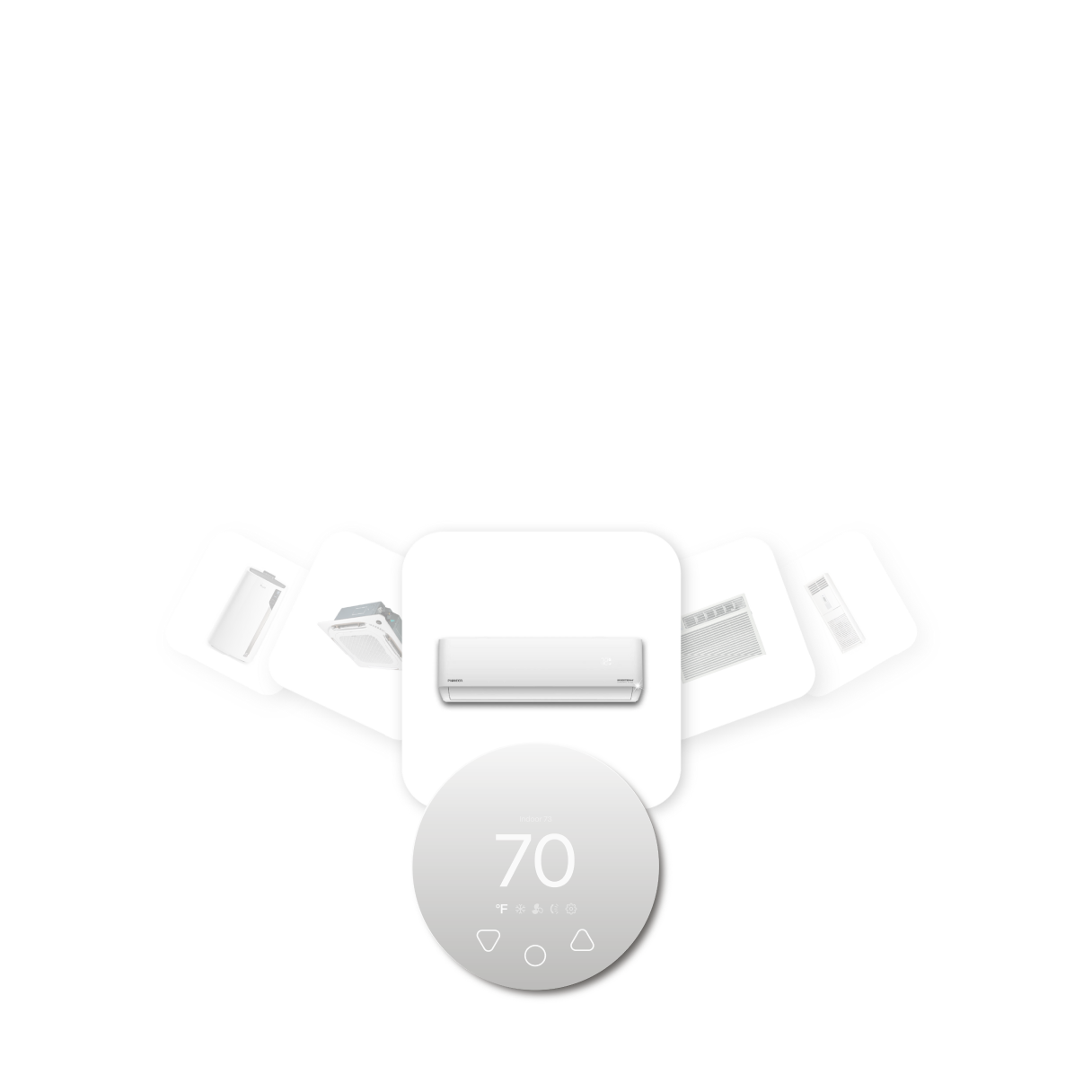
Real installs rarely look like a wiring diagram. You're dealing with mixed systems, legacy wiring that doesn't match anything current, accessory-heavy setups, and upgrades where running new thermostat wire simply isn't an option without opening a finished wall. The Universal Thermostat is designed around that reality: a Display and a Base that combine into one platform covering ducted and ductless systems without swapping hardware or stocking a dozen different thermostat models to cover your service area.
Unmatched Systems Compatibility
This is the core promise, and it's a wide one. The Universal Thermostat is built to work across mini-splits and ductless systems (any brand, any model, controlled without opening walls or wiring to the indoor unit, preserving original equipment behavior); standard heat pump systems, including dual fuel, auxiliary, and emergency heat support for electrification upgrades; VRF/VRV systems in light-commercial control and integration scenarios; central AC and ducted HVAC, both single-stage and multi-stage, gas and electric; boilers and hydronic systems through dry-contact and common control-scheme integration; fan coils in residential and light-commercial applications; and hybrid or mixed systems — zoning and accessory-heavy installs that don't fit a single standard diagram.
That's not a marketing list of "also compatible with." It's the actual design target: one platform that covers what a working contractor's book of business actually contains.
Install Where It Makes Sense, Not Where the Wiring Forces You
Most installs are limited by existing wiring, access, and finished spaces — not by what would ideally be the best location for a thermostat. The Universal Thermostat is built to remove that constraint with real install flexibility:
Simple replacement uses existing wiring for a standard swap, with no C-wire adapter needed for straightforward upgrades.
Install at the equipment puts the base directly at the furnace, boiler, or heat pump, with the display placed anywhere in the home — solving "broken wire" situations instantly instead of requiring a new wire pull through finished walls.
Install at the air handler eliminates wire-fishing entirely for system upgrades, which is particularly useful for straight-cool to heat-pump conversions, enabling full system control off existing wiring for a faster, cleaner install.
Wires That Adapt to the Job, Not the Other Way Around
Re-assignable terminals let you match the thermostat to whatever system and accessory combination you're installing, configured with a tap in the Boldr Pro App rather than requiring a different pre-wired thermostat model for every configuration. On-device setup lets you confirm wiring connections directly on the thermostat screen for instant verification during install — catching a miswire before you're back in the truck, not after a callback.
A Thermostat That Diagnoses, Not Just Controls
Traditional thermostats send commands and little else. The Universal Thermostat monitors system behavior, safety devices, and key temperatures at the equipment level, turning the thermostat into a diagnostic instrument for installers and service teams. That includes fault detection across condensate overflow switches, economizer and equipment fault outputs, external safety interlocks, and monitored fault (L) terminals; system behavior monitoring across equipment state signals, call-for-heat and call-for-cool patterns, and abnormal cycling; and temperature signal monitoring across indoor, outdoor, supply air, and return air sensors.
For a service call, that's the difference between guessing at a diagnosis and having the thermostat itself tell you where to start looking.
Built Like Something You'd Want on the Wall
Beyond the technical case, the Universal Thermostat is built from low-carbon aluminum and mirror glass — a seamless, reflective design that disappears into the room until it's needed, with touch controls for instant response. It's a device a customer notices in a good way, not just functional infrastructure hidden behind a thermostat guard.


Recent Articles

Mini-Split Outdoor Unit Clearance 2026 Guide
A mini-split outdoor unit needs air. Lots of it. The condenser pull...
Read More
What Happens if Your Mini-Split Is Too Small?
Most homeowner sizing advice focuses on oversized mini-splits. But ...
Read More
Does a Mini-Split Need a Manual J Load Calculation?
A 500-square-foot room does not automatically need a 12,000 BTU min...
Read More
Signs Your Mini-Split May Have a Refrigerant Leak
A mini-split does not normally “use up” refrigerant the way a car u...
Read More
Mini-Split Minimum Capacity: Why It Matters
When homeowners compare mini-splits, they normally look at the bigg...
Read More