






Ask ten customers what a "smart thermostat" is and you'll get ten different answers — most of them wrong, or at least incomplete. Ask ten contractors, and you'll get a more accurate but still inconsistent picture, because the term has been stretched to cover everything from a Wi-Fi-enabled dial that just moved a physical switch online, to a genuine learning system that models a building's thermal behavior in real time.
That distinction matters more than it sounds like it should, because it directly affects which comfort complaints you'll still be fielding a year after install.
The Baseline: What Makes a Thermostat "Smart" at All
At minimum, three things separate a smart thermostat from a mechanical or basic digital one:
Remote connectivity. It talks to a network — Wi-Fi most commonly, sometimes Zigbee or Matter — so it can be controlled and monitored from somewhere other than the wall.
Sensing beyond a single temperature reading. Real smart controls incorporate more than one data point: humidity, occupancy/presence, sometimes outdoor temperature, and increasingly, system health signals like run-time and cycling patterns.
Some form of logic layer. This is where the real differentiation happens, and where most of the "smart thermostat" category actually falls short.
Where Most "Smart" Thermostats Stop
A large share of what's marketed as a smart thermostat is, underneath the app, still running simple on/off or basic deadband control — the system kicks on when the temperature crosses a threshold and shuts off when it crosses back. That's not fundamentally different from a mechanical thermostat from thirty years ago; it's just been given a Wi-Fi radio and a nicer interface.
The tell is usually temperature swing. If a customer's space still overshoots the setpoint by two or three degrees before the system responds, or cycles more than it needs to, the "smart" part of that thermostat is mostly cosmetic — it's smart about being controlled remotely, not smart about how it actually manages comfort.
What Genuine Smart Control Looks Like
A control system that's actually doing something different under the hood typically includes:
Predictive or adaptive control logic, not just threshold-based switching — anticipating a setpoint change before the space drifts too far, and adjusting run behavior based on how the specific space actually responds to heating and cooling, not a generic factory curve.
Multi-zone awareness, especially critical in ductless and multi-head systems, where one indoor unit calling for heat while another calls for cool on the same outdoor unit creates real mechanical conflicts, not just a comfort complaint. Genuine smart control resolves that conflict in software before it becomes a nuisance callout.
Diagnostic and health monitoring, not just comfort control — tracking whether a system's performance is degrading over time (a sign of a refrigerant issue, a failing component, or a maintenance need) and surfacing that before it becomes a no-cool emergency call in July.
Energy and cost visibility built from actual run-time and system data, not a rough estimate based on average regional utility rates.
Why Ductless Systems Are a Different Problem Than Central Systems
Most consumer smart thermostat products were engineered for single-zone, central forced-air systems with a standard low-voltage wiring setup: R, C, Y, G, W terminals, a single call for heat or cool, one blower. That's a well-solved problem, and it's why the category matured quickly for that use case.
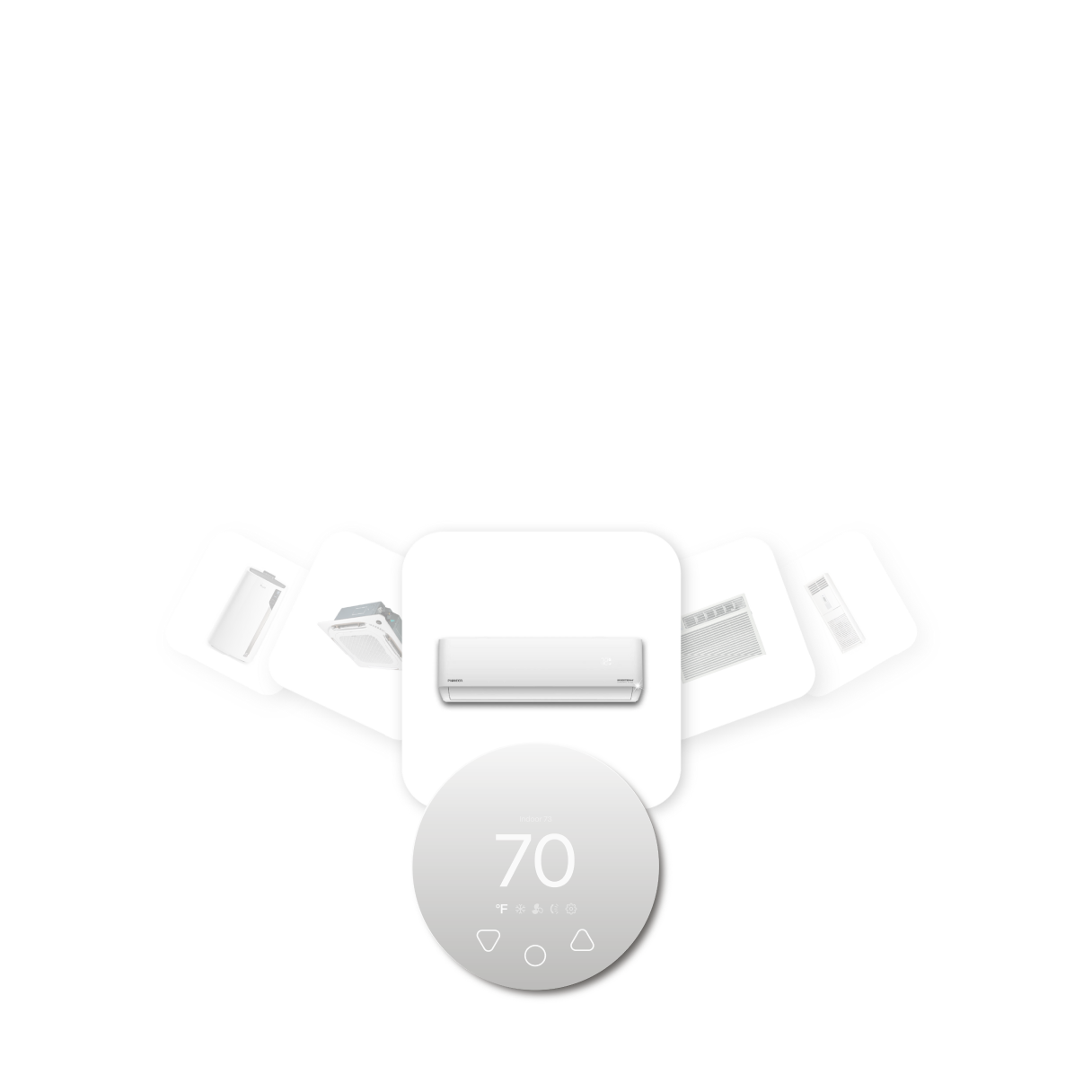
Ductless mini-split systems are architecturally different. Each indoor head is often independently controlled, frequently by an infrared remote rather than low-voltage wiring at all, with manufacturer-specific communication protocols that vary across brands. A generic smart thermostat designed for central systems typically can't even connect to a ductless head without a compatibility workaround — which is exactly why the ductless retrofit control category exists as its own product class rather than being served by the same devices used on forced-air systems.
This is the gap a purpose-built ductless smart controller is solving, rather than trying to force a central-system product into a job it wasn't designed for.
The Practical Difference for What You're Selling
When a customer asks for "a smart thermostat" on a ductless job, they usually mean they want three specific outcomes: stop the temperature swings, stop losing the remote, and see what it's costing them to run. None of those outcomes come from Wi-Fi connectivity alone — they come from the control logic underneath it.
That's the distinction worth making explicit in the sales conversation: not "smart vs. not smart," but what the control system actually does with the data it collects. A device that just lets someone change the setpoint from their phone is a convenience upgrade. A device that actively manages deadband, resolves multi-zone conflicts, tracks unit health, and gives real cost visibility is an operational upgrade — and it's the difference between a customer who calls you back happy in a year and one who calls you back with the same overshoot complaint they had before the install.
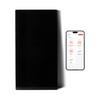
The Boldr Smart Controller was built around that second definition specifically for ductless systems — Comfort Zone AI to eliminate the overshoot and swing that basic on/off logic can't solve, multi-zone conflict resolution built for the way mini-split systems actually misbehave, and unit health monitoring that catches efficiency decay before it turns into a no-cool call. If you're positioning smart controls as a line item on every ductless install, it's worth being precise with customers about which kind you're actually giving them.


Recent Articles

Mini-Split Outdoor Unit Clearance 2026 Guide
A mini-split outdoor unit needs air. Lots of it. The condenser pull...
Read More
What Happens if Your Mini-Split Is Too Small?
Most homeowner sizing advice focuses on oversized mini-splits. But ...
Read More
Does a Mini-Split Need a Manual J Load Calculation?
A 500-square-foot room does not automatically need a 12,000 BTU min...
Read More
Signs Your Mini-Split May Have a Refrigerant Leak
A mini-split does not normally “use up” refrigerant the way a car u...
Read More
Mini-Split Minimum Capacity: Why It Matters
When homeowners compare mini-splits, they normally look at the bigg...
Read More