






Mini-splits are worth it for most homeowners — but not every homeowner. The answer depends on what you are replacing, what your home looks like, and how you plan to use the system. This guide lays out the real costs, real savings, and the specific situations where a mini-split pays for itself versus where it does not.
The Short Answer
If you currently heat with electric baseboard, oil, or propane — yes, a mini-split is almost certainly worth it. The efficiency gains alone can save $500–$1,500 per year, meaning the system pays for itself in 2–5 years. If you already have a well-functioning, high-efficiency central HVAC system with good ductwork, the financial case is weaker — but a mini-split may still be worth it for supplemental zones, additions, or rooms that are always too hot or too cold.
Cost vs. Savings Breakdown
| Scenario | Installed Cost | Annual Savings | Payback Period |
|---|---|---|---|
| Replacing electric baseboard heat | $3,000–$5,000 | $800–$1,500 | 2–4 years |
| Replacing oil furnace | $3,500–$5,500 | $600–$1,200 | 3–5 years |
| Replacing propane furnace | $3,500–$5,500 | $500–$1,000 | 4–6 years |
| Replacing window AC units | $3,000–$4,500 | $200–$500 | 6–10 years |
| Adding AC to a home with no cooling | $3,000–$5,000 | Comfort gain (no direct savings) | N/A — comfort investment |
| Supplementing central HVAC (one zone) | $2,500–$4,000 | $100–$300 | 8–15 years |
When a Mini-Split Is Clearly Worth It
- You heat with electric baseboard. Electric resistance heating has a COP of 1.0 — it converts electricity to heat one-for-one. A mini-split heat pump has a COP of 2.5–4.0, meaning it delivers 2.5 to 4 times more heat per watt of electricity. Switching from baseboard to a mini-split typically cuts heating electricity by 30–50%, according to utility program data across the US and Canada.
- You heat with oil or propane and prices are high. A mini-split heat pump running on electricity can be significantly cheaper per BTU of heat delivered, especially in regions where electricity rates are moderate ($0.10–$0.16/kWh). The higher your fuel costs and the milder your winters, the faster the payback.
- You have no existing ductwork. Adding ductwork to a home costs $5,000–$15,000. A mini-split provides heating and cooling without ducts, making it the most cost-effective option for ductless homes by a wide margin.
- You need heating and cooling for a single room. A garage, basement, sunroom, or home office that is not connected to your central system is an ideal mini-split application. A single-zone system costs $2,500–$5,000 installed and provides year-round climate control.
- You want zone control. Central systems heat and cool the whole house to one temperature. A multi-zone mini-split lets you set each room independently, reducing energy use in unoccupied rooms.
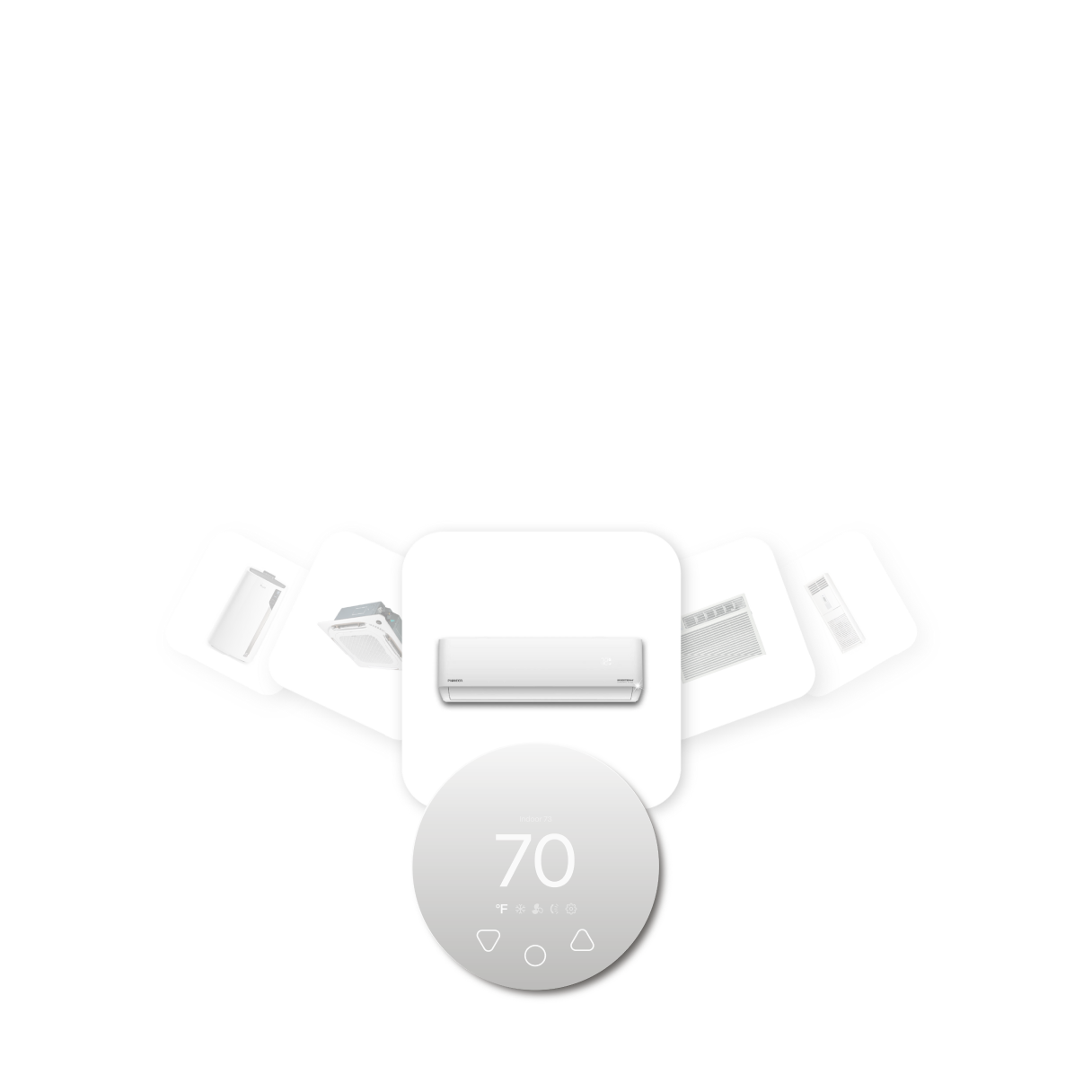
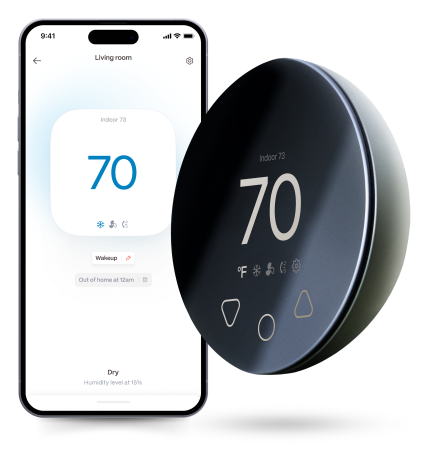
Compatible with all brands of ACs and Mini-Splits
Automate Climate Management
Control remotely
Reduce Energy Consumption
Monitor bills in realtimeKlima - Smart Home Thermostat for Mini-splits, Air Conditioners and Heatpumps
When a Mini-Split May Not Be Worth It
- You already have efficient central HVAC. If your home has a working, high-efficiency central system (SEER 16+ / AFUE 95%+) with good ductwork, replacing it with a mini-split system will not save enough to justify the cost.
- You plan to move within 1–2 years. The payback period for most mini-split installations is 3–6 years. If you are selling the home soon, you may not recoup the investment.
- You have natural gas heat at very low rates. In regions where natural gas is extremely cheap (under $0.60/therm), a high-efficiency gas furnace can be less expensive to operate than a heat pump.
Efficiency: How Much Energy Does a Mini-Split Actually Save?
Mini-splits achieve their efficiency advantage through two mechanisms: the heat pump cycle (moving heat rather than generating it) and the inverter compressor (adjusting speed to match demand rather than cycling on and off).
According to Energy Star, duct losses in central systems can waste over 25% of heating and cooling energy — especially when ducts run through unconditioned spaces. A ductless mini-split eliminates this loss entirely because conditioned air is delivered directly into the room.
Modern mini-splits carry SEER2 ratings between 18 and 42 for cooling and HSPF2 ratings between 9 and 15 for heating. For context, the federal minimum for central systems is SEER2 13.4–14.3. A mini-split at SEER2 22 uses roughly 40% less electricity for cooling than a minimum-efficiency central system.
Mini-Split Lifespan and Long-Term Value
| System | Typical Lifespan | Annual Maintenance Cost |
|---|---|---|
| Mini-split | 15–20 years | $100–$200 |
| Window AC | 5–10 years | Minimal |
| Central air conditioner | 12–18 years | $150–$300 |
| Gas furnace | 15–25 years | $100–$250 |
Rebates and Tax Credits (2026)
In the US, qualifying heat pumps — including mini-splits — are eligible for a federal tax credit of up to $2,000 under the Inflation Reduction Act. Many state and utility programs offer additional rebates of $500–$3,000. In Canada, the Canada Greener Homes Grant and various provincial programs offer rebates for heat pump installations. These incentives can significantly reduce the effective cost and shorten the payback period. Check with your local utility and government energy programs for current amounts in your area.
Frequently Asked Questions
Do mini-splits save money on electricity?
Yes, in most cases. Mini-splits use 30–50% less electricity than electric baseboard heating for the same amount of heat, and 25–40% less electricity for cooling compared to window units. Savings vary based on local electricity rates, climate, and what system you are replacing.
Are mini-splits worth it in cold climates?
Yes, with the right model. Cold-climate mini-splits from brands like Mitsubishi, Fujitsu, and Daikin are rated to heat at temperatures as low as −22°F (−30°C). In very cold regions, a supplemental heat source may be needed for the coldest days, but the mini-split handles the vast majority of heating hours efficiently.
Do mini-splits increase home value?
According to HVAC industry reporting, adding climate control to a room that previously had none — such as a finished basement, garage, or attic — does increase home value. The exact amount varies by market, but the combination of energy efficiency and zone control is attractive to buyers.
Is a mini-split worth it for just one room?
Yes — single-room applications are one of the strongest use cases. A single-zone mini-split costs $2,500–$5,000 installed and provides both heating and cooling for one room year-round. For a garage, home office, bonus room, or addition, there is no more cost-effective solution.


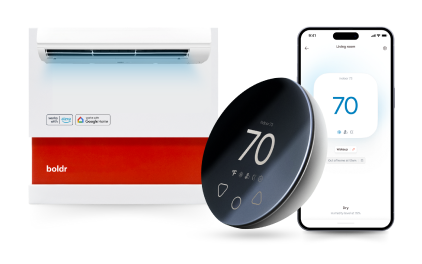
Klima - Smart Home Controller for Mini-splits, Air Conditioners and Heatpumps
Compatible with all brands of ACs and Mini-Splits Automate Climate Management Control remotely Reduce Energy Consumption Monitor bills in realtime
Try NowRecent Articles

Mini-Split Outdoor Unit Clearance 2026 Guide
A mini-split outdoor unit needs air. Lots of it. The condenser pull...
Read More
What Happens if Your Mini-Split Is Too Small?
Most homeowner sizing advice focuses on oversized mini-splits. But ...
Read More
Does a Mini-Split Need a Manual J Load Calculation?
A 500-square-foot room does not automatically need a 12,000 BTU min...
Read More
Signs Your Mini-Split May Have a Refrigerant Leak
A mini-split does not normally “use up” refrigerant the way a car u...
Read More
Mini-Split Minimum Capacity: Why It Matters
When homeowners compare mini-splits, they normally look at the bigg...
Read More