






For Canadian winters — where temperatures in most of the country regularly fall below −15°C and can reach −30°C or colder in the Prairies and northern regions — only cold-climate mini-splits rated to at least −25°C (−13°F) are appropriate as primary heating sources. Standard mini-splits lose substantial heating capacity below −10°C and may stop operating entirely at −20°C. This guide covers the best cold-climate options available in Canada in 2026.
Compatible with all brands of ACs and Mini-Splits
Automate Climate Management
Control remotely
Reduce Energy Consumption
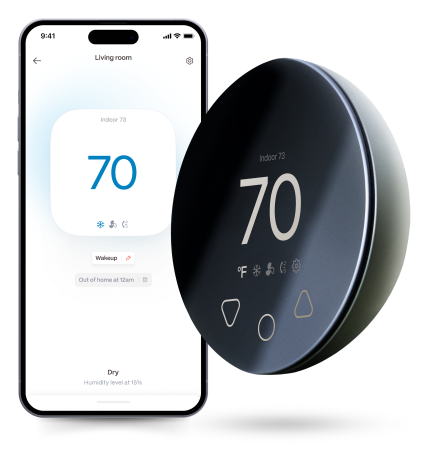
Monitor bills in realtimeKlima - Smart Home Thermostat for Mini-splits, Air Conditioners and Heatpumps
The Leading Cold-Climate Mini-Splits in Canada (2026)
| Brand | Product Line | Rated Min. Temp | Installed Cost (CAD, single zone) | Warranty |
|---|---|---|---|---|
| Mitsubishi | MSZ-FH Hyper-Heating (H2i) | −25°C (−13°F) | CAD $6,000–$9,500 | 12-year compressor |
| Daikin | Aurora (RXL/FTXL) | −25°C (−13°F) | CAD $5,500–$9,000 | 12-year compressor |
| LG | LGRED° | −25°C (−13°F) | CAD $5,000–$8,500 | 10-year compressor |
| Fujitsu | Halcyon | −25°C (−13°F) | CAD $5,500–$9,000 | 10-year compressor |
| Senville | AURA Series | −30°C (−22°F) | CAD $4,000–$7,000 | 5-year compressor |
How Much Heating Capacity Do They Retain at Low Temperatures?
Rated minimum temperature is the floor — but how much useful heat remains at that temperature matters just as much:
| Outdoor Temp | Standard Mini-Split (% rated capacity) | Cold-Climate H2i / Aurora / LGRED° (% rated capacity) |
|---|---|---|
| +8°C (47°F) | 100% | 100% |
| −8°C (17°F) | ~75% | ~100% |
| −15°C (5°F) | ~50% | ~85% |
| −25°C (−13°F) | May not operate | ~57–65% |
Do You Need Backup Heat?
For most of southern and central Canada — Ontario, Quebec south of the 50th parallel, BC, and Atlantic Canada — a properly sized −25°C rated cold-climate mini-split serves as a reliable primary heat source through virtually all winter conditions. For northern Ontario, northern Quebec, the Prairie provinces, and any location that regularly experiences temperatures below −25°C, a backup heating source for the coldest nights is standard practice in professionally designed systems.
Frequently Asked Questions
Which cold-climate mini-split is best for Prairie winters?
The Mitsubishi H2i, Daikin Aurora, LG LGRED°, and Fujitsu Halcyon are all used successfully in Alberta, Saskatchewan, and Manitoba. Senville's AURA series is rated to −30°C and is marketed specifically for extreme Canadian conditions. The choice between them typically comes down to local installer availability — confirm which brand has certified contractors in your area before deciding.
Can a mini-split be my only heat source in a Canadian winter?
Yes, for most of Canada, with a cold-climate model. Thousands of Canadian homeowners use cold-climate mini-splits as their sole heat source — particularly in BC, Ontario, and Quebec. In the coldest regions and on the rare extreme nights below −25°C, a small backup (electric resistance strips, retained oil or gas backup, or wood stove) handles the exceptional hours without the mini-split bearing the entire load.
Related reading:
→ Do Mini-Splits Work in Cold Weather?
→ Mitsubishi Hyper Heat: Is It Worth the Extra Cost?
→ How Efficient Is a Mini-Split in Winter? Real Numbers


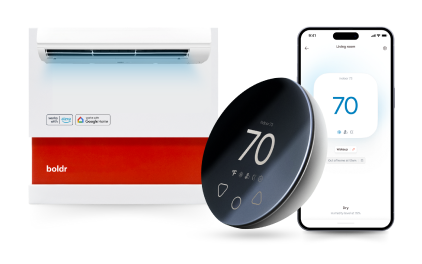
Klima - Smart Home Controller for Mini-splits, Air Conditioners and Heatpumps
Compatible with all brands of ACs and Mini-Splits Automate Climate Management Control remotely Reduce Energy Consumption Monitor bills in realtime
Try NowRecent Articles

Mini-Split Outdoor Unit Clearance 2026 Guide
A mini-split outdoor unit needs air. Lots of it. The condenser pull...
Read More
What Happens if Your Mini-Split Is Too Small?
Most homeowner sizing advice focuses on oversized mini-splits. But ...
Read More
Does a Mini-Split Need a Manual J Load Calculation?
A 500-square-foot room does not automatically need a 12,000 BTU min...
Read More
Signs Your Mini-Split May Have a Refrigerant Leak
A mini-split does not normally “use up” refrigerant the way a car u...
Read More
Mini-Split Minimum Capacity: Why It Matters
When homeowners compare mini-splits, they normally look at the bigg...
Read More