




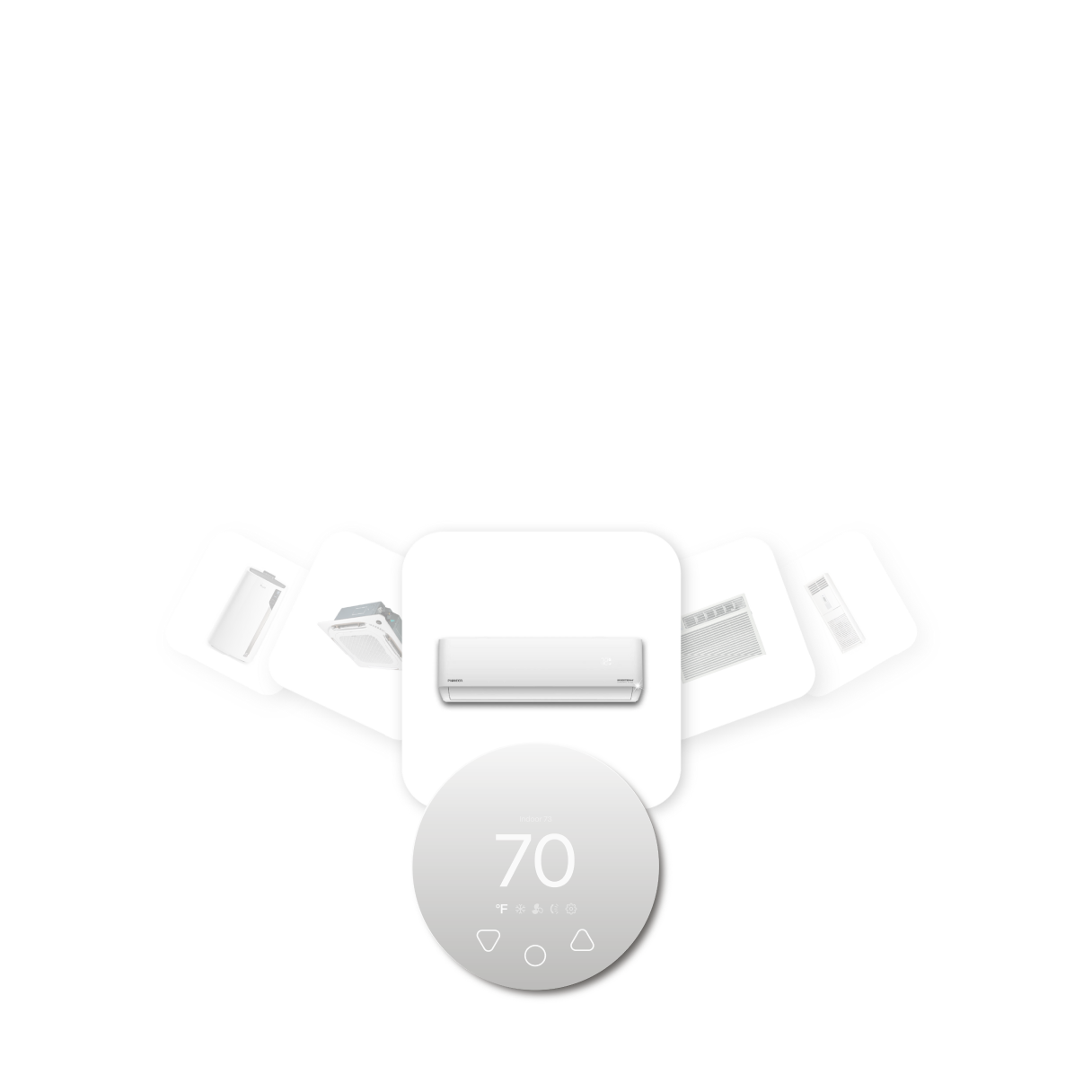



"Mini-split" almost always refers to ductless systems — but mini-splits actually come in two configurations: ductless (wall-mount, ceiling cassette, floor console) and ducted (concealed in a ceiling cavity with short duct runs to multiple grilles). Both use the same outdoor compressor technology; the difference is how conditioned air is delivered inside the space. Understanding both configurations helps you choose the right approach for your specific installation.
Compatible with all brands of ACs and Mini-Splits
Automate Climate Management
Control remotely
Reduce Energy Consumption
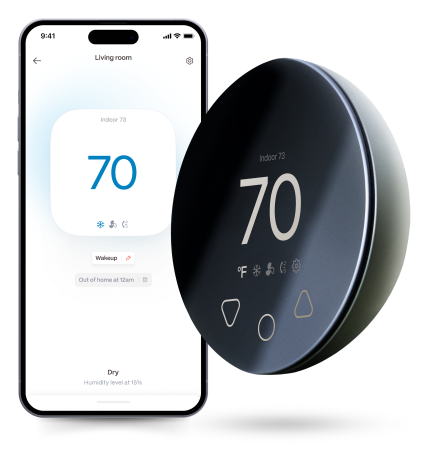
Monitor bills in realtimeKlima - Smart Home Thermostat for Mini-splits, Air Conditioners and Heatpumps
Ductless vs Ducted Mini-Split: Key Differences
| Factor | Ductless (Wall/Cassette/Floor) | Ducted Mini-Split (Concealed) |
|---|---|---|
| Indoor unit visibility | Visible on wall or ceiling | Hidden in ceiling; only grilles visible |
| Ductwork required | None | Short duct runs (typically 10–40 ft) |
| Installation complexity | Lower — wall bracket and penetration only | Higher — ceiling cavity access required |
| Installation cost premium | Base cost | $1,000–$3,000 more per zone |
| Rooms served per indoor unit | One room or open area | Multiple rooms via short duct branches |
| Filter access | Easy — front panel access | Access panel in ceiling required |
| Efficiency impact of ducts | None — no ductwork | Short runs cause minimal losses vs traditional long-run central systems |
Ducted Mini-Splits: When They Make Sense
A ducted mini-split (also called a concealed or short-duct mini-split) hides the indoor air handler in a ceiling cavity and distributes conditioned air through 1–4 short duct branches with conventional ceiling grilles. This provides the aesthetic of a traditional forced-air system while using the same inverter compressor technology as ductless systems.
Best applications:
- Open-plan spaces where a ceiling cassette would be visible and not preferred
- Renovations where preserving a clean ceiling aesthetic matters
- Multi-room zones where one air handler serves 2–3 adjacent rooms through short duct branches
- Homes where the owner prefers the conventional grille look over visible wall units
Stay cool and save more. Use code JONES15 to get 15% off your entire order—no strings attached.
Upgrade your comfort with a Klima today.
Frequently Asked Questions
Is a ducted mini-split as efficient as a ductless one?
Nearly as efficient. The short duct runs in a ducted mini-split system cause minimal energy losses compared to the long duct runs in a conventional central system. The efficiency difference between ductless and short-run ducted mini-splits is small (typically 3–7%) — much less than the 10–30% losses in a full central duct system.
Can I connect a mini-split to my existing central ductwork?
Not directly — standard mini-split indoor units are not designed to connect to a full conventional duct system. Ducted mini-split units are designed for short runs only (typically under 40 feet total). For homes with existing long-run ductwork, a ducted central heat pump (not a mini-split) is the appropriate equipment choice.
Related reading:
→ Mini-Split Ceiling Cassette vs Wall Mount: Which to Choose?
→ Mini-Split Installation Guide: The Complete Process
→ Mini-Split vs Central Air for Large Homes: Expert Verdict


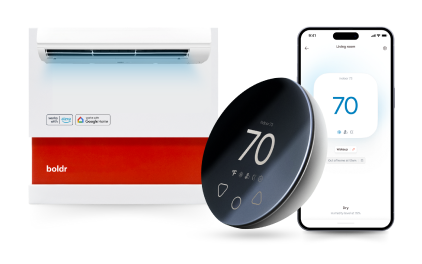
Klima - Smart Home Controller for Mini-splits, Air Conditioners and Heatpumps
Compatible with all brands of ACs and Mini-Splits Automate Climate Management Control remotely Reduce Energy Consumption Monitor bills in realtime
Try NowRecent Articles

Mini-Split Outdoor Unit Clearance 2026 Guide
A mini-split outdoor unit needs air. Lots of it. The condenser pull...
Read More
What Happens if Your Mini-Split Is Too Small?
Most homeowner sizing advice focuses on oversized mini-splits. But ...
Read More
Does a Mini-Split Need a Manual J Load Calculation?
A 500-square-foot room does not automatically need a 12,000 BTU min...
Read More
Signs Your Mini-Split May Have a Refrigerant Leak
A mini-split does not normally “use up” refrigerant the way a car u...
Read More
Mini-Split Minimum Capacity: Why It Matters
When homeowners compare mini-splits, they normally look at the bigg...
Read More