






Mini-splits use refrigerant to move heat between the indoor and outdoor units. The refrigerant type affects efficiency, environmental impact, availability, and which systems require EPA-certified handling. In 2026, the North American mini-split market is in transition — R-410A is being phased out, R-32 is the leading replacement, and R-454B is the US EPA-approved alternative for new equipment. This guide explains the differences and what they mean for homeowners buying a mini-split today.
Compatible with all brands of ACs and Mini-Splits
Automate Climate Management
Control remotely
Reduce Energy Consumption
Monitor bills in realtimeKlima - Smart Home Thermostat for Mini-splits, Air Conditioners and Heatpumps
The Three Main Refrigerant Types in 2026
| Refrigerant | GWP | Status in North America | Used By |
|---|---|---|---|
| R-410A | 2,088 | Being phased out; cannot be used in new equipment after 2025 | Many older/existing systems; some budget-tier brands |
| R-32 | 675 | Widely adopted globally; EPA-approved for new equipment | Daikin, LG, Mitsubishi (select), Panasonic, Fujitsu |
| R-454B (Puron Advance™) | 466 | EPA-approved; being adopted by US manufacturers | Carrier, and US-market focused manufacturers |
GWP = Global Warming Potential (relative to CO₂ = 1). Lower GWP = lower climate impact if refrigerant escapes during service or disposal.
What the Refrigerant Transition Means for Homeowners
Buying a new mini-split in 2026: Any new mini-split purchased today will use R-32, R-454B, or another EPA-approved low-GWP refrigerant. R-410A systems are no longer manufactured for the North American market. You do not need to do anything special — the transition happens at the manufacturer level.
Servicing an existing R-410A system: R-410A refrigerant can still be used to service existing equipment. It will remain available for servicing until existing systems reach end of life, though prices may rise as production is phased down.
R-32 is mildly flammable (A2L classification): R-32 has a lower flammability than propane but is not completely non-flammable. Installation and service requires technicians trained in A2L refrigerant handling. Equipment using R-32 is designed with appropriate safety measures — it is not a practical risk concern for homeowners.
Frequently Asked Questions
Should I avoid buying a mini-split with R-32?
No. R-32 is the leading refrigerant globally for new mini-splits and is used by Daikin, LG, Panasonic, Fujitsu, and others. It is EPA-approved, has lower environmental impact than R-410A, and is widely available for service. The A2L mildly flammable classification requires trained technicians — no different from how R-410A required EPA Section 608 certification.
Is R-32 more efficient than R-410A?
R-32 generally allows for slightly better thermodynamic performance in heat pump systems — one reason manufacturers favour it beyond environmental considerations. Real-world efficiency differences between R-32 and R-410A in comparable equipment are modest (1–3%) — system design and compressor technology matter more.
Stay cool and save more. Use code JONES15 to get 15% off your entire order—no strings attached.
Upgrade your comfort with a Klima today.
Related reading:
→ Mini-Split Refrigerant Leak: Signs, Cost and What to Do
→ Mini-Split SEER Rating: What It Means and Why It Matters
→ How Long Do Mini-Splits Last? Lifespan by Brand


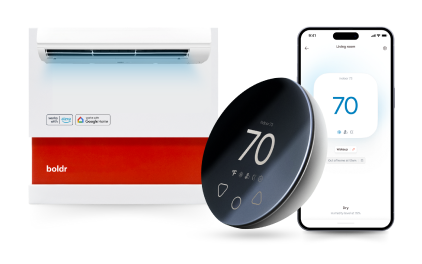
Klima - Smart Home Controller for Mini-splits, Air Conditioners and Heatpumps
Compatible with all brands of ACs and Mini-Splits Automate Climate Management Control remotely Reduce Energy Consumption Monitor bills in realtime
Try NowRecent Articles

Mini-Split Outdoor Unit Clearance 2026 Guide
A mini-split outdoor unit needs air. Lots of it. The condenser pull...
Read More
What Happens if Your Mini-Split Is Too Small?
Most homeowner sizing advice focuses on oversized mini-splits. But ...
Read More
Does a Mini-Split Need a Manual J Load Calculation?
A 500-square-foot room does not automatically need a 12,000 BTU min...
Read More
Signs Your Mini-Split May Have a Refrigerant Leak
A mini-split does not normally “use up” refrigerant the way a car u...
Read More
Mini-Split Minimum Capacity: Why It Matters
When homeowners compare mini-splits, they normally look at the bigg...
Read More