





A mini-split air conditioner and heat pump works by transferring heat between the inside and outside of your home using refrigerant, a compressor, and two connected units — one indoors and one outdoors. Unlike central HVAC systems, a mini-split does not use ductwork to distribute air. Instead, it delivers conditioned air directly into a room through a wall-mounted indoor unit connected to an outdoor compressor by a small set of refrigerant lines.This guide explains every component and process involved so you can understand exactly what happens when you press the button on your remote.
The Two-Unit System Explained
Every mini-split system has two main pieces of hardware. The outdoor unit (also called the condenser or compressor unit) sits outside your home, typically on a concrete pad or wall-mounted bracket. The indoor unit (also called the air handler or evaporator) mounts inside the room you want to heat or cool, usually high on a wall.
These two units connect through a small conduit — typically a 3-inch hole drilled through the exterior wall. Inside that conduit run two copper refrigerant lines (one for liquid, one for gas), a power cable, and a condensate drain line that removes moisture.
This two-unit design is the reason mini-splits are called "ductless" systems. There are no air ducts running through your ceiling or walls. The cooled or heated air comes directly from the indoor unit into the room.
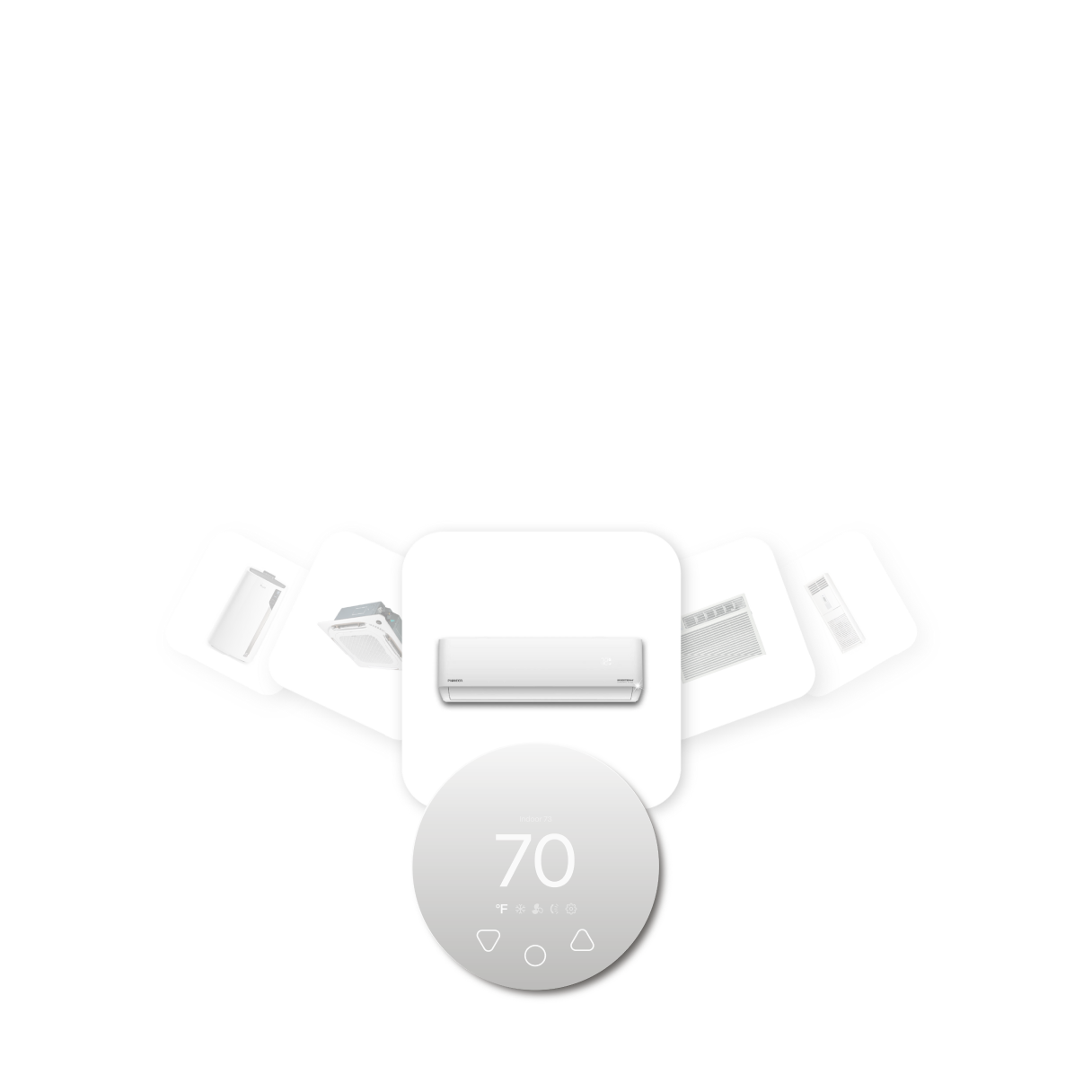
Compatible with all brands of ACs and Mini-Splits
Automate Climate Management
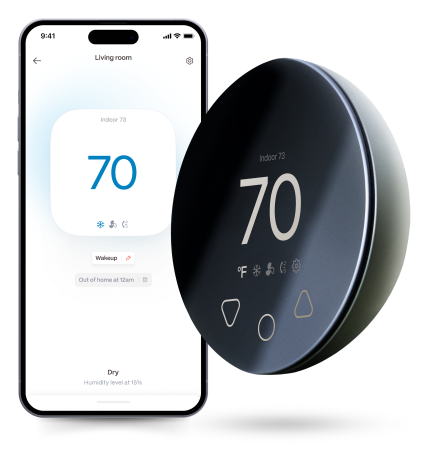
Control remotely
Reduce Energy Consumption
Monitor bills in realtimeKlima - Smart Home Thermostat for Mini-splits, Air Conditioners and Heatpumps
Single-Zone vs. Multi-Zone
A single-zone mini-split uses one outdoor unit connected to one indoor unit. It heats and cools one room or area. A multi-zone system connects one outdoor unit to multiple indoor units — commonly two, three, four, or even five — each serving a different room. Each indoor unit can be set to a different temperature independently.
How Cooling Mode Works
When you set your mini-split to cooling mode, the system absorbs heat from inside your room and moves it outdoors. Here is the step-by-step process:
Step 1: Warm indoor air passes over the evaporator coil inside the indoor unit. The coil contains cold refrigerant in a low-pressure liquid/gas state.
Step 2: The refrigerant absorbs heat from the air. As it absorbs heat, the refrigerant evaporates — changing from a liquid to a gas.
Step 3: The now-warm refrigerant gas travels through the copper line set to the outdoor unit.
Step 4: The compressor in the outdoor unit pressurizes the refrigerant gas, raising its temperature significantly.
Step 5: The hot, high-pressure gas passes through the condenser coil in the outdoor unit. A fan blows outdoor air across this coil, which pulls heat out of the refrigerant and disperses it into the outside air.
Step 6: The refrigerant cools down and condenses back into a liquid. It passes through an expansion valve, which drops its pressure and temperature drastically.
Step 7: The cold liquid refrigerant returns to the indoor unit, and the cycle repeats.
How Heating Mode Works
In heating mode, the refrigerant cycle reverses. Instead of absorbing heat from indoors and releasing it outdoors, the system absorbs heat from outdoor air and releases it inside. This is possible because even cold outdoor air contains thermal energy — modern mini-split heat pumps can extract heat from air as cold as −22°F (−30°C) in some models.
A component called a reversing valve in the outdoor unit switches the direction of refrigerant flow. In heating mode, the outdoor coil acts as the evaporator (absorbing heat from outside air) and the indoor coil acts as the condenser (releasing heat into your room).
According to reporting from the U.S. Department of Energy, heat pumps — including mini-splits — can deliver up to three times more heating energy than the electrical energy they consume, because they move heat rather than generate it through resistance.
What Is Inverter Technology?
Most modern mini-splits use inverter-driven compressors. This is a major difference from traditional air conditioners and is one of the main reasons mini-splits are more efficient.
A conventional AC uses a fixed-speed compressor that operates in only two states: fully on or fully off. It cycles on when the room gets warm, blasts cold air until the thermostat setpoint is reached, then shuts off completely. This on-off cycling wastes energy during startup and creates noticeable temperature swings.
An inverter compressor adjusts its speed continuously. When a room is close to the desired temperature, the compressor slows down to a whisper — using very little electricity — but never fully shuts off. When the room needs rapid cooling or heating, it speeds up. The result is more consistent temperatures and significantly lower energy bills.
| Feature | Fixed-Speed Compressor | Inverter Compressor |
|---|---|---|
| Speed adjustment | On or Off only | Variable (10%–100%) |
| Temperature consistency | ±3–5°F swings | ±1°F or less |
| Energy use at part load | Same as full load | Proportional to demand |
| Noise at low demand | Same as full load | Very quiet (19–26 dB) |
| Startup power surge | Yes, every cycle | Minimal — soft start |
The Refrigerant Cycle Step by Step
Refrigerant is the working fluid that carries heat between the indoor and outdoor units. Understanding how it changes state helps explain why mini-splits work so well.
Refrigerant has a very low boiling point — much lower than water. Common refrigerants used in mini-splits include R-410A (being phased out), R-32, and R-454B (gaining adoption in the US and Canada due to lower global warming potential).
The cycle has four stages:
1. Evaporation (Indoor Unit): Low-pressure liquid refrigerant enters the indoor coil. As warm room air blows over the coil, the refrigerant absorbs heat and boils into a gas. The air leaving the coil is now cooler.
2. Compression (Outdoor Unit): The compressor squeezes the low-pressure gas into a high-pressure, high-temperature gas. This is where most of the electrical energy is used.
3. Condensation (Outdoor Unit): The hot gas enters the outdoor coil. The outdoor fan blows ambient air across this coil, removing heat. The refrigerant cools and condenses back into a high-pressure liquid.
4. Expansion (Expansion Valve): The liquid refrigerant passes through a small expansion valve, which rapidly drops its pressure and temperature. It becomes a cold, low-pressure mixture of liquid and gas, ready to re-enter the indoor coil.
Key Components and What They Do
| Component | Location | Function |
|---|---|---|
| Compressor | Outdoor unit | Pressurizes refrigerant gas to raise its temperature for heat rejection |
| Condenser coil | Outdoor unit (cooling mode) | Releases absorbed heat into outside air |
| Evaporator coil | Indoor unit (cooling mode) | Absorbs heat from room air |
| Expansion valve | Between units | Reduces refrigerant pressure and temperature before evaporation |
| Reversing valve | Outdoor unit | Switches the refrigerant direction to toggle between heating and cooling |
| Fan (indoor) | Indoor unit | Circulates room air across the evaporator coil |
| Fan (outdoor) | Outdoor unit | Blows air across the condenser coil to disperse heat |
| Filter | Indoor unit | Captures dust, pollen, and particles from room air |
| Condensate drain | Indoor unit | Removes moisture that condenses on the evaporator coil during cooling |
| Line set | Connects units | Two insulated copper tubes carrying refrigerant between indoor and outdoor units |
How a Mini-Split Differs from Central Air
Central air conditioning systems use a single indoor air handler connected to a network of ducts that distribute conditioned air throughout the home. A mini-split eliminates the ductwork entirely.
According to Energy Star, duct losses in central systems can account for more than 25% of the total energy used for heating and cooling — especially when ducts run through unconditioned spaces like attics or crawl spaces. Mini-splits avoid this loss because conditioned air is delivered directly at the point of use.
Another key difference: central systems typically heat or cool the entire house to one temperature. A mini-split system allows zone-based control, meaning you can keep the living room at 72°F and a guest bedroom at 65°F without wasting energy conditioning an unoccupied room.
Why Mini-Splits Are So Efficient
Mini-splits achieve high efficiency for three main reasons that work together:
No duct losses. As noted above, ductwork in central systems leaks and loses heat. A ductless system delivers 100% of its conditioned air directly into the room.
Inverter compressor modulation. Rather than cycling on and off, the inverter compressor runs at exactly the speed needed. At low demand, it uses a fraction of its rated power. Industry data shows that mini-splits spend most of their operating hours at 30%–60% capacity, which is where they are most efficient.
Heat pump advantage. In heating mode, a mini-split moves heat rather than generating it. A 1,500-watt electric space heater produces 1,500 watts of heat. A mini-split using 1,500 watts of electricity can deliver 4,500 watts of heat (a COP of 3.0) because it is transferring existing heat from the outdoor air rather than converting electricity directly into warmth.
Modern mini-splits carry SEER2 ratings between 18 and 42, depending on the model. For context, the current federal minimum for central air conditioners in the US is SEER2 13.4 (northern states) or SEER2 14.3 (southern states). Most mini-splits far exceed these baselines.
Frequently Asked Questions
Does a mini-split use a lot of electricity?
No. Because of inverter technology and heat pump efficiency, most mini-splits use less electricity than central AC systems of equivalent capacity. A typical 12,000 BTU mini-split in cooling mode uses between 600 and 1,000 watts — comparable to a hair dryer on a medium setting.
Can a mini-split both heat and cool?
Yes. Nearly all modern mini-splits are heat pumps, meaning they can reverse the refrigerant cycle to provide both heating and cooling from the same unit. You select the mode from the remote control or app.
How cold can it be outside for a mini-split to still heat?
Standard mini-split models maintain effective heating down to about 5°F (−15°C). Cold-climate or "hyper heat" models from brands like Mitsubishi, Fujitsu, and Daikin are rated to heat at temperatures as low as −13°F to −22°F (−25°C to −30°C), though heating capacity decreases as outdoor temperature drops.
Does a mini-split dehumidify?
Yes. During cooling mode, moisture from indoor air condenses on the evaporator coil and drains out through the condensate line. Many models also have a dedicated "dry" mode that prioritizes dehumidification over temperature reduction.
How long does a mini-split last?
With regular maintenance — mainly filter cleaning every two weeks and annual professional checkups — a mini-split system typically lasts 15 to 20 years, according to HVAC industry estimates. The compressor is usually the component that determines overall lifespan.


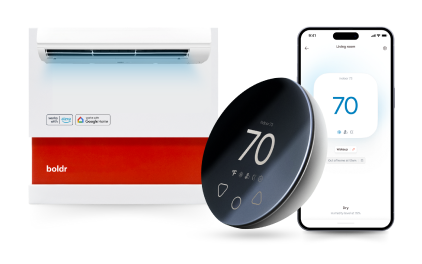
Klima - Smart Home Controller for Mini-splits, Air Conditioners and Heatpumps
Compatible with all brands of ACs and Mini-Splits Automate Climate Management Control remotely Reduce Energy Consumption Monitor bills in realtime
Try NowRecent Articles

Mini-Split Outdoor Unit Clearance 2026 Guide
A mini-split outdoor unit needs air. Lots of it. The condenser pull...
Read More
What Happens if Your Mini-Split Is Too Small?
Most homeowner sizing advice focuses on oversized mini-splits. But ...
Read More
Does a Mini-Split Need a Manual J Load Calculation?
A 500-square-foot room does not automatically need a 12,000 BTU min...
Read More
Signs Your Mini-Split May Have a Refrigerant Leak
A mini-split does not normally “use up” refrigerant the way a car u...
Read More
Mini-Split Minimum Capacity: Why It Matters
When homeowners compare mini-splits, they normally look at the bigg...
Read More