







A mini-split can be an effective way to heat and cool a garage, particularly when the space does not have existing ductwork.
However, garages often have much larger heating and cooling loads than similarly sized rooms inside the home. An uninsulated garage door, concrete floor, high ceiling and frequent door openings can make the system work much harder than expected.
Before buying equipment, consider how the garage is constructed and how it will be used.
Is a Mini-Split Good for a Garage?
A garage mini-split may be suitable for:
- A home workshop
- A gym
- A hobby room
- A converted office
- Vehicle storage
- A laundry area
- A detached garage
- A space used for woodworking or repairs
Mini-splits are particularly useful in spaces without ducts because they provide heating and cooling directly through an indoor unit.
The Department of Energy describes ductless mini-splits as a flexible option for buildings or areas without existing ductwork, while emphasising the importance of professional sizing and installation.
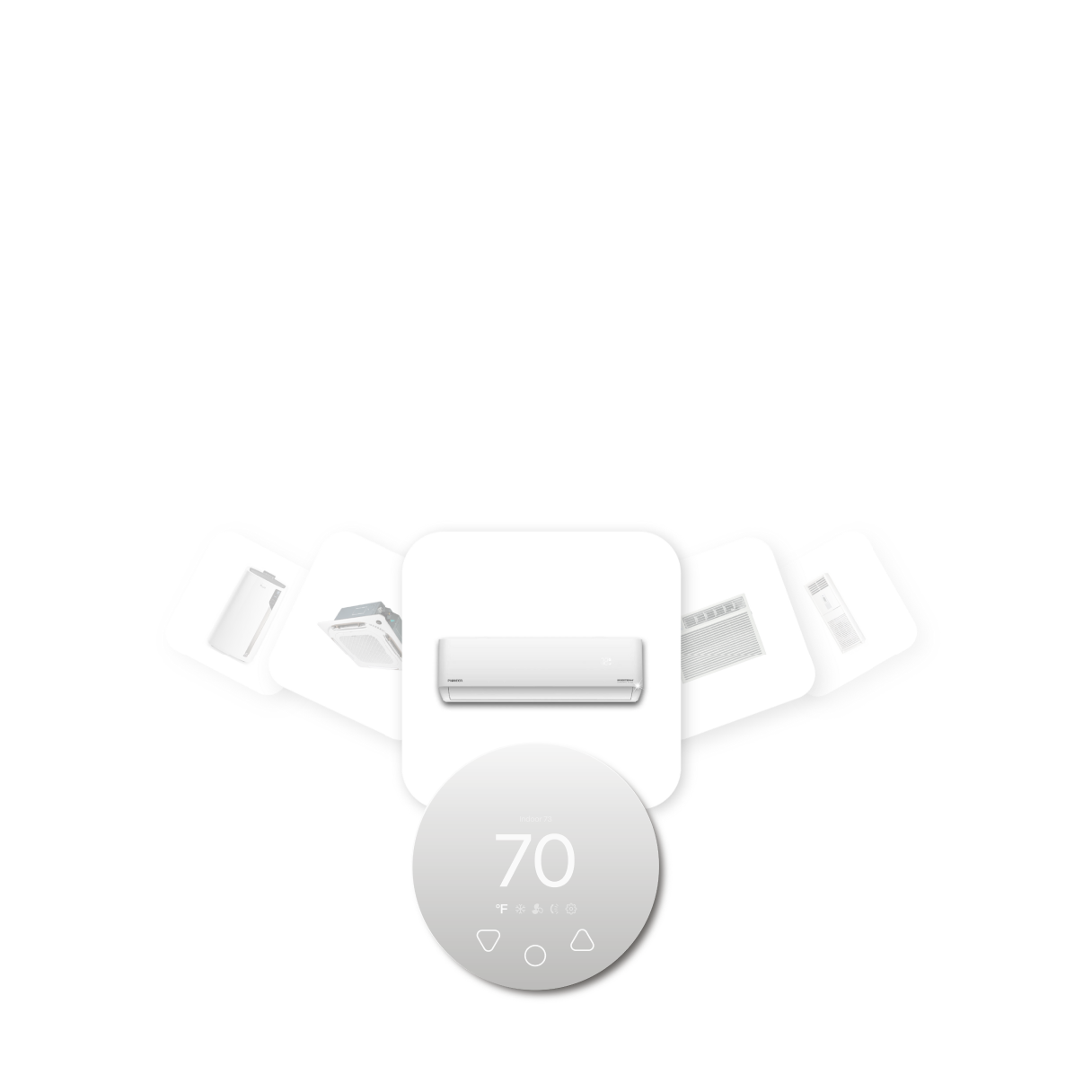
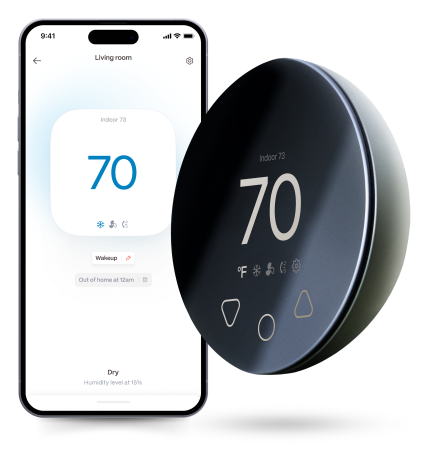
Compatible with all brands of ACs and Mini-Splits
Automate Climate Management
Control remotely
Reduce Energy Consumption
Monitor bills in realtimeKlima - Smart Home Thermostat for Mini-splits, Air Conditioners and Heatpumps
Insulate the Garage First
Installing a mini-split in an uninsulated garage may improve conditions, but the system could struggle to maintain comfort.
Check:
- Garage-door insulation
- Wall insulation
- Ceiling or roof insulation
- Weatherstripping
- Gaps around windows
- Gaps beneath doors
- Air leakage around penetrations
The garage door is often the largest source of heat gain and heat loss. Replacing damaged seals or adding an insulated door may reduce the required HVAC capacity.
Garage Size Is Not the Only Sizing Factor
Do not choose a mini-split based only on square footage.
A contractor should also consider:
- Ceiling height
- Number of exterior walls
- Garage-door size
- Sun exposure
- Local climate
- Insulation
- Air leakage
- Vehicles entering while hot
- Heat-producing tools
- Number of occupants
A 500-square-foot garage with a twelve-foot ceiling and two uninsulated doors may need substantially more capacity than a 500-square-foot insulated room inside the house.
Where Should the Indoor Unit Go?
Choose a position with a clear airflow path across the occupied area.
Avoid placing the indoor head:
- Above a dusty workbench
- Directly over expensive tools
- Where a vehicle could strike it
- Behind storage shelves
- Near welding fumes
- Where sawdust will enter the intake
- Above chemicals or fuel containers
The filters may need more frequent cleaning in a workshop because of dust and airborne debris.
What Temperature Should a Garage Use?
A garage does not necessarily need to remain at normal living-room temperatures all day.
A moderate occupied setting and a wider unoccupied setback may reduce unnecessary operation.
However, consider whether the space contains:
- Temperature-sensitive paints
- Batteries
- Electronics
- Plumbing
- Pets
- Woodworking materials
- Stored liquids
Do not allow the garage to reach temperatures that could damage stored products or create a freezing risk.
Can a Mini-Split Handle Woodworking Dust?
A mini-split is not a dust-collection system.
Fine workshop dust may accumulate on:
- Filters
- The indoor coil
- The blower wheel
- Louvers
- Electrical components
Use source dust extraction and inspect the mini-split more frequently than you would in a normal bedroom.
Do not depend on the unit’s washable filter to manage heavy sawdust or fine particulate matter.
What About Vehicle Exhaust?
A mini-split does not normally provide outdoor-air ventilation.
Never run a vehicle inside a closed garage, even when the mini-split is operating. Carbon monoxide can accumulate rapidly.
Install appropriate carbon-monoxide alarms and follow local safety requirements. EPA identifies carbon monoxide among the important indoor air pollutants homeowners need to address.
Can a Mini-Split Heat a Detached Garage?
Yes, provided the model is selected for the local winter conditions.
Ask the contractor for the system’s heating capacity at the coldest expected outdoor temperature—not only its headline BTU rating.
Cold-climate performance, defrosting and outdoor-unit placement become especially important in snowy areas.
Stay cool and save more. Use code JONES15 to get 15% off your entire order—no strings attached.
Upgrade your comfort with a Klima today.
Frequently Asked Questions
Can I use a 12,000 BTU mini-split in a two-car garage?
Possibly, but square footage alone is not enough. Door area, insulation, ceiling height and climate must be considered.
Should the outdoor unit go inside the garage?
No. The outdoor unit must exchange heat with outdoor air and should be installed according to the manufacturer’s requirements.
Will a mini-split remove workshop fumes?
No. Use appropriate source ventilation and safety equipment.
Can I leave a garage mini-split on all winter?
Yes, when the equipment is designed for the climate and the garage requires temperature protection. Use an appropriate setback when it is unoccupied


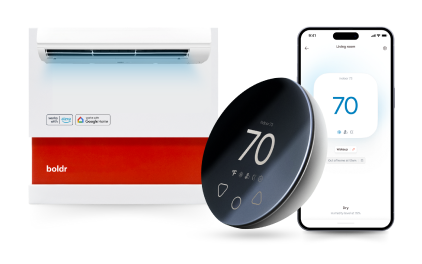
Klima - Smart Home Controller for Mini-splits, Air Conditioners and Heatpumps
Compatible with all brands of ACs and Mini-Splits Automate Climate Management Control remotely Reduce Energy Consumption Monitor bills in realtime
Try NowRecent Articles

Mini-Split Outdoor Unit Clearance 2026 Guide
A mini-split outdoor unit needs air. Lots of it. The condenser pull...
Read More
What Happens if Your Mini-Split Is Too Small?
Most homeowner sizing advice focuses on oversized mini-splits. But ...
Read More
Does a Mini-Split Need a Manual J Load Calculation?
A 500-square-foot room does not automatically need a 12,000 BTU min...
Read More
Signs Your Mini-Split May Have a Refrigerant Leak
A mini-split does not normally “use up” refrigerant the way a car u...
Read More
Mini-Split Minimum Capacity: Why It Matters
When homeowners compare mini-splits, they normally look at the bigg...
Read More