





Deciding whether to repair or replace a failing mini-split comes down to three factors: the system's age, the cost of the repair relative to a new system, and whether the existing system meets your current needs in terms of efficiency and features. There is a commonly used rule of thumb in HVAC — the 50% rule — that provides a useful framework: if the repair cost exceeds 50% of a new system's price, replacement is usually the wiser financial decision.
Compatible with all brands of ACs and Mini-Splits
Automate Climate Management
Control remotely
Reduce Energy Consumption
Monitor bills in realtimeKlima - Smart Home Thermostat for Mini-splits, Air Conditioners and Heatpumps
The 50% Rule
If a repair costs more than 50% of what a comparable new system would cost installed, replacement typically makes more financial sense. A new system comes with a fresh warranty, current efficiency ratings, and often meaningfully lower operating costs than a 10+ year old system. Investing 60–80% of a new system's cost into an aging unit leaves you with an old system still approaching end of life.
Repair vs Replace Decision Framework
| Scenario | Recommendation |
|---|---|
| System under 5 years old; repair cost under $500 | Repair — system is young and likely still under warranty |
| System 5–10 years old; repair under 30% of new system cost | Repair — cost-effective; system still has meaningful life remaining |
| System 5–10 years old; repair 30–50% of new system cost | Consider both — depends on brand quality, remaining warranty, and upgrade value |
| System 5–10 years old; repair over 50% of new system cost | Replace — approaching 50% rule threshold; new system preferable |
| System over 10 years old; any major repair | Replace — other components near end of life; newer systems more efficient |
| System needs second major repair in 12 months | Replace — multiple failures signal system-wide decline |
Additional Factors Favouring Replacement
- Refrigerant type: Systems on R-22 (phased out) are expensive to service due to refrigerant scarcity. R-410A systems face rising costs as production is phased down.
- Efficiency gains: A 15-year-old system rated at SEER 14 vs a new system at SEER2 20+ could save $200–$400 per year in electricity — relevant when calculating true payback on replacement
- Cold-climate capability: If your existing system performs poorly below 20°F and a cold-climate model would serve your climate better, the performance upgrade justifies replacement ahead of failure
- Federal rebates: New qualifying heat pumps are eligible for up to $2,000 US federal tax credit and additional state rebates — factoring these into the replacement cost calculation often significantly shortens payback
Frequently Asked Questions
What is the average lifespan of a mini-split?
15–20 years with proper maintenance for premium brands (Mitsubishi, Daikin, Fujitsu). Budget-tier brands typically last 10–15 years. Compressor warranties of 10–12 years from premium brands signal manufacturer confidence in that lifespan. Systems that are well-maintained — filters cleaned regularly, coils cleaned annually, refrigerant charge maintained — consistently reach or exceed the upper end of their expected lifespan.
Is it worth repairing a mini-split that's 12 years old?
For minor repairs (capacitor, sensor, drain line) costing $150–$350, yes — even a 12-year-old system has potential life remaining. For major repairs (compressor, PCB) costing $800+, the 50% rule applies — compare the repair cost to a new system and weigh the remaining warranty period and efficiency differential. Many homeowners in this situation choose to replace.
Related reading:
→ Mini-Split Repair Cost: What to Expect in 2026
→ How Long Do Mini-Splits Last? Lifespan by Brand
→ Mini-Split Compressor Replacement Cost 2026


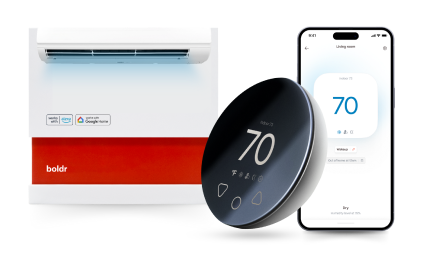
Klima - Smart Home Controller for Mini-splits, Air Conditioners and Heatpumps
Compatible with all brands of ACs and Mini-Splits Automate Climate Management Control remotely Reduce Energy Consumption Monitor bills in realtime
Try NowRecent Articles

How to Heat an ADU or Guest House: Heat Options
An accessory dwelling unit, a backyard guest house or an in-law su...
Read More
What Is the Safest Type of Space Heater? (2026)
What Is the Safest Type of Space Heater? There isn't a single safe...
Read More
Why Is This Room Always Cold? The Real Fixes, in Order
The instinct when a room runs cold is to buy a heater. The better ...
Read More
Best Heater for Airbnb; Rental Properties, No Install
Best Heater for Airbnb & Rental Properties (No Permanent Insta...
Read More
How to Heat a Basement That's Always Cold
A basement runs cold for a different reason than a drafty upstairs...
Read More