






Mini-splits are more energy-efficient than central air conditioning and better suited for homes without existing ductwork, room additions, and zoned comfort needs. Central air conditioning has a lower upfront cost when ducts already exist and is simpler for whole-home cooling in new construction. The right system depends on your home's existing infrastructure, the number of rooms you need to condition, your climate, and your priorities around upfront versus long-term operating costs.
Mini-Split vs Central Air: Key Differences
| Feature | Mini-Split | Central Air |
|---|---|---|
| Ductwork needed | No | Yes |
| Install cost — existing ducts | $8,000–$20,000 (whole home) | $4,000–$8,000 |
| Install cost — no ducts | $8,000–$20,000 | $12,000–$25,000+ |
| SEER2 efficiency | 16–30+ | 14–22 |
| Zoned control | Yes — each room independently | Limited — requires add-on zoning |
| Heating capability | Yes — heat pump built-in | Cooling only (needs separate furnace) |
| Energy loss from ducts | None | 20–30% typical duct loss |
| Indoor noise level | 19–45 dB | 50–70 dB |
| Visible equipment indoors | Wall-mounted unit in each zone | Vents only — equipment hidden |
| Lifespan | 15–20 years | 12–17 years (AC), 15–20 years (furnace) |
When a Mini-Split Makes More Sense
- No existing ductwork: Adding ducts to an existing home costs $5,000–$15,000. A mini-split avoids this entirely.
- Room additions or new zones: Extending existing ductwork is expensive and often reduces system efficiency. A single-zone mini-split is faster and more cost-effective for individual spaces.
- You want heating and cooling in one system: Mini-splits are heat pumps — they replace both an AC unit and a furnace.
- Energy efficiency is a priority: Mini-splits avoid the 20–30% energy loss typical of leaky ductwork. According to the US Department of Energy, duct losses account for more than 30% of energy consumption in a typical central air system.
- Zoned control matters: Mini-splits let you independently control temperature in each room. Central air conditions the whole home from one thermostat.
When Central Air Makes More Sense
- You already have ducts in good condition: Replacing a central AC unit in a home with existing ductwork is typically the most cost-effective whole-home cooling solution.
- You prefer hidden equipment: Central air only shows vents. Mini-split indoor units are wall-mounted and visible.
- Whole-home cooling in a mild climate: In climates that rarely require heating, a central AC paired with an existing gas furnace may be more economical overall.
- HOA or exterior restrictions: Some condominiums restrict exterior-mounted mini-split compressors.
Energy Efficiency: The Ductless Advantage
Central air conditioning systems lose 20–30% of conditioned air through duct leaks, poor insulation, and thermal loss in unconditioned spaces like attics and crawlspaces. According to the US Department of Energy, this duct loss accounts for more than 30% of energy consumption in a typical home. Mini-splits deliver conditioned air directly to the room — eliminating this loss entirely. On a per-BTU basis, a mini-split is consistently more efficient than central air in homes with typical ductwork, even when both carry similar SEER2 ratings.
10-Year Cost Comparison
| Cost Type | Mini-Split (3-zone) | Central Air + Furnace |
|---|---|---|
| Installation (existing ducts) | $10,000–$15,000 | $4,000–$8,000 |
| Installation (no ducts) | $10,000–$15,000 | $15,000–$25,000 |
| Annual energy cost (US avg) | $900–$1,400 | $1,400–$2,400 |
| 10-year operating cost | $9,000–$14,000 | $14,000–$24,000 |

What Is the Boldr Smart Controller?
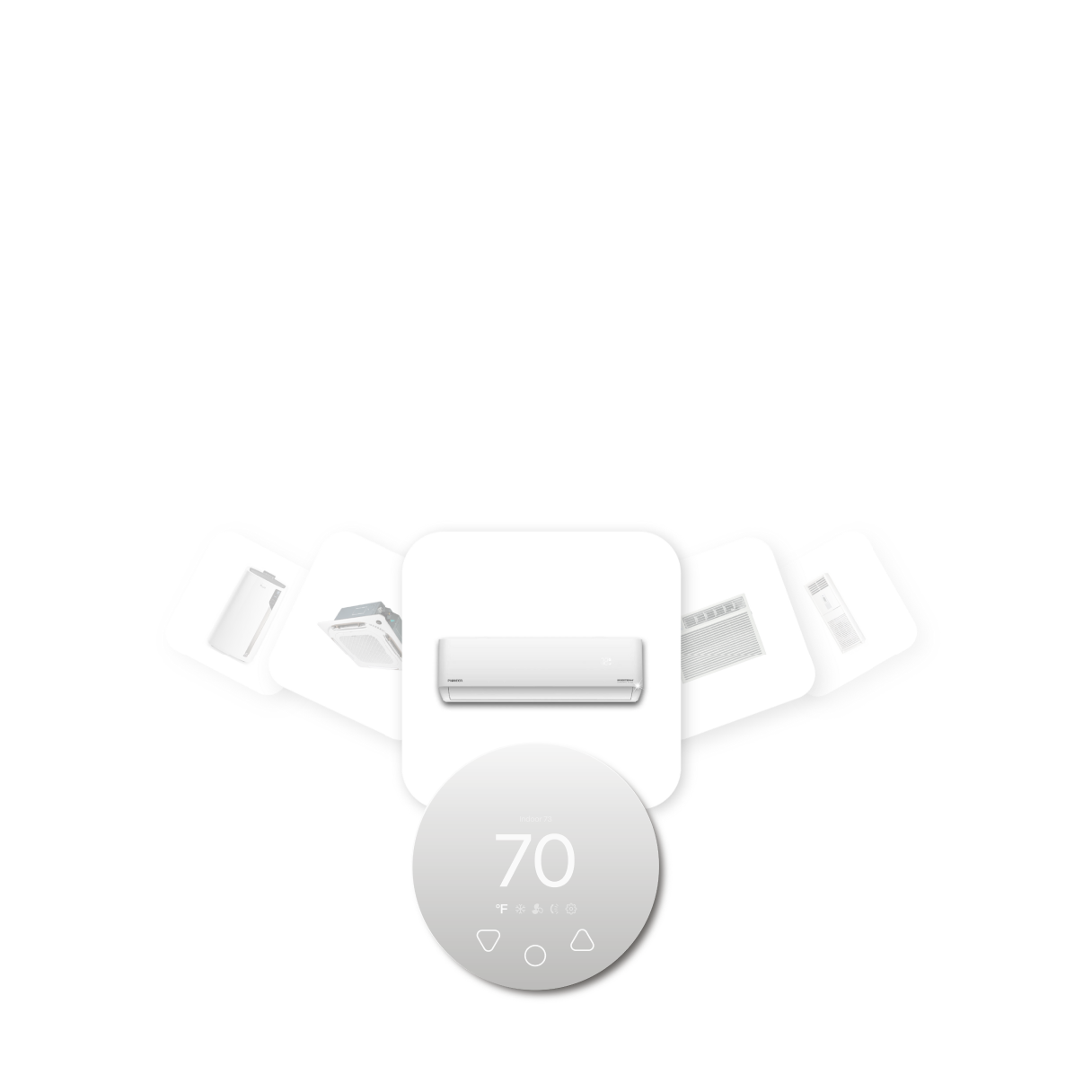
Whether you already own a mini-split or are considering one, the Boldr Smart Controller transforms any ductless mini-split, window AC, or room AC into a smart system — with phone control, automated scheduling, geofencing, energy monitoring, and Apple HomeKit support.
Installation takes under three minutes and requires no wiring. Compatible with any brand that uses an IR remote control.
→ Explore the Boldr Smart Controller
Frequently Asked Questions
Is a mini-split more efficient than central air?
In most scenarios, yes. Mini-splits avoid the 20–30% energy loss from ductwork and are available with higher SEER2 ratings than most central AC units. They are especially more efficient in homes with leaky or poorly insulated ductwork, which is common in older construction.
Can a mini-split replace central air in an existing home?
Yes. A multi-zone mini-split system can replace both central air conditioning and gas heating. This is increasingly common in older homes replacing aging HVAC systems, particularly in climates where electrification and energy reduction are priorities.
Is mini-split installation more expensive than central air?
If existing ductwork is in good condition, central air replacement is typically less expensive upfront. If no ducts exist, a mini-split system is almost always the less expensive option — installing new ductwork plus central AC routinely costs $15,000–$25,000 or more in an existing home.
Which is quieter — mini-split or central air?
Mini-splits are significantly quieter. Indoor units operate at 19–45 dB — comparable to a whisper or a quiet library. Central air systems typically produce 50–70 dB at the air handler and create additional noise through registers and duct vibration throughout the home.
Related reading:
→ What Is a Mini-Split? Everything Homeowners Need to Know
→ How Much Does a Mini-Split Cost? Full 2026 Guide
→ Mini-Split Pros and Cons: Is a Ductless System Right for You?



Klima - Smart Home Controller for Mini-splits, Air Conditioners and Heatpumps
Compatible with all brands of ACs and Mini-Splits Automate Climate Management Control remotely Reduce Energy Consumption Monitor bills in realtime
Try NowRecent Articles

Mini-Split Outdoor Unit Clearance 2026 Guide
A mini-split outdoor unit needs air. Lots of it. The condenser pull...
Read More
What Happens if Your Mini-Split Is Too Small?
Most homeowner sizing advice focuses on oversized mini-splits. But ...
Read More
Does a Mini-Split Need a Manual J Load Calculation?
A 500-square-foot room does not automatically need a 12,000 BTU min...
Read More
Signs Your Mini-Split May Have a Refrigerant Leak
A mini-split does not normally “use up” refrigerant the way a car u...
Read More
Mini-Split Minimum Capacity: Why It Matters
When homeowners compare mini-splits, they normally look at the bigg...
Read More