







For large homes over 2,000 square feet, the question of mini-split vs central air is more nuanced than for smaller spaces. Central air has the advantage of whole-home integration through existing ductwork; mini-splits offer zone-by-zone control, no duct losses, and the ability to heat and cool rooms at different temperatures simultaneously. This guide presents an objective comparison for large-home buyers in 2026.
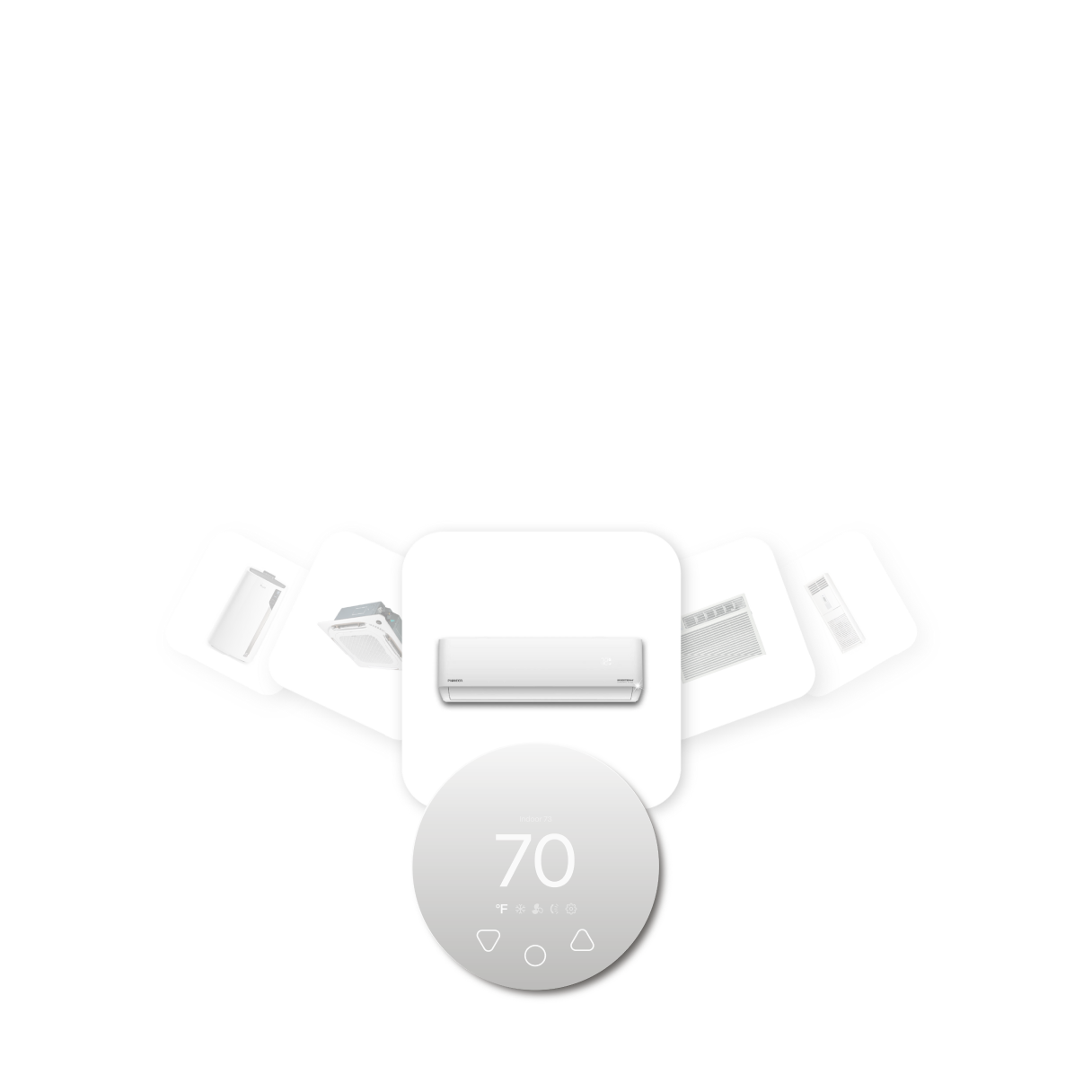
Compatible with all brands of ACs and Mini-Splits
Automate Climate Management
Control remotely
Reduce Energy Consumption
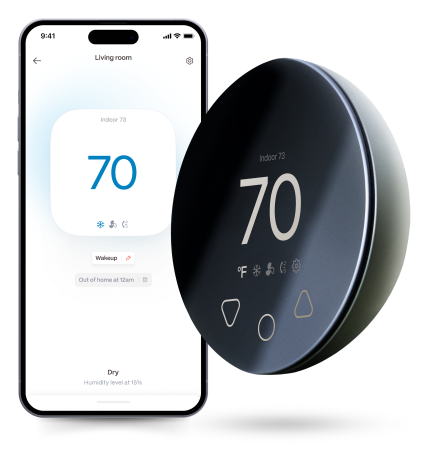
Monitor bills in realtimeKlima - Smart Home Thermostat for Mini-splits, Air Conditioners and Heatpumps
Side-by-Side: Mini-Split vs Central Air for Large Homes
| Factor | Multi-Zone Mini-Split | Central Ducted Air |
|---|---|---|
| Installation cost (new, no ductwork) | $15,000–$30,000 for 4–6 zones | $20,000–$40,000 including ductwork |
| Installation cost (existing ductwork) | Same — ductwork not used | $5,000–$12,000 for equipment only |
| Zone control | True room-by-room independent control | One thermostat unless zone dampers added ($3,000–$8,000) |
| Energy efficiency | No duct losses; SEER2 18–28+ | 10–30% duct losses; SEER2 14–22 |
| Aesthetics | Visible wall units in each room | Hidden — only grilles visible |
| Cold-climate heating | Cold-climate models to −25°C | Heat pump + furnace backup (dual-fuel) |
| Single failure impact | One zone affected; others continue | Whole home affected |
| Maintenance | Filter per indoor unit; coil cleaning | One central filter; duct cleaning every 5–10 years |
The Duct Loss Advantage
For large homes with long duct runs, duct losses are a significant efficiency factor. A central air system with 20% duct losses effectively operates at SEER2 equivalent to 80% of its rated value. A mini-split with SEER2 20 and no duct losses outperforms a central system with SEER2 18 and 20% duct losses. In large homes where ducts run through unconditioned attics or crawlspaces, this difference can represent $200–$500 per year in wasted energy.
When Central Air Wins in Large Homes
- Existing ductwork in good condition: If the home already has well-sealed, insulated ductwork in conditioned spaces, a central system is significantly less expensive to install — only the equipment needs replacing.
- Aesthetic priority: For custom homes or high-end renovations where visible wall units are not acceptable, central air with concealed ductwork is the standard specification.
- Single-thermostat comfort preferred: Households that want set-it-and-forget-it whole-home conditioning without per-room decisions may prefer central air's simplicity.
When Mini-Split Wins in Large Homes
- New construction without ductwork: Installing ductwork in a new home adds $8,000–$15,000. Multi-zone mini-splits at $15,000–$25,000 total cost are cost-competitive when ductwork is factored in.
- Renovation or addition: Adding mini-splits to an older home avoids the cost and disruption of running ductwork through finished walls and ceilings.
- Cold climate primary heating: Cold-climate multi-zone mini-splits provide reliable primary heating to −25°C — capabilities that require expensive dual-fuel central systems to match.
- Energy savings priority: Zone control means unoccupied bedrooms are not cooled to the same temperature as the occupied living room — a significant real-world efficiency gain in homes where most rooms are empty most of the day.
Stay cool and save more. Use code JONES15 to get 15% off your entire order—no strings attached.
Upgrade your comfort with a Klima today.
Frequently Asked Questions
Can mini-splits truly replace central air in a 3,000 sq ft home?
Yes — 5–6 zone multi-zone mini-split systems are regularly installed as whole-home primary HVAC in homes of 2,500–4,000 sq ft. Proper zone design is critical: one zone per bedroom, one or two for the main living areas, and one for the basement or secondary areas. A properly designed system provides room-by-room comfort at efficiency levels that central systems cannot match.
Related reading:
→ Mini-Split for Whole House: Can It Heat and Cool Everything?
→ Single Zone vs Multi-Zone Mini-Split: Which Is Right?
→ Mini-Split Zoning: How to Heat or Cool Rooms Independently


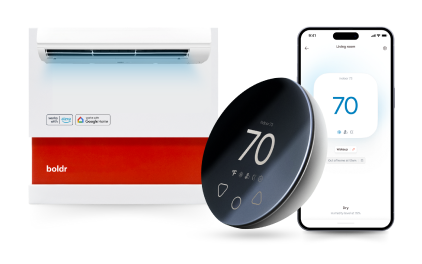
Klima - Smart Home Controller for Mini-splits, Air Conditioners and Heatpumps
Compatible with all brands of ACs and Mini-Splits Automate Climate Management Control remotely Reduce Energy Consumption Monitor bills in realtime
Try NowRecent Articles

Mini-Split Outdoor Unit Clearance 2026 Guide
A mini-split outdoor unit needs air. Lots of it. The condenser pull...
Read More
What Happens if Your Mini-Split Is Too Small?
Most homeowner sizing advice focuses on oversized mini-splits. But ...
Read More
Does a Mini-Split Need a Manual J Load Calculation?
A 500-square-foot room does not automatically need a 12,000 BTU min...
Read More
Signs Your Mini-Split May Have a Refrigerant Leak
A mini-split does not normally “use up” refrigerant the way a car u...
Read More
Mini-Split Minimum Capacity: Why It Matters
When homeowners compare mini-splits, they normally look at the bigg...
Read More