






Yes, a mini-split system can heat and cool an entire house. A multi-zone mini-split connects one outdoor unit to multiple indoor units — typically two to five — each serving a different room or zone. Homeowners across the US and Canada use multi-zone mini-splits as their sole HVAC system, eliminating the need for ductwork, a furnace, and a separate air conditioner. Whether it is the right approach for your home depends on the number of rooms, layout, climate, and insulation quality.
How a Whole-Home Mini-Split System Works
A multi-zone mini-split uses a single outdoor compressor connected to multiple indoor units through individual refrigerant line sets. Each indoor unit has its own thermostat control and operates independently — you can set the bedroom to 68°F, the living room to 72°F, and turn off the guest room entirely.
Outdoor units are available in sizes from 24,000 to 60,000+ BTU, supporting two to eight indoor zones depending on the brand and model. Each indoor unit is sized to its specific room.
Whole-Home Mini-Split Sizing Guide
| Home Size | Typical Zones | Total BTU Needed | Est. Installed Cost (US) |
|---|---|---|---|
| 800–1,200 sq ft | 2–3 | 18,000–30,000 | $6,000–$12,000 |
| 1,200–1,800 sq ft | 3–4 | 30,000–42,000 | $10,000–$18,000 |
| 1,800–2,500 sq ft | 4–5 | 42,000–60,000 | $14,000–$22,000 |
| 2,500–3,500 sq ft | 5–8 | 60,000–84,000 | $18,000–$30,000+ |
When a Whole-Home Mini-Split Makes Sense
- No existing ductwork. Older homes, homes with hot water radiator heating, or homes with electric baseboard heat often have no ducts. Adding ductwork costs $5,000–$15,000 and may not be feasible in every home. Mini-splits eliminate this entirely.
- You want room-by-room temperature control. Each zone operates independently. Instead of heating or cooling the entire house to one temperature, you condition only the rooms you are using.
- You are replacing an aging system. If your current furnace, boiler, or central AC is at end-of-life, a multi-zone mini-split can replace both heating and cooling in one system.
- Energy efficiency is a priority. Multi-zone mini-splits are among the most efficient HVAC systems available, with SEER2 ratings of 18–42 and no duct losses.
When a Whole-Home Mini-Split May Not Be Ideal
- You already have good ductwork. If your home has a modern, well-sealed duct system, replacing just the furnace and AC is typically less expensive than installing a full multi-zone mini-split system.
- Very large open-plan spaces. A single 3,000 sq ft open-concept area is difficult to condition with wall-mounted mini-split heads. Ducted mini-split units or a central system may be more effective.
- Extreme cold without backup. In regions where temperatures regularly drop below −20°F (−29°C), even cold-climate mini-splits lose significant capacity. A hybrid system with a gas furnace backup may be more practical.
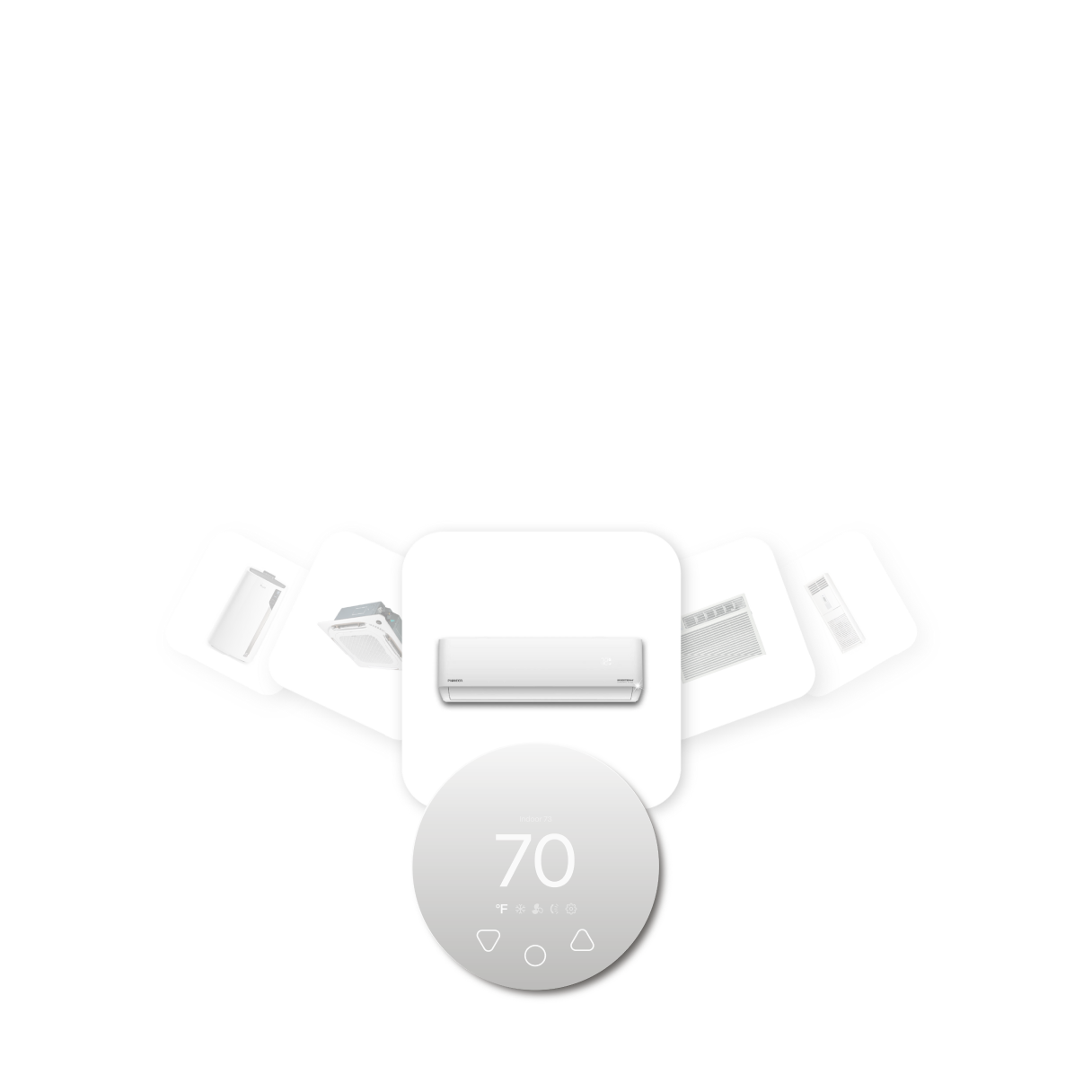
Compatible with all brands of ACs and Mini-Splits
Automate Climate Management
Control remotely
Reduce Energy Consumption
Monitor bills in realtimeKlima - Smart Home Thermostat for Mini-splits, Air Conditioners and Heatpumps

Whole-Home Mini-Split vs Central HVAC
| Factor | Multi-Zone Mini-Split | Central HVAC |
|---|---|---|
| Ductwork required? | No | Yes |
| Zone control | Yes — each room independent | Limited — one thermostat |
| Energy efficiency (SEER2) | 18–42 | 13–21 |
| Installed cost (4-zone) | $12,000–$22,000 | $8,000–$15,000 (with existing ducts) |
| Duct losses | 0% | 15–25%+ |
| Noise (indoor) | 19–32 dB per unit | 30–45 dB (duct noise) |
Planning a Whole-Home Mini-Split Layout
Not every room needs its own zone. Open-plan living areas, kitchens that connect to dining rooms, and hallways that connect bedrooms can often share a zone. The goal is to cover every occupied space without over-zoning.
A common layout for a 3-bedroom, 1,500 sq ft home might use 3 zones: one for the living/dining area (12,000 BTU), one for the master bedroom (6,000 BTU), and one for the second and third bedrooms connected by an open hallway (9,000 BTU). Total: 27,000 BTU from a single outdoor unit.
A professional Manual J load calculation is recommended for whole-home systems. This room-by-room analysis accounts for insulation, window orientation, ceiling height, and local climate to determine the exact BTU needs per zone. Most HVAC contractors include this in their quoting process.
Frequently Asked Questions
Can a mini-split really replace a furnace?
Yes, in most climates. Cold-climate mini-splits from Mitsubishi, Fujitsu, and Daikin can heat at temperatures as low as −22°F (−30°C). In very cold regions, some homeowners keep a backup heat source for the coldest days, but the mini-split handles 80–95% of heating hours.
How many zones do I need for a whole house?
Most homes need 3–5 zones. A 1,200 sq ft home typically needs 2–3 zones. A 2,500 sq ft home typically needs 4–5. Open areas can share zones; closed rooms with doors generally each need their own indoor unit.
Is a whole-home mini-split cheaper than central HVAC?
If ductwork already exists, central HVAC replacement is usually cheaper upfront. If no ductwork exists, a multi-zone mini-split is typically $5,000–$15,000 less expensive because you avoid the cost of installing new ducts. Operating costs are lower for mini-splits due to higher efficiency and zone control.



Klima - Smart Home Controller for Mini-splits, Air Conditioners and Heatpumps
Compatible with all brands of ACs and Mini-Splits Automate Climate Management Control remotely Reduce Energy Consumption Monitor bills in realtime
Try NowRecent Articles

Mini-Split Outdoor Unit Clearance 2026 Guide
A mini-split outdoor unit needs air. Lots of it. The condenser pull...
Read More
What Happens if Your Mini-Split Is Too Small?
Most homeowner sizing advice focuses on oversized mini-splits. But ...
Read More
Does a Mini-Split Need a Manual J Load Calculation?
A 500-square-foot room does not automatically need a 12,000 BTU min...
Read More
Signs Your Mini-Split May Have a Refrigerant Leak
A mini-split does not normally “use up” refrigerant the way a car u...
Read More
Mini-Split Minimum Capacity: Why It Matters
When homeowners compare mini-splits, they normally look at the bigg...
Read More