







In cold climates — Canada, the northern US Midwest, New England, the Pacific Northwest, and anywhere temperatures regularly fall below 0°F (−18°C) — choosing a mini-split with the right cold-climate rating is not optional, it is essential. Standard mini-splits lose substantial heating capacity below 20°F and may stop operating entirely below 0°F. Cold-climate models maintain meaningful heating output down to −13°F (−25°C) and are the only appropriate choice for primary heating in these regions.
Compatible with all brands of ACs and Mini-Splits
Automate Climate Management
Control remotely
Reduce Energy Consumption
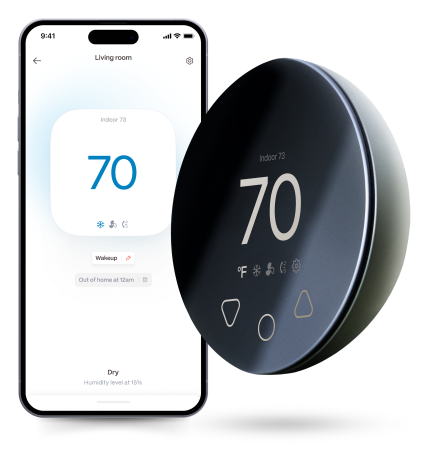
Monitor bills in realtimeKlima - Smart Home Thermostat for Mini-splits, Air Conditioners and Heatpumps
What "Cold Climate" Actually Means
A cold-climate mini-split uses enhanced compressor technology — typically flash injection or an enhanced vapor injection (EVI) cycle — to maintain refrigerant compression efficiency at low outdoor temperatures. The practical result: at 5°F (−15°C), a standard mini-split might deliver 50–60% of its rated BTU capacity, while a cold-climate model delivers 80–100% of rated capacity at the same temperature.
The Leading Cold-Climate Models (2026)
| Brand | Product Line | Rated Min. Temp | BTU Range | Compressor Warranty |
|---|---|---|---|---|
| Mitsubishi | MSZ-FH Hyper-Heating (H2i) | −13°F (−25°C) | 6,000–18,000 | 12 years |
| Daikin | Aurora (RXL/FTXL) | −13°F (−25°C) | 9,000–24,000 | 12 years |
| LG | LGRED° (LSN/LSU) | −13°F (−25°C) | 9,000–24,000 | 10 years |
| Fujitsu | Halcyon (AOU/ASU) | −13°F (−25°C) | 9,000–24,000 | 10 years |
| Bosch | Climate 5000 | −13°F (−25°C) | 9,000–24,000 | 7 years |
| Senville AURA | AURA Series | −22°F (−30°C) | 9,000–24,000 | 5 years |
What to Look for Beyond the Temperature Rating
- Heating capacity at low temperatures: The rated minimum temperature tells you the floor, but how much capacity remains at that temperature varies. Request the unit's heating capacity at 5°F and −4°F from your installer — some units retain 80% capacity at these temperatures, others only 50–60%.
- HSPF2 rating: Higher HSPF2 = better seasonal heating efficiency. In cold climates where the heat pump runs heavily, HSPF2 has a major impact on annual electricity costs. Look for HSPF2 of 10+ for cold-climate applications.
- Defrost cycle performance: Cold-climate units run more defrost cycles. Efficient defrost logic minimises comfort interruption during these cycles.
- Backup heat planning: Even cold-climate units are designed with a backup heat plan for the very coldest hours. Ensure your system design includes electric resistance backup strips or a retained backup heating source for nights below the unit's rated minimum.
Frequently Asked Questions
Which cold-climate mini-split is best for Canada?
All four leading brands — Mitsubishi H2i, Daikin Aurora, LG LGRED°, and Fujitsu Halcyon — are widely used across Canada and perform reliably in Canadian winters. The choice between them typically comes down to local installer availability, price, and whether HomeKit integration or specific smart home features matter to you. Mitsubishi has the broadest certified installer network nationally; Daikin has a strong presence in Ontario and BC; LG and Fujitsu are well-represented in major markets.
Do I need backup heat with a cold-climate mini-split in Canada?
For most of southern Canada (Ontario, BC, Quebec south of 50th parallel), a −13°F rated cold-climate unit can serve as primary heat without backup for the vast majority of winter hours. For northern Canada or regions with sustained temperatures below −25°C, a small amount of electric resistance backup for the coldest nights is standard practice in properly designed systems.
Related reading:
→ Do Mini-Splits Work in Cold Weather?
→ Mitsubishi Hyper Heat Mini-Split: Is It Worth the Extra Cost?
→ How Efficient Is a Mini-Split in Winter? Real Numbers


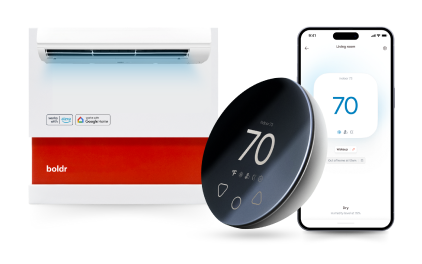
Klima - Smart Home Controller for Mini-splits, Air Conditioners and Heatpumps
Compatible with all brands of ACs and Mini-Splits Automate Climate Management Control remotely Reduce Energy Consumption Monitor bills in realtime
Try NowRecent Articles

Mini-Split Outdoor Unit Clearance 2026 Guide
A mini-split outdoor unit needs air. Lots of it. The condenser pull...
Read More
What Happens if Your Mini-Split Is Too Small?
Most homeowner sizing advice focuses on oversized mini-splits. But ...
Read More
Does a Mini-Split Need a Manual J Load Calculation?
A 500-square-foot room does not automatically need a 12,000 BTU min...
Read More
Signs Your Mini-Split May Have a Refrigerant Leak
A mini-split does not normally “use up” refrigerant the way a car u...
Read More
Mini-Split Minimum Capacity: Why It Matters
When homeowners compare mini-splits, they normally look at the bigg...
Read More