


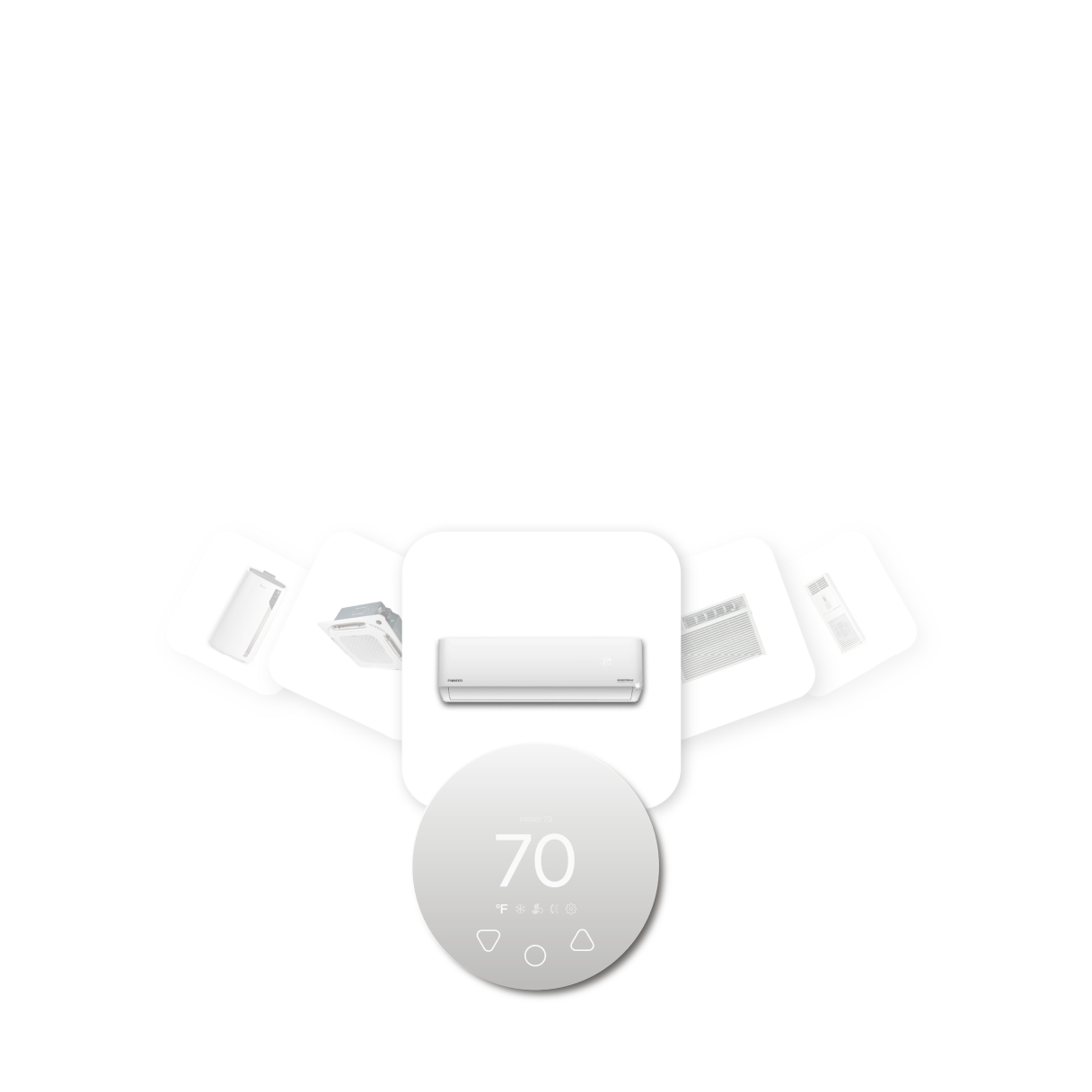



An accessory dwelling unit, a backyard guest house or an in-law suite is a small building with its own heating question. The answer is rarely one product, so here is how to think about it, and where our wall heater, Kelvin, fits alongside the other options.

Stay warm and save more. Use code JONES15 to get 15% off your entire order—no strings attached.
Upgrade your comfort with a Kelvin today
What Counts as an ADU
The California Energy Commission defines an ADU as an attached or detached residential unit with complete independent living facilities, on a lot with a primary residence. A junior ADU (JADU) is a smaller version of up to 500 square feet, contained entirely within an existing single-family home. Detached ADUs, attached ADUs and conversions are treated differently under the state's energy code, so check how yours is classified.
Source: California Energy Commission, "2022 Energy Code Accessory Dwelling Units (ADU) FAQs"
The Three Ways to Heat an ADU
- A mini-split heat pump. The U.S. Department of Energy says heat pumps are preferable in most climates when electricity is the only choice, and that they can cut electricity use by 50% compared with electric resistance heating. The California Energy Commission page says mini-split, multi-split and variable-capacity heat pump systems are allowed for ADUs. Our mini-split guide for guest houses and accessory dwellings covers sizing and installation.
- Extending the main house's heating. This can work, but the Department of Energy notes resistance heat can make sense for an addition where extending an existing system is impractical, which can describe a detached unit.
- Electric room heaters, like wall heaters, as primary or supplemental heat.
The right mix depends on climate, how often the unit is used and what's already installed. In a cold climate with a unit used all winter, a heat pump is the more efficient base. Electric room heaters are the flexible layer on top, or the whole answer for a small, occasionally used space.
Source: U.S. Department of Energy, "Electric Resistance Heating"
Where Kelvin Fits
Kelvin is an infrared wall heater that heats a room, not a whole building:
- Standard (450W) heats up to 100 sq ft, and Large (700W) up to 200 sq ft, based on a 2.4 m (7.9 ft) ceiling and A+ insulation.
- It's a plug-in. There's no wiring job: mount it, then plug it into a standard outlet. Installation takes under five minutes, with the mount, screws and guides included and drywall anchors for US orders.
- It works room by room. The Smart Sensor and the Boldr Energy app give you scheduling and zone control, so you can heat the room in use and leave the rest.
- It fits wet rooms. All models are IP44, so they are rated for bathrooms. Don't install one inside a shower or directly above a bath or sink.
- It suits a guest house. The app supports multi-user access and sharing with guests, and temperature limits (Guardian mode) that keep the room within the range you set.
The Department of Energy says zone heating can save more than 20% compared with heating the whole house, which is the logic behind heating only the room in use.
How to Size It
Heat room by room rather than by the whole footprint. A 400 sq ft studio isn't one 400 sq ft heater. Add up the areas you actually heat, then match each to a model:
| Room | Area | Kelvin model |
|---|---|---|
| Bedroom | Up to 100 sq ft | Standard |
| Living area | Up to 200 sq ft | Large |
| Bathroom | Small | Standard, mounted away from direct water |
| Open studio of 300 sq ft | Beyond one unit's rating | More than one unit, or a mini-split |
For spaces larger than one unit's rating, or in very cold climates, a mini-split is the better primary system and Kelvin becomes the supplemental layer. The sizing basis (2.4 m ceiling and A+ insulation) matters: a poorly insulated space, such as an uninsulated converted garage, may not reach the rated coverage.
Electrical and Safety Notes for a Guest House
- Have an electrician confirm the circuits. A 700W Kelvin draws about 5.8 amps at 120V, and a 450W unit about 3.75 amps. Add those up against the circuit and anything else on it.
- Plug straight into the wall. CPSC says electric heaters go directly into a wall outlet, not an extension cord or power strip. An outlet that isn't near the wall you want is a job for an electrician. Our extension cord guide explains why.
- Keep clearance and turn heaters off when sleeping, as CPSC advises, and tell guests the rule.
- Check local requirements for permits, because rules vary by location.
Source: CPSC, "Keep Warm and Safe This Winter" (Jan 2026)
If You Rent the Unit
Short-term hosts have two problems: guests who leave heating on, and guests who change settings. Kelvin's app has multi-property management and remote access. See Best Heater for Airbnb and Rental Properties and How to Stop Airbnb Guests from Overusing Your Heating. For an in-law suite or long-term rental, the rental suite guide covers the mini-split route.
FAQ
What is the best way to heat an ADU?
The Department of Energy says heat pumps are preferable in most climates when electricity is the only choice. One approach is a mini-split as the base with electric room heaters for extra rooms or cold spells.
Can I use electric heaters in an ADU?
Yes, with the same safety rules as anywhere: plug directly into the wall, keep clear of combustibles, and turn them off when sleeping. Have an electrician confirm the circuits.
How many Kelvin heaters do I need for a guest house?
One per room. Standard covers up to 100 sq ft and Large up to 200 sq ft, based on a 2.4 m (7.9 ft) ceiling and A+ insulation.
Is Kelvin enough as the only heat in a backyard guest house?
For a small, well-insulated space used occasionally, possibly. For a larger unit or a cold climate used all winter, a mini-split is the more efficient base, with Kelvin as the supplemental layer.
Stay warm and save more. Use code JONES15 to get 15% off your entire order—no strings attached.
Upgrade your comfort with a Kelvin today
Bottom Line
Heat the rooms you use, not the whole footprint. A mini-split is the efficient base for a larger or colder ADU, and a plug-in wall heater like Kelvin is the easy, flexible layer for individual rooms, bathrooms and small spaces. Have an electrician confirm the circuits, and keep the safety rules for guests.
See Kelvin's sizes and specifications to match a model to each room.


Kelvin - cost effective, smart electric heater
30% more cost effective than traditional heaters Smart functions to automate home climate Control remotely Maintenance Free Easy 5 minute installation
Try NowRecent Articles

How to Heat an ADU or Guest House: Heat Options
An accessory dwelling unit, a backyard guest house or an in-law su...
Read More
What Is the Safest Type of Space Heater? (2026)
What Is the Safest Type of Space Heater? There isn't a single safe...
Read More
Why Is This Room Always Cold? The Real Fixes, in Order
The instinct when a room runs cold is to buy a heater. The better ...
Read More
Best Heater for Airbnb; Rental Properties, No Install
Best Heater for Airbnb & Rental Properties (No Permanent Insta...
Read More
How to Heat a Basement That's Always Cold
A basement runs cold for a different reason than a drafty upstairs...
Read More