







A mini-split is the most practical HVAC solution for a rental suite, in-law suite, or basement apartment — it provides independent heating and cooling for the tenant without sharing the main home's system, costs significantly less to install than extending central HVAC, and gives landlords the option to monitor and manage energy use remotely between tenancies. This guide covers sizing, installation, and the remote management tools that make rental property management easier.
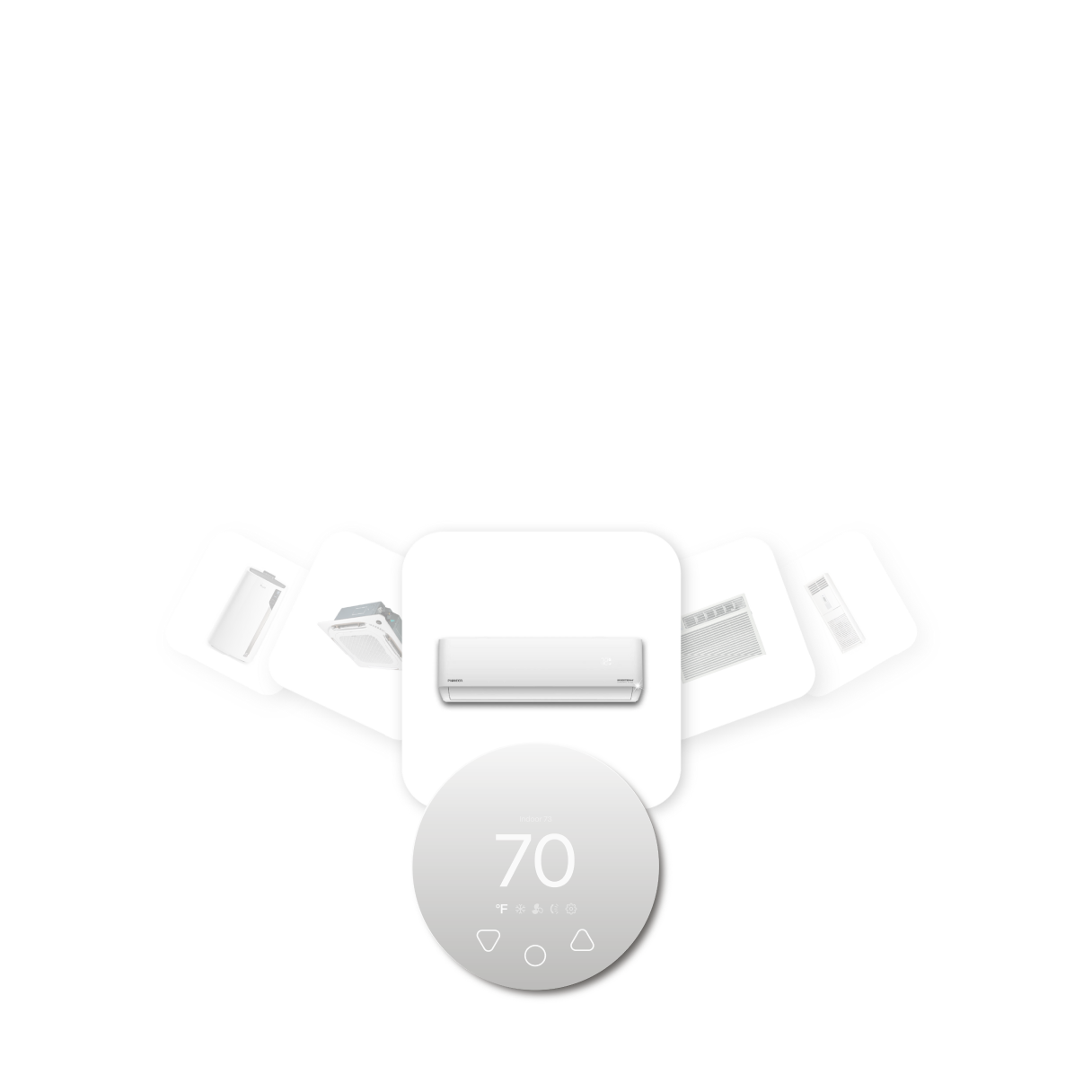
Compatible with all brands of ACs and Mini-Splits
Automate Climate Management
Control remotely
Reduce Energy Consumption
Monitor bills in realtimeKlima - Smart Home Thermostat for Mini-splits, Air Conditioners and Heatpumps
Why Mini-Splits Are Ideal for Rental Suites
- Independent from the main home: Tenant controls their own temperature without affecting the rest of the house — no shared thermostat conflicts
- No ductwork required: Most rental suites (basement apartments, garage conversions, laneway houses) were not designed with HVAC in mind — a mini-split installs without disrupting finished walls or floors
- Low installation cost vs alternatives: Installing mini-split heating and cooling costs $3,500–$7,000 vs $15,000–$25,000 for extending central HVAC and adding a zone
- Remote monitoring: A smart AC controller allows landlords to verify the system is operating, prevent extreme temperature settings, and track energy costs per suite
Sizing for Rental Suites
| Suite Size | Zones | Recommended BTU | Notes |
|---|---|---|---|
| Bachelor / studio (under 400 sq ft) | 1 | 9,000–12,000 BTU | Single unit covers entire suite |
| 1-bedroom suite (400–650 sq ft) | 1 | 12,000–18,000 BTU | Bedroom may need separate unit if door is closed |
| 2-bedroom suite (650–1,000 sq ft) | 1–2 | 18,000 BTU single or 2-zone | 2-zone preferred for tenant comfort flexibility |
Remote Management for Landlords
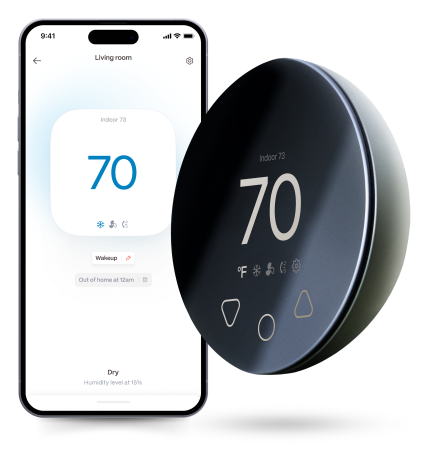
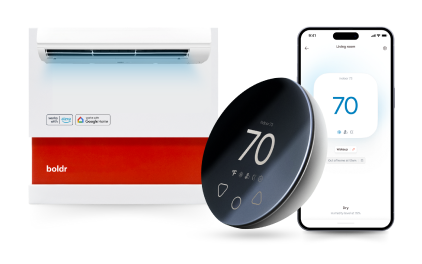
The Boldr Klima is particularly useful for rental properties — it adds WiFi remote control and monitoring to any mini-split without any modification to the unit. Benefits for landlords:
- Monitor the suite remotely without requiring tenant access
- Pre-condition the suite before tenant move-in or between tenancies
- Track energy consumption per suite to verify electricity costs for billing or budgeting
- Share limited access with the tenant through the multi-user feature — they can control the unit without seeing the full account dashboard
- Set temperature limits to prevent the tenant from setting extreme temperatures that waste energy
Cold-Climate Rental Suites
In Canada, a rental suite mini-split must be sized for primary heating across a full winter — landlords are legally required to maintain habitable temperatures (minimum 20°C in most provinces). A cold-climate mini-split rated to −25°C ensures reliable heating even on the coldest nights without the system defaulting to expensive electric resistance backup heat.
Frequently Asked Questions
Do I need to include heating in a rental suite in Canada?
Yes — in most Canadian provinces, landlords are legally required to maintain a minimum indoor temperature in rental units. Specific minimums vary by province (typically 20°C / 68°F) and municipal bylaws may set higher requirements. A properly sized cold-climate mini-split provides compliant year-round heating as the primary heat source.
Can I split the electricity cost between the main home and the suite?
In most cases, a rental suite mini-split is on a dedicated circuit — if it is on the main home's electrical panel, it contributes to the main home's electricity bill. For fair cost separation, the suite ideally has its own sub-panel or separately metered service. A smart energy monitor on the suite's dedicated circuit is the lower-cost alternative to full sub-metering.
Related reading:
→ Mini-Split for Airbnb Hosts: What You Need to Know
→ Mini-Split for Basement: Sizing, Placement and Best Options
→ Mini-Split Cost in Canada 2026: What to Budget


Klima - Smart Home Controller for Mini-splits, Air Conditioners and Heatpumps
Compatible with all brands of ACs and Mini-Splits Automate Climate Management Control remotely Reduce Energy Consumption Monitor bills in realtime
Try NowRecent Articles

Mini-Split Outdoor Unit Clearance 2026 Guide
A mini-split outdoor unit needs air. Lots of it. The condenser pull...
Read More
What Happens if Your Mini-Split Is Too Small?
Most homeowner sizing advice focuses on oversized mini-splits. But ...
Read More
Does a Mini-Split Need a Manual J Load Calculation?
A 500-square-foot room does not automatically need a 12,000 BTU min...
Read More
Signs Your Mini-Split May Have a Refrigerant Leak
A mini-split does not normally “use up” refrigerant the way a car u...
Read More
Mini-Split Minimum Capacity: Why It Matters
When homeowners compare mini-splits, they normally look at the bigg...
Read More